23 Budget Printables Ideas for a More Organized Money Routine
Last updated on May 5th, 2026 at 03:41 pm
Keeping track of your money often feels like a juggling act. Between bills, savings goals, and everyday spending, it's easy to lose sight of where your cash actually goes. That's where budget printables come in—they give you a clear, hands-on way to see your financial picture at a glance.
Printables turn abstract numbers into something you can touch and fill out. They don't require fancy apps or complicated spreadsheets.
Just a printer, a pen, and a few minutes each week can transform how you manage your money. Whether you're a budgeting newbie or a seasoned pro, the right printable can make all the difference.
Free PDF Download
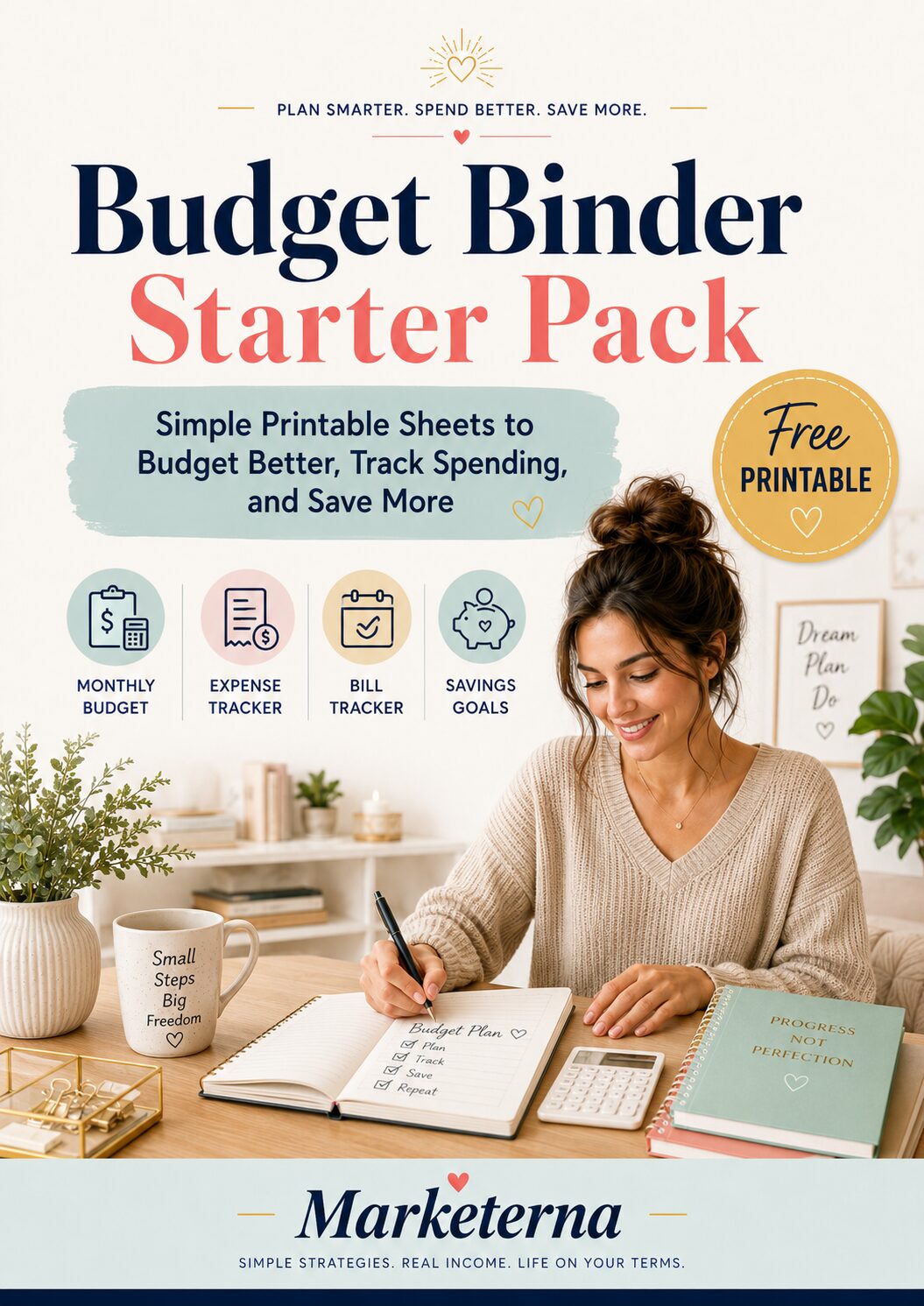
Get the Free Budget Binder Starter Pack
Download simple printable budget sheets to plan your monthly money, track expenses, organize bills, and start building better money habits without feeling overwhelmed.
You’ll get this free PDF plus access to the full Marketerna Save More & Earn More PDF Kit. No spam. Unsubscribe anytime.
1. Monthly Budget Overview

Think of this as your financial command center. A monthly budget overview sheet lays out every dollar coming in and going out, so you can spot patterns, adjust spending, and stay on track without digging through bank statements. It's the simplest tool to keep your money routine honest and clear.
This printable is your big-picture snapshot. It typically has sections for income, fixed expenses, variable expenses, and savings. You fill in amounts at the start of the month, then update as you pay bills or make purchases.
By the end, you can see exactly where your money went and whether you stuck to your plan.
What To Include
List all income sources first—salary, freelance gigs, side hustles. Then add fixed costs like rent, utilities, and loan payments. Leave room for variable expenses such as groceries, dining out, and gas.
Finally, include a savings line for goals like an emergency fund or vacation.
How To Use It Weekly
Set aside 10 minutes each Sunday to update your overview. Compare actual spending to your budgeted amounts. If you're over in one category, adjust elsewhere.
This habit keeps small oversights from becoming big problems.
Pro Tip For Accuracy
Keep receipts or use a notes app to track cash purchases. At month-end, total everything and compare to your overview. The closer your estimates are to reality, the more useful this printable becomes.
2. Weekly Expense Tracker
A monthly budget can hide a lot of small, sneaky purchases. That daily coffee, the quick takeout lunch, the random Amazon buy—they add up fast. A weekly expense tracker helps you catch those leaks before they drain your budget.
By reviewing your spending every seven days, you stay in control. You can spot patterns, adjust habits, and keep small overspends from turning into bigger problems. It's like giving your finances a quick health check each week.
A weekly expense tracker printable typically has columns for each day and categories like food, transport, and entertainment. You write down every expense as it happens or at the end of the day. At the week's end, you total each category and compare it to your weekly budget.
This habit builds awareness and helps you make smarter choices the next week.
How To Use It Effectively
Keep the tracker somewhere visible—on your fridge, desk, or inside your planner. Make it a daily habit to jot down expenses, even the tiny ones. At the end of the week, highlight any category that went over budget.
Use that info to plan a better spending week ahead.
What To Look For
Watch for recurring small expenses that don't bring much joy. Maybe it's a subscription you forgot about or a daily snack habit. Also notice if you tend to overspend on certain days—like weekends or payday.
Awareness is the first step to change.
Customize Your Tracker
Tailor the categories to your life. If you commute, add a transport line. If you have pets, include a pet supplies category.
The more specific, the more useful the tracker becomes. You can also add a notes section for context, like 'car repair' or 'birthday gift. '
Free PDF Download
Get the Free Budget Binder Starter Pack
Download simple printable budget sheets to plan your monthly money, track expenses, organize bills, and start building better money habits without feeling overwhelmed.
You’ll get this free PDF plus access to the full Marketerna Save More & Earn More PDF Kit. No spam. Unsubscribe anytime.
3. Bill Payment Calendar
A bill payment calendar takes the guesswork out of due dates. Instead of scrambling to remember when each payment is due, you get a clear month-by-month layout that shows every bill, its amount, and the exact date it needs to go out. This printable is a lifesaver for anyone who's ever paid a late fee or accidentally double-paid a subscription.
Print one out, stick it on your fridge or inside your planner, and fill in the details at the start of each month. You'll see exactly what's coming due and how much cash you need to set aside. It's a simple habit that stops missed payments before they happen.
A bill payment calendar is your monthly roadmap for staying on top of every due date. It helps you track amounts, avoid late fees, and plan your cash flow so you're never caught off guard.
What To Include
List every recurring bill—rent, utilities, credit cards, subscriptions, loans, insurance. Add the due date, the typical amount (or a range if it varies), and a checkbox for when you've paid it. Some calendars also include a column for confirmation numbers or notes about auto-pay setups.
How To Use It Effectively
Fill out the calendar at the beginning of each month. Check it weekly, or better yet, set a recurring reminder to review it every payday. Mark bills as paid right after you submit them, so you don't accidentally pay twice.
If a due date falls on a weekend, note the last business day before it.
Pro Tip: Color-code For Priority
Use different highlighters or pen colors to separate fixed essentials (like rent) from variable expenses (like electricity) and optional subscriptions. This visual cue helps you see at a glance which bills are non-negotiable and which ones you could cut if money gets tight.
4. Debt Snowball Tracker
Debt can feel like a heavy weight, but the debt snowball method turns that weight into a series of small, winnable battles. This printable helps you list all your debts from smallest to largest, then track every payment and milestone as you knock them out one by one. It’s simple, motivating, and gives you a clear visual of your progress.
The debt snowball method works because it focuses on behavior, not math. By paying off the smallest debt first, you get quick wins that keep you motivated. This printable makes it easy to see each debt, your minimum payment, and your extra payment amount.
As you cross off debts, you’ll feel the momentum build—and that’s what keeps you going.
How To Set It Up
Start by listing every debt you have—credit cards, student loans, car loans, personal loans—from smallest balance to largest. Write down the total owed, minimum monthly payment, and interest rate. Then decide how much extra cash you can throw at the smallest debt each month.
The printable has dedicated rows for each debt and columns for tracking payments.
Tracking Your Progress
Each time you make a payment, fill in the date and amount. Watch the remaining balance shrink. When you pay off a debt entirely, celebrate that win and roll the full payment you were making (minimum + extra) to the next debt on the list.
The printable includes a progress bar or checklist to mark each debt as paid off.
Staying Motivated
The visual nature of the tracker is its superpower. Color in a section each time you pay down a debt, or put a sticker on the page when you hit a milestone. Seeing the list shrink gives you a tangible sense of accomplishment.
Keep the printable somewhere you’ll see it daily—like on your fridge or in your planner.
Free PDF Download
Get the Free Budget Binder Starter Pack
Download simple printable budget sheets to plan your monthly money, track expenses, organize bills, and start building better money habits without feeling overwhelmed.
You’ll get this free PDF plus access to the full Marketerna Save More & Earn More PDF Kit. No spam. Unsubscribe anytime.
5. Sinking Fund Savings Sheet
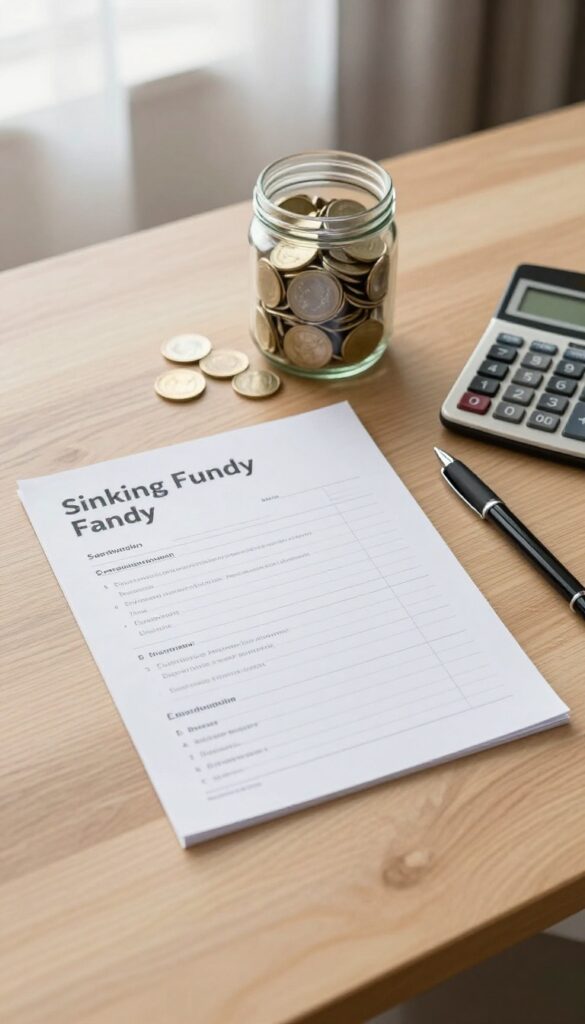
Irregular expenses like car repairs, holiday gifts, or annual insurance premiums can throw your budget off track if you're not prepared. A sinking fund savings sheet helps you break those big, unpredictable costs into small, manageable monthly contributions. By setting aside a little each month, you'll have the cash ready when those expenses pop up.
A sinking fund is essentially a savings account for a specific future expense. The printable sheet lets you track multiple sinking funds at once, so you can see progress toward each goal. It turns vague worry into a concrete plan.
How To Set Up Your Sinking Funds
Start by listing all irregular expenses you expect in the next year. Common ones include car maintenance, medical bills, holiday spending, and home repairs. Estimate the total cost for each and divide by the number of months until you need the money.
That's your monthly contribution.
Track Each Fund Separately
Use columns or separate rows for each sinking fund on your printable. Record your starting balance, monthly contribution, and current total. This keeps you from accidentally spending money meant for car repairs on holiday gifts.
Automate Your Contributions
Set up automatic transfers from your checking account to a dedicated savings account for each fund. Even small amounts add up over time. The printable helps you monitor that the transfers are happening and that you're on track.
6. Envelope Budgeting System
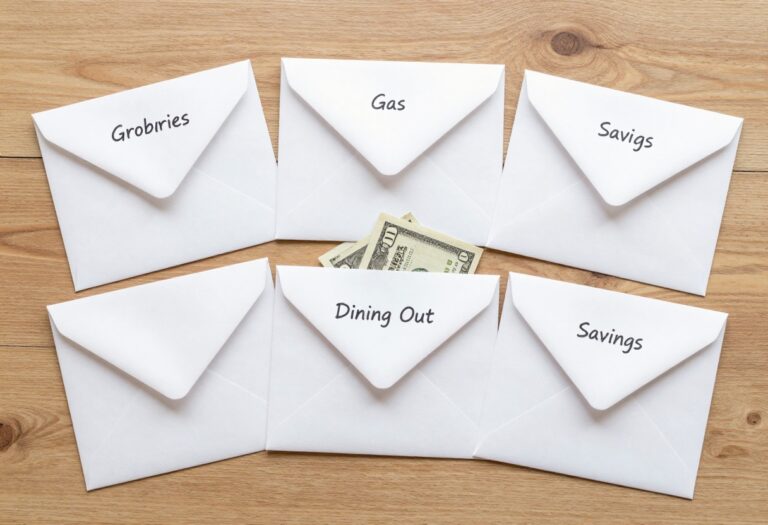
The envelope system is a classic for a reason—it makes your spending limits physical and impossible to ignore. Instead of swiping a card and hoping for the best, you pull cash from labeled envelopes for things like groceries, dining out, or fun money. Printable envelope labels and tracking sheets take this method digital-friendly, so you can print a fresh set each month and stay on track without any fancy tools.
Printables make the envelope system even easier. You can download label templates for standard #10 envelopes or cute cash envelopes, plus a simple tracking sheet to log how much goes in and out of each category. This hands-on approach works wonders for overspenders because once the cash is gone, you're done spending in that category—no excuses.
How To Set It Up
Start by listing your variable spending categories—groceries, gas, entertainment, personal care, etc. Decide how much cash to allocate to each for the month. Print a label for each envelope, fill it with cash, and place the envelopes in a secure spot like a small cash box or a dedicated wallet.
Use the tracking sheet to record every withdrawal so you can review your habits later.
Printable Labels That Stick
Look for printable envelope labels that include category names, a spot for the budgeted amount, and maybe a little icon (like a carrot for groceries). Adhesive labels work great for reusing envelopes, or you can print directly onto paper envelopes if you prefer. Some free sets even come with matching tracking sheets so everything coordinates.
Tracking Your Progress
Each time you take cash out, jot down the date and amount on the tracking sheet. At the end of the month, you'll see exactly where your money went. This simple habit reveals spending patterns and helps you adjust next month's cash allocations.
Plus, seeing leftover cash in an envelope feels surprisingly rewarding.
7. No-Spend Challenge Tracker
Sometimes the best way to reset your spending habits is to hit pause entirely. A no-spend challenge does exactly that—it asks you to stop all non-essential purchases for a set period. This isn't about deprivation; it's about becoming hyper-aware of every dollar that leaves your wallet.
A visual tracker turns that challenge into a game, with each successful day feeling like a small win.
A no-spend challenge tracker is a printable that lets you mark off days, weeks, or even months where you avoid unnecessary spending. You decide the rules: maybe no eating out, no online shopping, or no coffee runs. Each day you succeed, you color in a square or place a sticker.
Seeing the chain of success grow is surprisingly motivating. It also reveals patterns—like which days of the week are hardest—so you can plan ahead.
How To Set Your Rules
Start by defining what 'no spend' means for you. Essentials like rent, utilities, and groceries still count as necessary. But anything extra—takeout, new clothes, streaming subscriptions—is off limits.
Write your personal exceptions right on the tracker so there's no confusion later. Some people allow one 'cheat day' per week; others go all in. Pick what feels challenging but doable.
Track And Celebrate Progress
Place your tracker somewhere you'll see it daily—on the fridge, in your planner, or by your desk. Each evening, take a moment to mark the day. If you slipped, don't erase it; just note what happened and start fresh tomorrow.
At the end of the challenge, tally up how much you saved. That number is your reward, and it often feels better than whatever you would have bought.
Extend The Challenge
Once you've successfully completed a no-spend week, try stretching it to two weeks or a full month. Many people find that the first few days are the hardest, but after that, the momentum carries them. You can also repeat the challenge quarterly to keep your spending in check.
Over time, these short breaks become a powerful habit that reshapes your entire relationship with money.
8. Savings Goal Thermometer
Saving for a big goal—like a vacation, emergency fund, or down payment—can feel slow and abstract. A savings goal thermometer turns that process into something you can see and celebrate. Each time you add money, you color in a little more of the thermometer, and that visual progress keeps you motivated.
Print a thermometer template and write your target amount at the top. Break it into increments (like $500 or $1, 000). Every time you hit a milestone, shade in that section.
Place it somewhere you'll see daily—on your fridge, bulletin board, or inside your planner. It's a simple but powerful way to turn a long-term goal into a daily win.
How To Set It Up
Start by choosing a specific savings goal and a deadline. Then divide the total into smaller chunks. For example, if you want to save $1, 200 in 12 months, each chunk is $100.
Label those chunks on the thermometer. Print it out and hang it where you'll see it often.
Keep The Momentum Going
The key is consistency. Set up automatic transfers to your savings account, and each time the transfer hits, color in the corresponding section. If you get a bonus or extra cash, add it and color in extra.
The visual progress will keep you excited to reach the top.
Customize It Your Way
You can make it as simple or creative as you like. Use different colors for different goals, add stickers for milestones, or even turn it into a family challenge. The more personal it feels, the more you'll want to fill it up.
9. Grocery Shopping List & Budget
Grocery shopping is one of those areas where spending can quietly balloon. A list helps, but adding a budget column right next to it keeps you honest. This printable merges your shopping list with a running total, so you see the cost before it hits the register.
A combined grocery list and budget printable helps you plan meals, track prices, and avoid impulse buys. It turns a simple errand into a money-saving habit.
How It Works
The printable has two columns: one for the item, another for its estimated cost. As you add items, you tally the total. If you're over budget, you swap or skip items before checkout.
Meal Planning Integration
Pair the list with a weekly meal plan. Write down what you need for each recipe, then estimate costs. This prevents buying extras and reduces food waste.
Store Layout Tips
Organize your list by store section—produce, dairy, meat, etc. This saves time and reduces the chance of grabbing unplanned items. The budget column still applies, so you stay on track aisle by aisle.
10. Meal Planning & Grocery Budget

Food is one of the biggest variable expenses in most budgets. Without a plan, it's easy to overspend on takeout or impulse buys at the store. A meal planning printable helps you map out your week's meals and estimate costs before you ever step foot in the grocery aisle.
Start by choosing a template that has space for each day's meals, plus a running total for estimated costs. Fill it in before you shop—check your pantry first, then list only what you need. This simple step cuts down on food waste and keeps your grocery bill predictable.
How To Use A Meal Planning Printable
Pick one day each week (Sunday works great) to sit down with your printable. Look at your calendar, note any nights you'll eat out or have leftovers, and plan accordingly. Write down breakfast, lunch, dinner, and snacks.
Then estimate the cost per meal using recent receipts or store prices.
Pair It With A Grocery List
Many meal planning printables include a grocery list section. Use it to jot down ingredients grouped by store aisle. Stick to the list when you shop—no stray items unless they're on sale and you'll actually use them.
This combo keeps your food spending on target.
Track Your Savings Over Time
Keep your completed printables in a binder or folder. After a month, compare your estimated costs to your actual receipts. You'll quickly see patterns—maybe you're overestimating produce or underestimating snacks.
Adjust your planning accordingly and watch your grocery budget shrink.
11. Subscription Tracker
Subscriptions have a way of piling up quietly. Streaming services, apps, gym memberships, and even that monthly snack box—they all chip away at your budget without much thought. A subscription tracker printable helps you list every single recurring charge, its cost, and when it renews, so you can finally see the full picture and decide what's worth keeping.
Once you see all your subscriptions in one place, it's easier to spot the ones you forgot about or barely use. Canceling just a few can free up cash for things that actually matter.
What To Track
Include the service name, monthly or annual cost, renewal date, and how often you actually use it. Also note if it's a free trial about to convert to paid—those sneak up fast.
How To Review
Set a recurring reminder to check your tracker every three months. Highlight any subscriptions you haven't used in the past 30 days and consider canceling them. For annual subscriptions, mark the renewal date a week before so you have time to decide.
Savings Goal
Add a column for potential savings if you cancel. Watching that number grow can be surprisingly motivating. Even small cuts add up over a year.
12. Annual Budget Planner
Seeing the big picture of your finances can be a game-changer. An annual budget planner helps you map out income and expenses for the entire year, so you can spot seasonal trends and plan ahead. Instead of reacting month by month, you'll see the whole year at a glance.
An annual budget planner is a printable that lets you record your expected income and fixed expenses for each month of the year. It's perfect for identifying patterns—like higher utility bills in winter or extra spending during the holidays—so you can adjust your budget proactively. Plus, it makes tax time easier because you have a full year's data in one place.
Spot Seasonal Spending Patterns
Use the annual planner to note recurring costs that change with the seasons. For example, heating bills spike in winter, while summer might bring higher travel expenses. By seeing these trends, you can set aside money in advance and avoid surprises.
Plan For Big Annual Expenses
Insurance premiums, property taxes, or holiday gifts often come once a year. Add them to your annual planner and divide the total by 12 to create a monthly savings goal. That way, when the bill arrives, you're ready.
Track Income Fluctuations
If your income varies by season—like freelance work or commission-based pay—the annual planner helps you see lean months and plan accordingly. You can build a buffer during high-earning periods to cover the slower ones.
13. Net Worth Tracker
Your net worth is the single best snapshot of your financial life. It’s simply everything you own minus everything you owe. Tracking it quarterly shows you whether you’re building wealth or treading water—without getting lost in daily ups and downs.
A net worth tracker printable lets you list your assets (savings, investments, home value) and liabilities (mortgage, student loans, credit card balances) in one place. Update it every three months and watch the gap shrink as you pay down debt and grow savings. Seeing that number climb is hugely motivating.
What To Include
Assets: checking and savings accounts, retirement funds, property value, vehicles, and any other investments. Liabilities: mortgages, car loans, student loans, credit card balances, personal loans. Be honest—rounding up assets or downplaying debt only hurts your own picture.
How Often To Update
Quarterly is the sweet spot. Monthly is too noisy—stock market swings and small purchases can distort the trend. Yearly is too infrequent to catch problems early.
Pick four dates (e. g. , Jan 1, Apr 1, Jul 1, Oct 1) and make it a habit.
Make It A Ritual
Pair your net worth update with something enjoyable—a coffee date with your budget binder, a quiet Sunday morning, or a check-in with your partner. The printable becomes a financial progress report, not a chore.
14. Cash Envelope Log
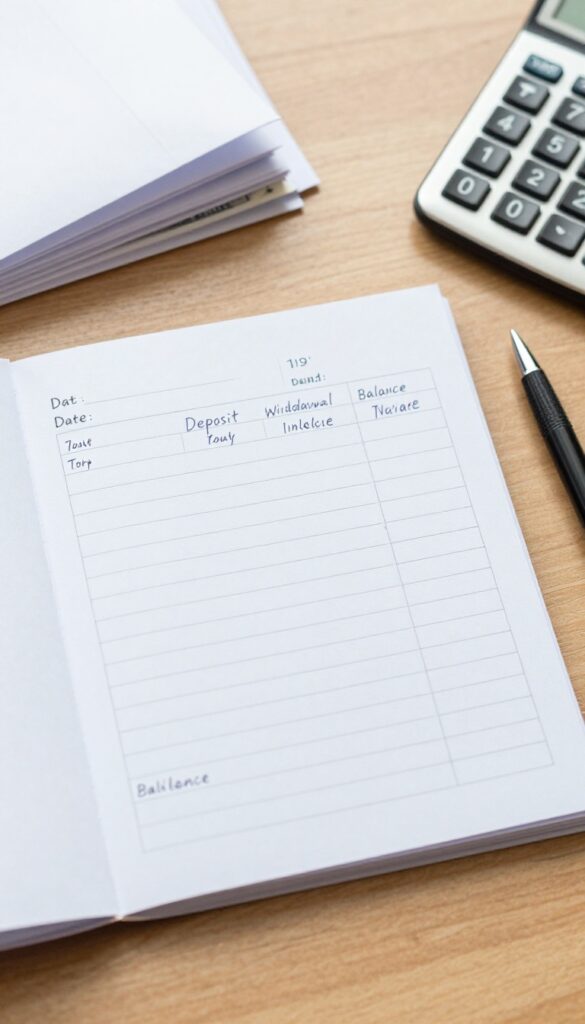
The cash envelope system is a classic budgeting method, but it only works if you actually track what goes in and out. A dedicated log turns a pile of envelopes into a clear record of your spending habits. It helps you spot leaks, adjust categories, and stay on top of your cash flow without guesswork.
A cash envelope log is a simple printable where you note the date, amount added, amount spent, and running balance for each envelope category. It brings accountability to the envelope system and makes it easy to see where your cash is going at a glance.
What To Include
Your log should have columns for date, description, deposit, withdrawal, and balance. Add a row for each transaction so you can track every dollar. Some printables also include a spot for the envelope category name and a starting balance.
How To Use It Daily
Every time you put cash in or take cash out, record it right away. Keep the log with your envelopes—maybe clip it to the front or store it in a binder. A quick daily check prevents forgotten transactions and keeps your balances accurate.
Review And Adjust
At the end of the month, total up your spending per envelope. Compare it to your budget. If you consistently overspend in one category, consider adjusting your allocation.
The log gives you the data to make smart tweaks.
15. Daily Spending Log
A daily spending log is like a financial diary. The idea is simple: every time you spend money, you write it down. No exceptions.
This small habit builds incredible awareness. You start noticing patterns you never saw before—like how those quick coffee runs add up or why your cash seems to disappear by mid-month.
The beauty of a daily spending log is that it doesn't require any complex categories or calculations. Just a simple table with columns for date, item, amount, and maybe a note. You can print a month's worth on one page.
Keep it in your wallet or on your desk, and make it a rule to fill it in before you put your wallet away.
Why It Works
Writing things down forces you to confront your spending in real time. It's easy to ignore a credit card bill, but harder to ignore a log you fill out every day. Over time, you'll spot trends—like spending more on weekends or impulse buys after a stressful day.
That awareness is the first step to change.
How To Set It Up
You can find free printable daily spending logs online, or make your own in a spreadsheet. Print a stack and keep them in a binder. Use a simple layout: date, description, category (optional), and amount.
Some people like to add a column for "need vs. want" to reflect on each purchase.
Tips For Consistency
The hardest part is remembering to log every purchase. Try keeping the log next to your wallet or phone. Set a daily reminder on your phone to fill it in at night.
If you miss a day, don't stress—just pick up where you left off. The goal is progress, not perfection.
16. Bill Split Organizer
Shared expenses can get messy fast—especially when you're splitting rent, utilities, and groceries with roommates or a partner. A bill split organizer printable takes the guesswork out of who owes what and when. It's a simple way to keep everyone on the same page without awkward money conversations.
This printable helps you list shared bills, track payments, and see at a glance if someone is falling behind. You can use it weekly or monthly, depending on how often you split costs. The key is to update it right after each bill is paid so nothing slips through the cracks.
How It Works
Start by listing all shared expenses—rent, electricity, internet, streaming services, and shared supplies. Then assign each person's share (equal or proportional based on income or usage). As payments come in, mark them off.
One glance tells you who's paid and who still owes.
Why It Helps
It eliminates the need to text or email reminders, which can feel naggy. Instead, you just point to the sheet. It also prevents forgotten payments from building up into bigger issues.
Plus, it's a clear record if you need to settle up at the end of the month.
Pro Tip
Pair this printable with a shared digital payment app like Venmo or Zelle. After you pay a bill, snap a photo of the organizer and send it to the group chat. That way everyone sees the updated status in real time without having to check a physical sheet.
17. Emergency Fund Tracker
An emergency fund is your financial safety net, but building one takes time and discipline. A dedicated tracker turns that big goal into bite-sized milestones, so you can see your progress week by week. Instead of guessing how much you've saved, you'll have a clear visual of your growing cushion.
This printable helps you monitor your journey toward a 3-6 month emergency fund. It breaks down your target amount into smaller chunks, making the goal feel achievable. You can track deposits, interest earned, and celebrate each milestone along the way.
Why You Need One
Life throws curveballs—car repairs, medical bills, job loss. An emergency fund keeps you from relying on credit cards or loans when the unexpected hits. A tracker keeps you motivated and accountable, turning a daunting goal into a series of small wins.
How To Use It
Start by setting your target amount (3-6 months of essential expenses). Then divide that by the number of weeks or months you want to save. Each time you add money, fill in the tracker.
Watch your progress bar grow—it's surprisingly satisfying.
Tips For Success
Automate transfers to a separate high-yield savings account so you don't forget. Treat your emergency fund like a non-negotiable bill. And don't get discouraged if you have to dip into it—that's what it's there for.
Just reset and keep going.
18. Paycheck Budget Planner
If your paychecks come at different times or amounts, a standard monthly budget might not cut it. A paycheck budget planner helps you assign every dollar from each paycheck to a specific category—so nothing slips through the cracks. It's perfect for freelancers, hourly workers, or anyone who wants to stay on top of their money between paydays.
This printable breaks down your income by paycheck rather than by month. You list each upcoming check, then allocate funds to bills, savings, and spending before the next check arrives. It keeps you from overspending early in the month and helps you build a routine that matches your actual cash flow.
How It Works
Start by writing the date and amount of your next paycheck. Then list all the expenses that need to be covered before your following check—rent, groceries, subscriptions, etc. Subtract those from the total, and whatever's left goes to savings or discretionary spending.
Repeat for each paycheck in the month.
Why It's Useful
This method prevents the common pitfall of running out of money mid-month. It also makes irregular income feel more predictable. You'll always know exactly what each check needs to do, which reduces financial stress and impulse spending.
Tips For Success
Be realistic about your variable expenses—don't underestimate groceries or gas. Leave a small buffer for unexpected costs. And if you get paid weekly, consider grouping two checks together to simplify the process.
19. Financial Goals Worksheet
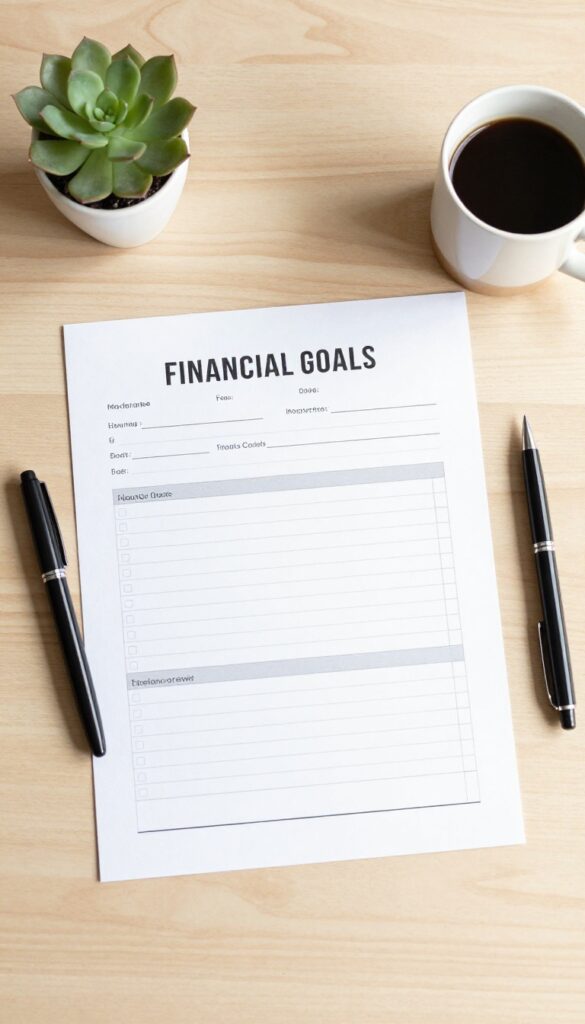
Dreaming about a vacation or a debt-free life feels great, but without a plan, those dreams stay fuzzy. A financial goals worksheet turns your wishes into a clear roadmap. It helps you define what you want, when you want it, and exactly how you'll get there.
This printable is all about breaking big goals into bite-sized steps. You'll list your short-term goals (like saving for a new laptop) and long-term goals (like retirement). Then, for each goal, you assign a deadline and a monthly savings target.
Some worksheets also include a section for tracking progress, so you can see how close you are to crossing each goal off your list.
Start With The Big Picture
First, jot down everything you want to achieve financially over the next year, five years, and beyond. Don't hold back—include travel, debt payoff, home repairs, whatever matters to you. Then prioritize them.
Knowing which goals are most important helps you focus your money where it counts.
Create Actionable Steps
For each goal, break it down into smaller milestones. For example, if you want to save $6, 000 for a trip in two years, that's $250 a month. Write down the monthly amount and set a reminder to review your progress every quarter.
Small, consistent actions add up fast.
Track And Celebrate Progress
Use the worksheet to check off milestones as you hit them. Seeing your progress in black and white is incredibly motivating. And when you reach a goal—even a small one—take a moment to celebrate.
That positive reinforcement keeps you going for the next one.
20. Credit Card Payment Tracker
Juggling multiple credit cards can feel like a circus act—different due dates, varying minimum payments, and balances that creep up if you're not careful. A dedicated credit card payment tracker printable puts everything in one place so you never miss a payment or get hit with a late fee. It's a simple way to stay on top of your revolving debt and protect your credit score.
This printable helps you log each card's details, track payment history, and plan ahead. It's especially useful if you're working on paying down debt or just want to avoid surprises.
What To Track
List each card's name, credit limit, current balance, minimum payment, and due date. Leave space to note the actual payment you make and the date you send it. Over time, you'll spot patterns—like which cards you rely on most or where you tend to overspend.
How To Use It Weekly
Set a recurring reminder to update your tracker every Sunday evening. Check that all payments are scheduled or sent, and note any new charges. This five-minute habit keeps you aware of your total credit utilization and ensures you never miss a deadline.
Bonus: Payoff Strategy
If you're tackling debt, add a column for your payoff goal—whether it's the avalanche method (highest interest first) or snowball (smallest balance first). Seeing progress in print can be incredibly motivating and helps you stick with the plan.
21. Tax Deduction Log
Tax season doesn't have to mean scrambling for receipts or guessing what you spent. A dedicated tax deduction log helps you track deductible expenses as they happen, so when April rolls around, you're ready to file with confidence. This simple printable can save you money and stress, especially if you freelance, run a side hustle, or have medical or charitable expenses.
A tax deduction log is a printable sheet where you record each deductible expense throughout the year. Common categories include medical bills, charitable donations, business supplies, mileage, and home office expenses. By jotting down the date, amount, category, and a brief note, you build a clear record that makes tax prep straightforward.
No more digging through bank statements or guessing whether you hit that deduction threshold.
What To Include
Your log should have columns for date, expense description, category, amount, and any notes (like receipt location or payment method). Add a row for each expense as it occurs. Keep the log in your budget binder or a dedicated tax folder so it's always handy.
How To Use It Year-round
Set a recurring reminder—weekly or monthly—to update your log. Pair it with a receipt scanning app for backup. At year-end, total each category and compare with IRS guidelines.
This habit turns tax time from a panic into a simple data entry task.
Who Benefits Most
Freelancers, gig workers, small business owners, and anyone with significant medical or charitable expenses will find this log invaluable. Even employees who itemize deductions can benefit. It's also great for tracking job-search expenses or educator supplies.
22. Monthly Expense Breakdown
When the month wraps up, do you ever wonder where all your money went? A monthly expense breakdown printable gives you the answer. It's a simple spreadsheet-style page where you list every single expense by category—groceries, dining out, subscriptions, you name it.
By totaling each category, you get a crystal-clear snapshot of your spending habits. This isn't about judging yourself; it's about understanding your patterns so you can make smarter choices next month.
Grab your receipts, bank statements, or budgeting app data and set aside 20 minutes at month-end. On your printable, write down every expense under the right category. Then add up each column and compare the totals to your budgeted amounts.
Notice where you went over or under. Use that insight to adjust your budget for the coming month—maybe you need to cut back on takeout or allocate more for gas.
Categorizing Like A Pro
Don't just lump everything into 'Miscellaneous. ' Break it down into meaningful groups: Housing, Utilities, Groceries, Transportation, Entertainment, Health, Debt Payments, Savings, and Personal Care. The more specific you are, the easier it is to spot trends. For example, you might realize your 'Entertainment' category is eating up more than you thought.
Spotting Surprises And Leaks
A breakdown often reveals hidden leaks—small recurring charges you forgot about, like a streaming subscription you never use or an app fee. It also highlights pleasant surprises, like spending less on dining out than you feared. Use this info to cancel what you don't need and celebrate what's working.
23. Budget Binder Cover & Dividers
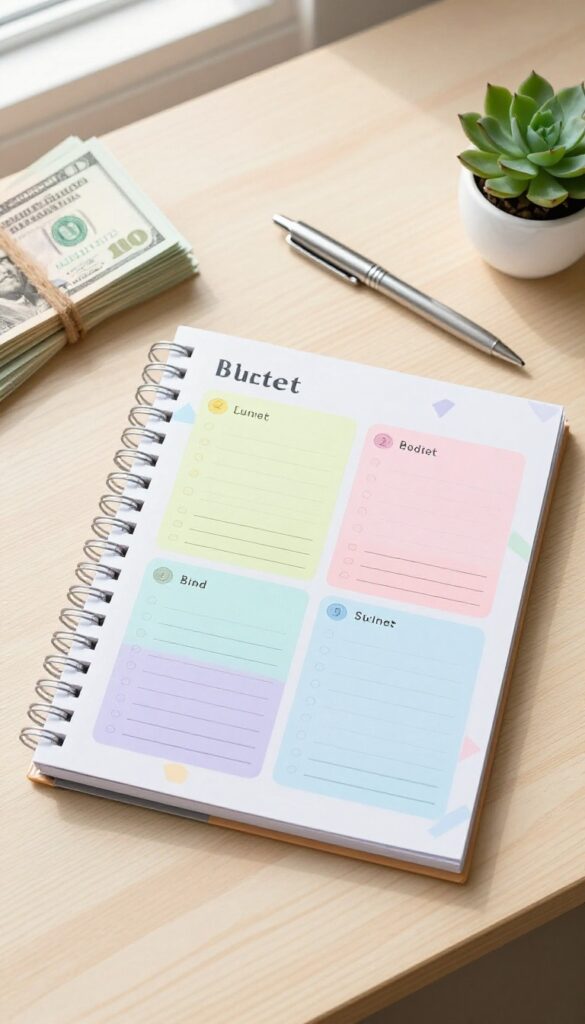
A budget binder brings all your printables together in one place, but without a little structure, it can quickly turn into a messy pile of papers. That's where a custom cover and dividers come in. They turn a simple binder into a tool you actually enjoy opening.
Think of your binder cover as the front door to your financial life. A design that feels personal—whether it's a calming pattern, a motivational quote, or a simple minimalist layout—sets the tone every time you sit down with your budget. Dividers take it further by separating categories like bills, savings, debt tracking, and monthly overviews.
No more flipping through every page to find what you need. You can print pre-made divider templates or create your own using a free design tool. Label each tab clearly, and consider adding a small pocket page for receipts or loose notes.
The result is a binder that's both functional and visually pleasing.
Cover Design Ideas
Your cover should reflect your style. Try a simple geometric pattern, a watercolor wash, or a bold typography with your name or a money mantra. Keep it clean so it doesn't distract from the contents.
If you're sharing the binder with a partner, choose something neutral you both like.
Divider Categories That Work
Standard dividers include: Monthly Budget, Bills & Due Dates, Savings Goals, Debt Tracker, and Expense Log. You can also add a section for annual planning or financial notes. Use tabbed dividers so you can flip directly to the right section without searching.
Extra Touches For Easy Use
Add a clear pocket on the inside front cover for a to-do list or a quick reference card. Use page protectors for frequently used sheets like your monthly budget template. A three-hole punch makes adding new printables a breeze.
These small upgrades keep your binder organized and ready to use.
FAQ
What are budget printables?
Budget printables are pre-designed sheets you can print at home to track income, expenses, savings, and financial goals. They offer a tangible, no-tech way to manage your money.
Are budget printables free?
Many budget printables are available for free online from personal finance blogs and websites. Some premium designs may cost a few dollars, but there are plenty of free options.
How do I use budget printables effectively?
Pick a few that match your needs, print them out, and fill them in regularly—daily or weekly. Keep them in a binder or folder where you'll see them often to stay consistent.
Can budget printables replace budgeting apps?
They can, especially if you prefer a hands-on approach. Printables offer flexibility and don't require internet access. Many people use both for different purposes.
What's the best budget printable for beginners?
Start with a simple monthly budget overview or a weekly expense tracker. These give you a clear picture without overwhelming detail, making it easier to build the habit.
Conclusion
Budget printables are a simple, effective way to take control of your finances without relying on complicated tools. They bring clarity to your spending, help you set and reach goals, and make money management feel less like a chore. Start with just one or two sheets that address your biggest pain points—whether that's tracking daily expenses or saving for a vacation.
Over time, you can expand your collection and build a routine that sticks. Your future self will thank you.
Free PDF Download
Get the Free Budget Binder Starter Pack
Download simple printable budget sheets to plan your monthly money, track expenses, organize bills, and start building better money habits without feeling overwhelmed.
You’ll get this free PDF plus access to the full Marketerna Save More & Earn More PDF Kit. No spam. Unsubscribe anytime.