21 Personal Budget Ideas for Beginners
Last updated on May 5th, 2026 at 03:41 pm
Starting a budget doesn't have to mean giving up everything you enjoy. The right approach can actually free up money for what matters most, whether that's paying down debt, building savings, or just having a little breathing room. These 21 personal budget ideas are beginner-friendly and designed to fit real life—no complicated spreadsheets or guilt trips required.
Each method targets a different spending habit or savings goal, so you can pick what clicks with your personality. From the classic 50/30/20 rule to fun challenges like the 52-week money challenge, there's something here for everyone.
The best part? Many of these ideas take just minutes to set up.
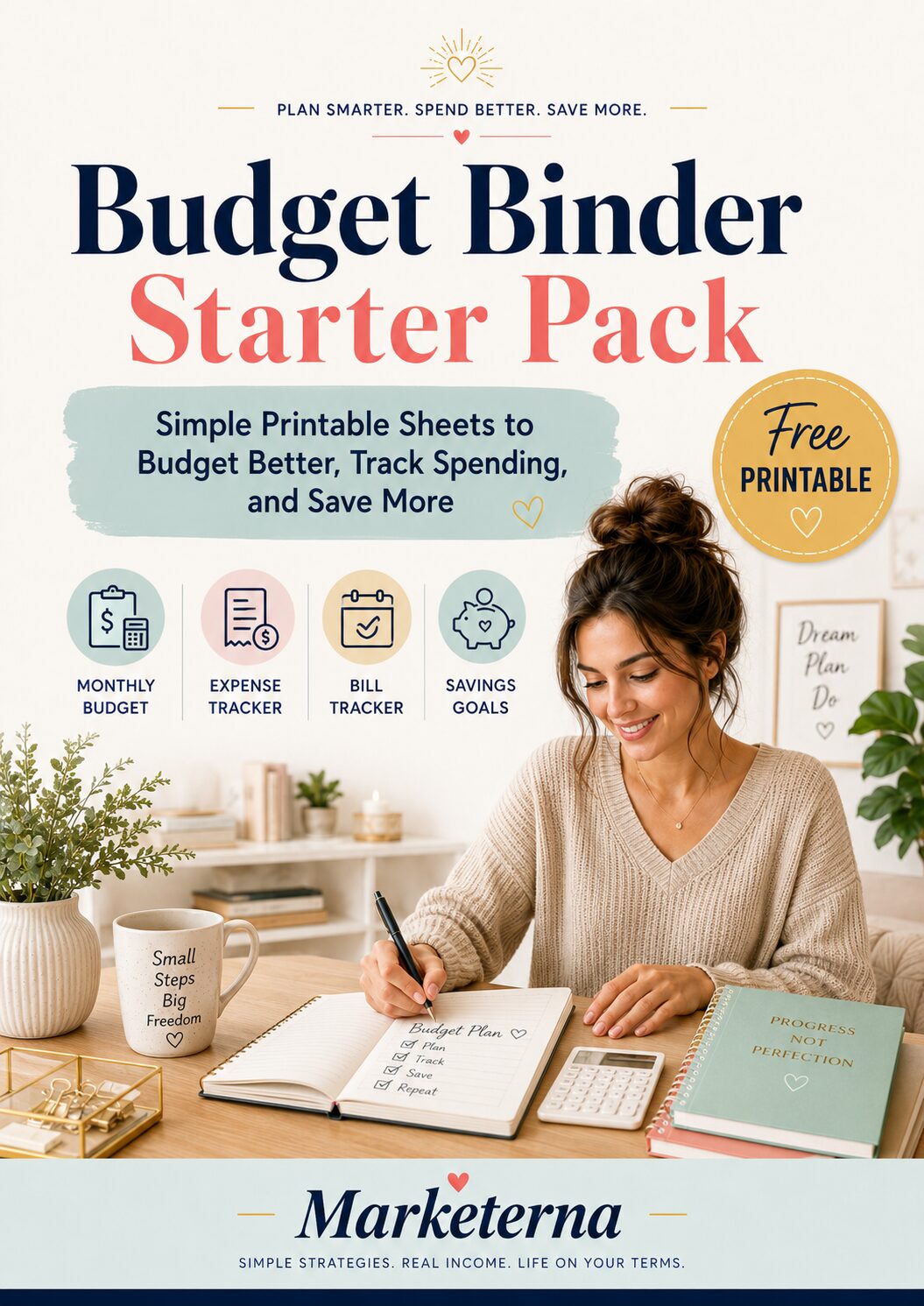
Free PDF Download
Get the Free Budget Binder Starter Pack
Download simple printable budget sheets to plan your monthly money, track expenses, organize bills, and start building better money habits without feeling overwhelmed.
You’ll get this free PDF plus access to the full Marketerna Save More & Earn More PDF Kit. No spam. Unsubscribe anytime.
1. The 50/30/20 Rule

If you're looking for a no-fuss way to start budgeting, the 50/30/20 rule is your best friend. It's a straightforward framework that divides your after-tax income into three categories: needs, wants, and savings. No complicated spreadsheets, no tracking every penny—just a simple percentage split that keeps your finances balanced.
The rule works like this: 50% of your income goes to necessities like rent, groceries, utilities, and minimum debt payments. 30% is for wants—dining out, streaming subscriptions, hobbies, and travel. The remaining 20% goes toward savings, investments, and extra debt payments.
It's a flexible system that adjusts as your income changes, making it perfect for beginners.
How To Set It Up
Start by calculating your monthly after-tax income. Then list all your expenses and sort them into needs, wants, and savings. Adjust your spending until it matches the 50/30/20 split.
Use a simple tracking app or a spreadsheet to monitor your progress.
Why It Works For Beginners
The beauty of this rule is its simplicity. You don't need to obsess over every dollar—just keep your categories in check. It gives you permission to spend on fun stuff while still prioritizing savings, which makes it easier to stick with long-term.
Common Pitfalls To Avoid
Be honest about what counts as a need. That daily latte might feel essential, but it's a want. Also, if your needs exceed 50%, you may need to downsize or increase income.
The rule is a guideline, not a straitjacket—adjust it to fit your life.
2. Zero-Based Budgeting
Zero-based budgeting asks you to give every dollar a specific purpose. You start with your income, then subtract all your expenses—bills, groceries, savings, even fun money—until you hit exactly zero. It's not about being broke; it's about being intentional.
No dollar gets to just hang out in your account without a job. This method forces you to plan where every penny goes, which can feel intense at first. But once you get the hang of it, you'll notice mindless spending drops off.
You're no longer wondering where your money went because you already told it where to go.
Zero-based budgeting is a hands-on approach that works best for people who want total control. You'll track every category each month, adjusting as needed. The key is to include savings and fun as line items—this isn't about deprivation.
It's about making your money work for your priorities.
How To Start
List your monthly income at the top. Then write down every expense category you can think of: rent, utilities, groceries, transportation, subscriptions, dining out, savings, debt payments, and even a little fun money. Subtract each category from your income until you reach zero.
If you have money left over, assign it to savings or an extra debt payment.
Tools That Help
You can do zero-based budgeting with pen and paper, a spreadsheet, or an app like YNAB (You Need A Budget) or EveryDollar. These tools make it easy to adjust categories on the fly and see your progress. Many offer free trials, so you can test them out.
Common Pitfalls To Avoid
Don't forget irregular expenses like car repairs or annual subscriptions—add a sinking fund category for those. Also, be realistic with your numbers. If you always spend $50 on coffee, budget $50 instead of $20 and feeling guilty.
The goal is honesty, not perfection.
Free PDF Download
Get the Free Budget Binder Starter Pack
Download simple printable budget sheets to plan your monthly money, track expenses, organize bills, and start building better money habits without feeling overwhelmed.
You’ll get this free PDF plus access to the full Marketerna Save More & Earn More PDF Kit. No spam. Unsubscribe anytime.
3. The Envelope System
This old-school method is perfect if you tend to overspend with cards. You withdraw cash for variable categories like groceries, dining out, and entertainment. Once the envelope is empty, you stop spending in that category.
It's simple, visual, and forces you to prioritize.
How It Works
Label envelopes for each flexible budget category. Withdraw the budgeted amount in cash and place it in the corresponding envelope. Use only that cash for purchases.
When the envelope is empty, you're done—no dipping into other envelopes.
Best Categories To Use
Focus on categories where you tend to overspend: groceries, dining out, entertainment, clothing, and personal care. Fixed bills like rent and utilities are better paid electronically.
Tips For Success
Keep envelopes in a secure place. If you're worried about losing cash, try a digital version using separate bank accounts or apps that mimic the system. Review your spending weekly and adjust amounts as needed.
4. Pay Yourself First
Most people treat savings as whatever is left after bills and spending. Flip that script. Pay yourself first means setting aside money for your future the moment your paycheck arrives—before you pay rent, buy groceries, or grab coffee.
It turns saving into a non-negotiable habit, not an afterthought.
Automate a fixed transfer to a separate savings or investment account on payday. Even $50 per paycheck adds up. Treat this transfer like any other bill: it must be paid.
Over time, you'll adjust your spending to the smaller balance in checking, and your savings will grow without effort.
Start Small, Stay Consistent
If you're new to this, start with an amount that feels almost too easy—maybe 1% of your income. Increase it by 1% every few months. The key is consistency, not the initial amount.
Automate it so you never see the money hit your checking account.
Where To Stash Your Savings
Keep your 'pay yourself first' money in a separate account from your daily checking. A high-yield savings account or a brokerage account for index funds works well. The goal is to make it slightly harder to access so you're not tempted to spend it.
Treat It Like A Bill
Set up an automatic transfer on the same day each month—right after payday. Label it 'Future Me' or 'Freedom Fund' in your banking app. When you see it listed alongside rent and utilities, your brain starts treating it as essential.
Free PDF Download
Get the Free Budget Binder Starter Pack
Download simple printable budget sheets to plan your monthly money, track expenses, organize bills, and start building better money habits without feeling overwhelmed.
You’ll get this free PDF plus access to the full Marketerna Save More & Earn More PDF Kit. No spam. Unsubscribe anytime.
5. The 30-Day Rule

Impulse buys are budget killers. That shiny gadget or trendy jacket feels essential in the moment, but the feeling often fades fast. The 30-day rule puts a simple cooling-off period between you and unnecessary spending.
For any non-essential purchase over a set amount—say $30 or $50—force yourself to wait a full 30 days. Write down the item and the price, then walk away. When the month is up, you'll likely find the urge is gone, or you'll realize it's something you truly want.
This pause alone can save hundreds each year.
Set Your Threshold
Pick a dollar amount that makes sense for your budget. It should be high enough to avoid tracking every coffee, but low enough to catch most impulse buys. Common thresholds are $30, $50, or $100.
Adjust as needed.
Keep A Wishlist
Write down the item, price, and date you first wanted it. After 30 days, review the list. You'll be surprised how many things you've already forgotten.
For the ones you still want, you can budget for them intentionally.
Automate The Reminder
Use a note on your phone, a spreadsheet, or a simple app to track your 30-day items. Set a calendar reminder for 30 days later. When it pops up, you decide if the purchase still makes sense.
6. No-Spend Challenge
Sometimes the best way to reset your budget is to hit pause on spending altogether. A no-spend challenge does exactly that: you pick a set time—maybe a day, a week, or even a month—where you only buy absolute necessities like rent, utilities, and groceries. Everything else gets a hard no.
It sounds extreme, but the results can be eye-opening. You'll quickly see which purchases are truly essential and which are just habits. Plus, the money you save during the challenge can go straight into your savings or debt payoff fund.
The no-spend challenge is a powerful reset button for your finances. It forces you to confront your spending patterns and often reveals surprising waste. Many people find that after a challenge, they naturally spend less because they've broken the impulse-buy cycle.
How To Choose Your Challenge Length
Start small if you're new. A no-spend weekend is a low-pressure way to test the waters. If that feels manageable, try a full week.
For a bigger impact, a month-long challenge can dramatically shift your financial habits. Just be realistic—if a month sounds terrifying, go with a week.
What Counts As A Necessity?
Define your rules upfront to avoid gray areas. Necessities usually include rent/mortgage, utilities, insurance, groceries (basic food, not takeout), transportation to work, and essential healthcare. Everything else—coffee runs, new clothes, streaming subscriptions, eating out—is off-limits.
Write your list down so you don't have to decide in the moment.
Tips To Survive And Thrive
Plan ahead by meal prepping and canceling any tempting subscriptions for the duration. Tell friends and family you're doing the challenge so they don't invite you to expensive outings. Keep a list of free activities you enjoy, like hiking, reading, or movie nights at home.
Track your progress and celebrate small wins along the way.
7. The $1 Savings Challenge
If saving a big chunk of money feels intimidating, start with just a dollar. The $1 Savings Challenge turns saving into a daily habit that grows slowly—so you barely notice the money leaving your account. By the end of the year, you'll have built a nice little nest egg without the pain of a huge monthly goal.
Here's how it works: Day one, save $1. Day two, save $2. Keep adding a dollar each day.
On day 365, you'll put away $365. Add it all up and you've saved $667. 95.
The trick is the gradual increase—your budget adjusts naturally, and you never feel a big pinch.
How To Get Started
Grab a jar or open a separate savings account. Each day, transfer the corresponding amount. Use a simple checklist or a savings tracker app to keep tabs.
Set a daily reminder on your phone so you don't forget.
Make It Easier
Automate the transfers. Many banks let you set up recurring transfers that increase by $1 each day. If that's too complex, do it weekly: week one save $7, week two save $14, and so on.
You'll still end up with the same total.
What To Do With The Money
This challenge is perfect for a specific goal—like a holiday fund, an emergency cushion, or a guilt-free splurge. Decide ahead of time where the money will go, and watch it grow.
8. 52-Week Money Challenge
Saving money can feel overwhelming when you think about big numbers. The 52-week money challenge breaks it down into tiny, weekly steps that add up without much pain. You start small and gradually increase your savings as the year goes on, making it perfect for beginners who want to build a habit.
The concept is simple: save $1 during week one, $2 during week two, and keep adding a dollar each week. By week 52, you'll put away $52, and your total for the year will be $1, 378. That's a nice chunk of change for an emergency fund, a vacation, or holiday gifts.
Adjust The Amounts
If $1, 378 feels too high or too low, tweak the numbers. Try saving $0. 50 the first week and increasing by $0.
50, or double it if you're feeling ambitious. The key is consistency, not the exact dollar amount.
Track Your Progress
Print a 52-week chart or use a savings app to check off each week. Seeing those checkmarks grow is surprisingly motivating. You can also stash the cash in a jar or a separate account to avoid temptation.
Make It Fun
Turn it into a game with a friend or partner. Challenge each other to stick with it and celebrate when you hit milestones like week 26. A little friendly competition can keep you on track.
9. Cash-Only Weekends

Plastic money makes spending too easy. Swipe, tap, and suddenly you've blown through your weekend budget without really noticing. Cash-only weekends flip that script by forcing you to work with a physical limit.
Hand over your cards on Friday evening and take out a set amount of cash for the entire weekend. When it's gone, it's gone. This simple trick builds mindfulness and naturally caps your spending without complicated tracking.
Cash-only weekends are a powerful reset button for impulse spenders. The tactile act of handing over bills makes each purchase feel more real than tapping a card. Plus, you'll quickly learn which weekend habits actually matter to you.
How To Start
Pick a weekend and withdraw a reasonable amount—say $40 for a single person or $80 for a couple. Leave all debit and credit cards at home or in a drawer. Use only that cash for everything: coffee, groceries, takeout, entertainment.
If you run out, you're done spending until Monday.
Why It Works
Cash creates a hard boundary. You can't overspend because there's simply no more money. It also reveals your true priorities—you'll quickly see what you're willing to spend on versus what was just an impulse.
Make It A Habit
Try one cash-only weekend per month. Over time, you'll build awareness and naturally spend less even when you do use cards. Some people enjoy it so much they switch to cash-only weeks.
10. The Spare Change Round-Up
Ever notice how a few cents here and there just vanish? The spare change round-up turns those invisible pennies into real savings. It's one of the easiest ways to save without thinking about it.
Apps like Acorns or Qapital link to your debit or credit card and round up each purchase to the nearest dollar. The difference goes straight into a savings or investment account. A $4.
50 coffee becomes $5. 00, and that extra $0. 50 adds up fast.
Over a month, you might save $20–$30 without even noticing.
Set It And Forget It
Once you link your card, the app does all the work. You don't have to remember to transfer money or change your spending habits. It's passive saving at its best.
Watch The Drip Grow
Those tiny round-ups can snowball. Some apps let you multiply the round-up (like 2x or 10x) for faster growth. Even without multipliers, a year of spare change could fund a small emergency fund or a nice treat.
No Budget Overhaul Needed
You don't have to cut anything or track every penny. The round-up just skims a little off the top of your normal spending. It's perfect for beginners who want to save without the hassle.
11. Automated Bill Pay
Late fees are a budget killer—and they're totally avoidable. Setting up automatic payments for your fixed bills (rent, utilities, subscriptions) takes the guesswork out of due dates and keeps your credit score safe. Plus, it frees up mental energy you'd otherwise spend tracking deadlines.
Automation isn't just for tech geeks. It's a simple way to make sure your money goes where it needs to go before you have a chance to spend it on something else. Just set it and forget it—but do keep an eye on your account balance.
Which Bills To Automate
Start with non-negotiables: rent/mortgage, utilities, insurance, and loan payments. Subscription services (streaming, gym) are also easy to automate. Avoid automating variable bills like credit cards unless you pay the full statement balance each month.
Avoiding Overdrafts
The biggest risk with autopay is insufficient funds. Schedule payments for right after payday, or keep a small buffer in your checking account. Most banks let you set low-balance alerts, so you'll know before a payment bounces.
Review And Adjust Regularly
Automation isn't a set-it-and-forget-it forever thing. Every few months, check your automated payments to make sure you're still using those services and that amounts are correct. Cancel anything you no longer need.
12. The 24-Hour Rule
Impulse buys are budget kryptonite. The 24-Hour Rule is a simple trick that puts a speed bump between you and unnecessary spending. For any non-essential online purchase, add it to your cart and then walk away.
Wait a full day before clicking buy. You'll be surprised how many things you no longer want.
This rule works because it disrupts the emotional high of finding something new. That rush fades fast. After 24 hours, your rational brain takes over, and most items feel less urgent.
It's a low-effort way to cut down on spontaneous purchases without feeling deprived.
Why The Wait Works
The urge to buy is often tied to dopamine, not need. Waiting lets that chemical spike settle. Studies show that most impulse purchases are forgotten within a day.
By then, you've likely moved on, and your wallet stays intact.
How To Make It Stick
Set a specific time for your 24-hour timer—maybe right after dinner. When you add something to your cart, note the date and time. If you still want it the next day, consider if it fits your budget.
If not, remove it. No guilt.
When To Break The Rule
The 24-Hour Rule isn't for emergencies or essentials. If you're out of toothpaste or need a last-minute gift, buy it. But for that cute sweater or new gadget?
Wait. You might find you didn't need it after all.
13. Category-Specific Budgets

If you have a spending category that always throws your budget off track, it's time to give it its own rulebook. Instead of lumping everything into one big spending limit, create a mini-budget just for that trouble spot. This way, you can still enjoy the things you love without blowing your whole financial plan.
Category-specific budgets work because they force you to make conscious choices. When you know you only have $50 for dining out this month, you'll think twice before ordering takeout. It's not about restriction—it's about making your money last where it matters most.
Identify your biggest spending leaks first. Look at the last few months of bank statements and pick one or two categories where you consistently overspend. Common culprits include eating out, entertainment, groceries, and online shopping.
Then set a firm monthly cap for each category and treat it like a non-negotiable limit. Use cash envelopes or a budgeting app to track it in real time. If you hit the cap early, you're done for the month—no exceptions.
This builds discipline and helps you see exactly where your money goes.
Pick Your Problem Areas
Not every category needs a separate budget. Focus on the ones that cause the most stress or overspending. For many beginners, that's dining out, entertainment, or impulse buys.
Choose no more than three categories to start so you don't overwhelm yourself.
Set Realistic Caps
Your caps should be tight but doable. Look at what you've spent in the past and cut it by 10–20% to start. If you usually spend $200 on restaurants, try $160.
Adjust as you go—the goal is progress, not perfection.
Track And Adjust Monthly
Check your category spending weekly. If you keep hitting the cap early, either your cap is too low or the category needs more attention. Don't be afraid to tweak the numbers.
Over time, you'll find a balance that works.
14. The Anti-Budget
Not everyone thrives on spreadsheets and categories. If tracking every dollar makes you want to give up entirely, the anti-budget might be your perfect fit. The idea is simple: automate your savings and essential bills, then spend whatever is left with zero guilt.
This method works best for people who have a steady income and are generally disciplined with spending. You set up automatic transfers to savings and investment accounts as soon as your paycheck hits. Then, you pay your recurring bills automatically.
Whatever remains is yours to spend freely—no tracking, no limits, no shame.
Set Your Automation First
Start by calculating your fixed monthly expenses and savings goals. Then automate those amounts to move to separate accounts on payday. This ensures your priorities are handled before you even see the money.
Know Your Baseline
The anti-budget only works if you have a rough idea of your spending patterns. Track your expenses for a month or two to see how much you typically spend on fun stuff. Then set your automation so that your leftover spending money matches that number.
Check In Occasionally
Even with an anti-budget, it's smart to review your finances every few months. Make sure your automated amounts still align with your goals. If you're not saving enough, adjust the automation, not your spending.
15. Use a Budgeting App
If you're not a spreadsheet person, a budgeting app can be a game-changer. These tools sync with your bank accounts, credit cards, and loans to automatically categorize your spending. No manual entry, no math, no excuses.
Set It And Forget It
Once you link your accounts, the app does the heavy lifting. Transactions get sorted into categories like groceries, dining out, or utilities. You can check your spending anytime with a glance at your phone.
Pick The Right One
YNAB (You Need A Budget) is great for proactive budgeting. Mint offers a free, all-in-one dashboard. EveryDollar follows a zero-based budget approach.
Try a few free trials to see which interface clicks with you.
Use Alerts To Stay On Track
Most apps let you set spending limits per category and send alerts when you're close to exceeding them. That nudge can stop an overspend before it happens.
16. The 80/20 Rule
If micromanaging every dollar sounds exhausting, the 80/20 rule is your style. You save 20% of your income automatically and spend the other 80% freely—no tracking, no guilt. It's budgeting for people who want results without the daily grind.
The 80/20 rule, also called the “pay yourself first” method, flips traditional budgeting on its head. Instead of tracking expenses and hoping to save what's left, you prioritize savings upfront. Set up an automatic transfer to your savings or investment account on payday.
Then, spend the rest on whatever you need or want. No categories, no spreadsheets, no stress. The key is making that 20% non-negotiable.
If you can't hit 20% yet, start with 10% or 5% and increase over time. The habit matters more than the number.
Why It Works For Beginners
Most budgets fail because they're too complicated to maintain. The 80/20 rule removes the friction. You only have one rule: save first, spend later.
It's forgiving—if you overspend one month, you don't need to rebalance categories. Just make sure your savings transfer happens before you touch the rest.
How To Automate It
Set up a direct deposit from your paycheck into a separate savings account, or schedule a recurring transfer on payday. Many banks let you split your deposit automatically. Out of sight, out of mind.
Over time, your savings grow without you lifting a finger.
When To Level Up
Once the 20% savings feels easy, consider bumping it to 25% or 30%. Or combine the 80/20 rule with a simple spending check-in once a month to spot any big leaks. But even if you never do more, this one habit can transform your finances.
17. Sinking Funds
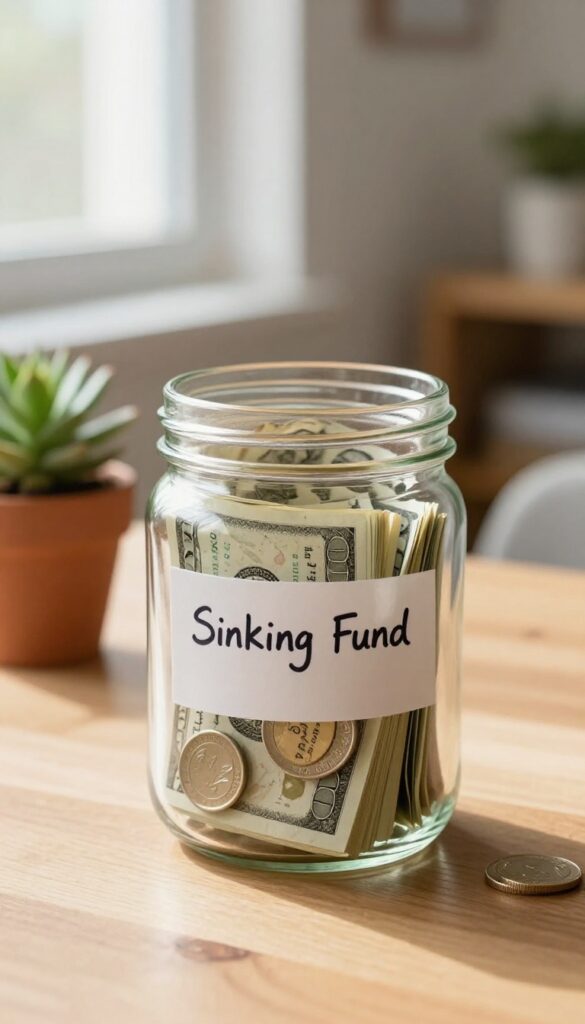
Predictable irregular expenses can wreck a budget if you're not ready for them. A sinking fund is a simple way to set aside a little each month so you're covered when car repairs, holidays, or insurance premiums roll around. It turns a potential budget bomb into a manageable, planned expense.
How It Works
Figure out the total cost of an upcoming expense and divide it by the number of months until you need it. For example, if your car insurance is $600 every six months, save $100 per month. Put that money in a separate savings account or a labeled envelope so you don't accidentally spend it.
Common Sinking Fund Categories
Popular sinking funds include car maintenance, annual subscriptions, holiday gifts, and medical copays. You can also use them for bigger goals like a vacation or a new phone. The key is to identify expenses that come up once or twice a year and plan for them ahead of time.
Automate For Success
Set up automatic transfers from your checking account to a dedicated sinking fund account each payday. Even $25 per week adds up fast. Automating removes the temptation to skip a month and ensures you're always building toward your next predictable expense.
18. The Debt Snowball
Debt can feel like a heavy weight, but the debt snowball method turns paying it off into a game you can win. Instead of tackling everything at once, you focus your energy on one small victory at a time. The result?
Quick wins that keep you motivated.
List all your debts from smallest to largest, ignoring interest rates for now. Pay the minimum on every debt except the smallest one. Throw every extra dollar you can find at that smallest debt until it's gone.
Then roll that payment amount into the next smallest debt. Each time you knock one out, your payment snowball grows bigger and faster.
Why Small Debts First?
The magic is psychological. Paying off a $50 medical bill or a $200 credit card feels amazing. That rush of accomplishment keeps you going when the bigger debts feel far away.
You build momentum with every win, which makes it easier to stick with the plan long-term.
How To Start Today
Grab a list of all your debts—credit cards, student loans, car payments, personal loans. Sort them by balance, smallest to largest. Pick one extra source of cash, like a side gig or a trimmed subscription, and aim it at the smallest balance.
Set up automatic minimum payments for everything else so you don't slip up.
What If Interest Rates Are High?
The debt snowball ignores interest rates on purpose. Yes, you might pay a bit more in interest compared to the debt avalanche method. But for most people, the behavioral boost outweighs the math.
If you're disciplined enough to stick with the avalanche, go for it. But if you need motivation, snowball is your friend.
19. The Debt Avalanche
If you're juggling multiple debts and want to save the most money in interest, the debt avalanche method is your best friend. Instead of spreading payments thin, you focus extra cash on the debt with the highest interest rate first. It's not as emotionally rewarding as the snowball method, but mathematically it's the clear winner.
With the debt avalanche, you pay minimums on everything except the highest-interest debt. Any extra money goes straight to that balance. Once it's gone, you roll those payments to the next highest-rate debt.
Over time, you'll pay less interest and get out of debt faster.
Why It Works
High-interest debt costs you more per dollar borrowed. By attacking it first, you reduce the total interest you'll pay over the life of your debts. It's the most efficient path to becoming debt-free.
How To Get Started
List all your debts with their balances and interest rates. Sort them from highest to lowest rate. Keep paying minimums on all but the top one, and throw every extra dollar you can at that highest-rate debt until it's gone.
Who It's Best For
This method works well if you're disciplined and motivated by numbers. If you need quick wins to stay motivated, the debt snowball might be a better fit. But if you want to save the most money, avalanche is the way to go.
20. Bi-Weekly Payment Plan
If your bills feel like they arrive all at once, splitting them into bi-weekly payments can smooth out your cash flow. Instead of paying your mortgage or car loan once a month, you pay half every two weeks. Over the course of a year, that adds up to one extra full payment—without feeling the pinch.
The bi-weekly payment plan is a simple scheduling trick. By paying half your monthly bill every two weeks, you make 26 half-payments, which equals 13 full payments per year. That extra payment goes straight to principal, cutting down your loan term and saving you interest.
Many lenders allow this automatically, but you can also do it yourself by dividing your monthly payment in half and setting up a separate account to hold the funds until the due date.
How It Works
Take your monthly mortgage or loan payment and split it in half. Pay that amount every two weeks instead of once a month. Since there are 52 weeks in a year, you'll make 26 half-payments, which equals 13 full payments.
The extra payment reduces your principal faster.
Setting It Up
Check with your lender if they offer a bi-weekly payment program. Some charge a small fee, but you can also do it yourself manually. Just divide your payment by two and transfer that amount to a savings account every two weeks.
Then make your regular monthly payment from that account.
Who It Helps Most
This method works best for people with steady paychecks every two weeks. It aligns with your income schedule and forces you to budget with half the payment in mind. If you get paid bi-weekly anyway, the timing is natural.
21. Budget Review Sundays

Consistency is the secret weapon of successful budgeting, but daily tracking can feel like a chore. Enter Budget Review Sundays: a low-effort weekly ritual that keeps your finances on track without the daily grind. Spend just 15 minutes every Sunday reviewing what you spent and planning the week ahead.
It's a small time investment that pays off in clarity and control.
Pick a time that works for you—Sunday morning with coffee or Sunday evening while winding down. Open your budgeting app, spreadsheet, or notebook. Look at the past week's spending: did you stick to your categories?
Where did you go over? No judgment, just awareness. Then glance at the upcoming week: any bills due, events, or irregular expenses?
Adjust your spending plan accordingly. That's it. Over time, this habit builds a clear picture of your money flow and helps you catch drift before it becomes a problem.
What To Review
Focus on three things: your spending by category, any unexpected expenses, and your progress toward savings goals. Don't obsess over every penny—just note patterns. Did you eat out more than planned?
Did that subscription you forgot about renew? This quick scan highlights where your budget needs tweaking.
Plan Ahead
After reviewing, look at the next seven days. Check your calendar for events, appointments, or travel that might affect spending. Pre-plan meals to avoid takeout temptations.
Set a spending limit for the week in categories that tend to slip. A little foresight prevents impulse buys and keeps your budget intact.
Keep It Simple
Don't turn this into a hours-long deep dive. Set a timer for 15 minutes. If you finish early, great.
If you need more time, stick to the basics and move on. The goal is consistency, not perfection. A short weekly check-in is far more sustainable than daily tracking that you'll abandon after two weeks.
FAQ
What is the best budgeting method for a complete beginner?
The 50/30/20 rule is often the easiest to start with because it's simple and doesn't require tracking every penny. You just split your income into three broad categories.
How much should I save each month as a beginner?
Aim for at least 20% of your income, but even 10% is a good start. The key is consistency, not the amount.
Do I need a budgeting app to manage my money?
No, but apps can make it easier. Many people succeed with pen and paper or a simple spreadsheet. Choose what feels comfortable.
How do I stick to a budget when I have irregular income?
Focus on your essential expenses first, then save a percentage of any extra income. A zero-based budget works well for variable income.
What should I do if I overspend in a category?
Don't panic. Adjust by cutting back in another category or rolling over the overspend into next month. The goal is progress, not perfection.
Conclusion
You don't need to overhaul your entire financial life overnight. Pick one or two ideas from this list that actually sound doable—maybe the cash envelope system or a no-spend weekend—and give them a try for 30 days. That small win will build momentum and show you that budgeting isn't about restriction.
It's about making your money work for the life you want. Start small, stay consistent, and watch your confidence grow.
Free PDF Download
Get the Free Budget Binder Starter Pack
Download simple printable budget sheets to plan your monthly money, track expenses, organize bills, and start building better money habits without feeling overwhelmed.
You’ll get this free PDF plus access to the full Marketerna Save More & Earn More PDF Kit. No spam. Unsubscribe anytime.