21 Budgeting Tips for Beginners on a Low Income
Last updated on May 5th, 2026 at 03:43 pm
Budgeting on a low income can feel like trying to squeeze water from a stone. But with the right approach, you can make every dollar work harder for you. This isn't about deprivation—it's about smart choices that build momentum.
You don't need a finance degree or a high salary to take control of your money. Small, consistent habits often beat big, dramatic changes. The goal is progress, not perfection.
Let's walk through 21 practical tips that respect your current reality. No judgment, no fluff—just real strategies that have worked for others in similar situations.

Free PDF Download
Get the Free Budget Binder Starter Pack
Download simple printable budget sheets to plan your monthly money, track expenses, organize bills, and start building better money habits without feeling overwhelmed.
You’ll get this free PDF plus access to the full Marketerna Save More & Earn More PDF Kit. No spam. Unsubscribe anytime.
1. Track Every Dollar for One Month

Before you can budget, you need to know where your money goes. Use a simple notebook or free app to log every expense for 30 days. This reveals spending patterns and hidden leaks.
Tracking every dollar might sound tedious, but it's eye-opening. You'll likely spot small expenses that add up fast—like daily coffee runs or unused subscriptions. Once you see the numbers, you can make informed cuts without feeling deprived.
Why A Full Month?
A single week can be misleading due to irregular expenses like gas or groceries. A full month captures your true spending rhythm, including occasional bills and splurges.
Tools That Make It Easy
You don't need fancy software. A pocket notebook works fine. For digital options, try free apps like Mint or EveryDollar.
The key is consistency—log expenses daily, not from memory.
What To Look For
After 30 days, categorize your spending (housing, food, transport, etc. ). Look for patterns: Are you overspending on takeout? Paying for a gym you don't use?
These are your budget leaks.
2. Use the 50/30/20 Rule as a Starting Point
If you're new to budgeting, the 50/30/20 rule is a simple framework that doesn't require a spreadsheet. It splits your after-tax income into three buckets: 50% for needs, 30% for wants, and 20% for savings or debt. The beauty is that it's flexible—you can adjust the percentages to fit your reality without feeling like you're failing.
This rule gives you a clear, guilt-free way to allocate your money. Needs include rent, utilities, groceries, and minimum debt payments. Wants cover dining out, streaming services, and hobbies.
Savings or debt goes toward emergency funds, retirement, or extra payments. The key is to start somewhere—even if you can only save 5% right now, that's a win.
Why 50/30/20 Works For Low Income
It's forgiving. You don't need to track every penny—just categorize your spending into three broad groups. This reduces the overwhelm of detailed budgeting.
Plus, it forces you to prioritize needs while still allowing room for fun, which makes the budget sustainable.
How To Adjust The Percentages
If your rent eats up more than 50% of your income, tweak the rule. Maybe 60/20/20 or 50/20/30 works better. The goal is to find a balance that covers your essentials and still leaves something for savings.
Even a small emergency fund can prevent a crisis.
A Real-world Example
Say you bring home $1, 800 a month. That means $900 for needs, $540 for wants, and $360 for savings. If your rent is $700, you have $200 left for other needs like groceries and utilities.
Adjust as needed—the rule is a guide, not a law.
Free PDF Download
Get the Free Budget Binder Starter Pack
Download simple printable budget sheets to plan your monthly money, track expenses, organize bills, and start building better money habits without feeling overwhelmed.
You’ll get this free PDF plus access to the full Marketerna Save More & Earn More PDF Kit. No spam. Unsubscribe anytime.
3. Prioritize Your 'Four Walls'
When money is tight, your first job is to protect the basics. Dave Ramsey calls them the 'Four Walls': food, utilities, shelter, and transportation. These are the non-negotiables that keep you safe, fed, and able to earn income.
Everything else—streaming services, eating out, new clothes—comes after these are covered. This simple priority system prevents you from accidentally spending rent money on takeout.
Start by listing your actual costs for each of the four walls. Then, before you allocate a single dollar to anything else, make sure those are funded. If there's not enough to go around, look for ways to reduce these costs first—like a cheaper phone plan or a more fuel-efficient route to work.
What Are The Four Walls?
Food: groceries, not restaurants. Utilities: electricity, water, gas, internet (if needed for work). Shelter: rent or mortgage, property taxes, insurance.
Transportation: car payment, gas, bus pass, or bike maintenance. These are the pillars that support your daily life.
How To Apply This On A Low Income
Write down the minimum amount you need for each wall each month. Pay those first—automate if possible. Then, with whatever is left, you can budget for debt, savings, and fun.
If you're short, cut back on variable walls like food (buy in bulk, cook from scratch) or transportation (carpool, work from home).
Why This Works
It removes the guesswork. You're not trying to balance 20 categories at once. You're just making sure the roof stays over your head and you have food on the table.
Once that's stable, you can breathe and tackle the rest.
4. Embrace Cash Envelopes for Variable Expenses
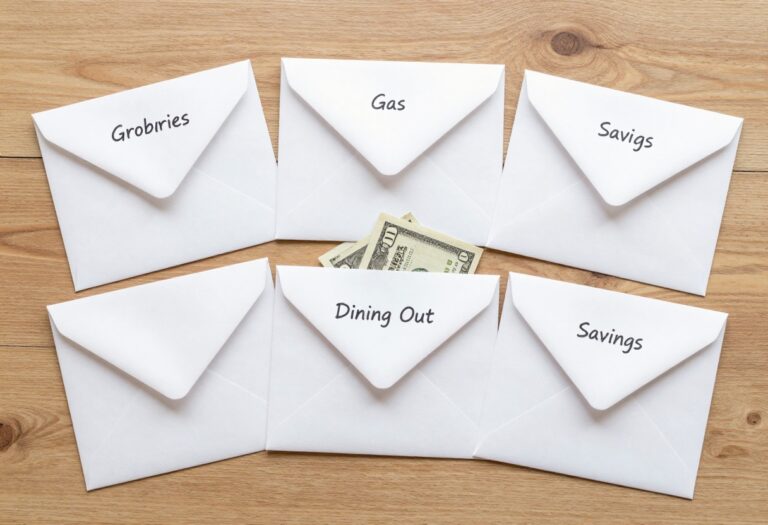
Digital payments make it easy to overspend—swipe and forget. The cash envelope system brings back a physical limit. You withdraw a set amount for categories like groceries or dining out, and when the envelope is empty, you stop.
No exceptions.
This method works because it taps into the pain of losing cash. Handing over bills feels more real than tapping a card. It also forces you to prioritize: if the envelope is low, you skip the latte or buy generic brands.
How To Set It Up
List your variable expenses—things that change month to month. Common ones: groceries, eating out, entertainment, personal care. Decide a realistic amount for each.
Withdraw that cash from your bank and split it into labeled envelopes. Keep them somewhere safe but accessible.
Sticking To The Limits
Once the envelope is empty, that category is done for the month. No borrowing from another envelope unless it's an emergency. This discipline teaches you to plan ahead and avoid impulse buys.
Over time, you'll naturally spend less.
When Cash Isn't Practical
Some expenses, like online bills or gas, don't work well with cash. Use a separate debit card or prepaid card for those. Or keep a digital envelope in a budgeting app.
The principle stays the same: set a limit and don't exceed it.
Free PDF Download
Get the Free Budget Binder Starter Pack
Download simple printable budget sheets to plan your monthly money, track expenses, organize bills, and start building better money habits without feeling overwhelmed.
You’ll get this free PDF plus access to the full Marketerna Save More & Earn More PDF Kit. No spam. Unsubscribe anytime.
5. Automate Small Savings Transfers

Saving when you're on a low income often feels impossible—there's never anything left at the end of the month. But what if you could save without even thinking about it? Automation takes willpower out of the equation.
By setting up tiny, regular transfers, you build a safety net without the mental struggle.
The key is to start absurdly small. Think $5 or $10 per week—an amount so low you won't miss it. Over a year, that's $260 to $520, which can cover an emergency car repair or a medical copay.
The habit matters more than the amount.
Choose Your Trigger
Pick a day that aligns with your pay cycle. If you get paid weekly, set the transfer for the day after payday. If monthly, schedule it right after rent and bills are paid.
The goal is to move money before you have a chance to spend it.
Pick The Right Account
Use a separate savings account—preferably one that's not linked to your debit card. Out of sight, out of mind. Many banks let you nickname accounts, so call it "Emergency Fund" or "Peace of Mind" to reinforce the purpose.
Increase Gradually
Once the small transfer feels routine, bump it up by a dollar or two. Do this every few months. You'll barely notice the increase, but your savings will grow faster.
This slow ramp-up prevents the shock of a big jump.
6. Cut One Subscription Immediately
Subscriptions sneak up on you. That $9. 99 streaming service, the $14.
99 app, the $19. 99 box—each seems harmless alone. But together, they can drain $50–$100 from your monthly budget without you noticing.
The fix is simple: pick one and cancel it today. That single move puts real cash back in your pocket.
Small recurring charges add up fast. One subscription might cost $120–$240 a year. That's money that could go toward groceries, debt, or savings.
By cutting just one, you free up cash without changing your lifestyle much. And once you start, you'll likely find more you can live without.
Audit Your Subscriptions
List every subscription you pay for—streaming, apps, boxes, software, gym memberships. Check your bank statements or app store history. You might find services you forgot about or barely use.
Pick The Weakest Link
Which one gives you the least value? Maybe it's a streaming channel you haven't opened in months, or a box that collects dust. Cancel that one first.
You can always resubscribe later if you miss it.
Redirect The Savings
Put that $10–$20 right into a savings account or toward a debt payment. Seeing the difference will motivate you to keep cutting. Even small wins build momentum.
7. Plan Meals Around Sales and Staples
Grocery shopping can eat up a huge chunk of your budget if you're not strategic. The good news? You don't have to sacrifice taste or nutrition to save.
By letting store sales guide your menu and sticking with affordable staples, you can slash your food bill without feeling deprived.
Start by checking weekly flyers from your local grocery stores. Pick two or three proteins and a few vegetables that are on deep discount, then build your meals around those items. Pair them with low-cost staples like rice, beans, lentils, oats, and seasonal produce.
This approach keeps your pantry flexible and your spending predictable.
How To Spot Real Deals
Not all sales are created equal. Unit prices (the cost per ounce or pound) tell you which package is truly cheaper. Also, watch for loss leaders—items like chicken or eggs sold below cost to get you in the door.
Stock up when staples hit rock-bottom prices, but only buy what you'll actually use before it spoils.
Build A Staples Pantry
Keep your kitchen stocked with versatile, long-lasting basics: rice, pasta, canned tomatoes, beans, lentils, flour, oil, and spices. When you have these on hand, you can turn almost any sale item into a full meal. A bag of rice and a can of beans cost pennies per serving and pair with nearly any vegetable or protein.
Sample Meal Plan On A Budget
Let's say chicken thighs are on sale for $1. 29/lb and bell peppers are $0. 79 each.
You could make: stir-fry with rice (Monday), chicken and pepper fajitas with tortillas (Tuesday), and chicken soup with beans and leftover veggies (Wednesday). That's three different dinners from one sale purchase.
8. Use the 'No-Spend Day' Challenge
Money flows out so easily that we barely notice it. A coffee here, a snack there, an online deal that seems too good to pass up. The 'no-spend day' challenge flips that script by giving you a clear rule: spend zero money on certain days.
It sounds simple, but it can reshape how you think about every purchase. Start with one or two days per week. No buying anything—not even a pack of gum.
You'll quickly see which expenses are real needs and which are just habits. Over time, those no-spend days add up to real savings and a stronger sense of control.
The no-spend day challenge is a powerful tool for building financial discipline. By designating specific days where you spend absolutely nothing, you train yourself to pause before every purchase. You'll discover that many things you thought you needed can wait until tomorrow.
This isn't about deprivation—it's about intentionality. Over weeks and months, those saved dollars accumulate, giving you more breathing room in your budget.
How To Start
Pick two days each week that work for your schedule. Maybe Tuesday and Thursday, or Saturday and Sunday. Mark them on your calendar.
On those days, the rule is simple: no spending. That means no coffee runs, no takeout, no online shopping, no vending machine snacks. You can still use money for bills or pre-planned essentials, but avoid impulse buys.
What You'll Learn
After a few weeks, you'll notice patterns. Maybe you reach for your wallet out of boredom or stress. Maybe you realize how often you buy things you don't really need.
The no-spend day isn't just about saving money—it's about changing your relationship with spending. You'll start asking, 'Do I really need this? ' before every purchase.
Make It A Game
Turn it into a challenge with a friend or partner. See who can go the longest without spending. Or reward yourself after a certain number of successful no-spend days—but with a free activity, not a purchase.
The more you practice, the easier it gets, and the more your savings grow.
9. Negotiate Bills and Interest Rates

Most people never question their monthly bills—they just pay them. But many service providers have wiggle room, especially if you've been a loyal customer. A quick phone call can unlock discounts or lower rates that put real cash back in your pocket each month.
Start With Your Biggest Bills
Focus on the services that cost the most: internet, cell phone, cable, insurance, and even credit card interest rates. Call each provider and politely ask if they have any promotions, loyalty discounts, or rate reductions available. Mention competitor offers if you've seen any.
What To Say On The Call
Keep it simple and friendly. Say something like: “I've been a customer for X years and I'm reviewing my budget. Can you help me find a better rate or any current discounts? ” If the first rep says no, ask to speak to the retention or loyalty department.
Follow Up Every 6–12 Months
Companies change promotions often. Set a calendar reminder to repeat the process twice a year. Even a $20 monthly saving adds up to $240 a year—that's a nice emergency fund boost or a guilt-free treat.
10. Build a Tiny Emergency Fund First
Before you start throwing every extra dollar at debt, pause. A small emergency fund of $500 to $1, 000 acts like a financial shock absorber. Without it, one flat tire or urgent vet visit can send you right back to credit card debt.
This tiny cushion is your first line of defense, not a luxury.
Focus on saving $500–$1, 000 before tackling debt. This small buffer prevents you from relying on credit cards when unexpected expenses pop up.
Why $500 To $1,000 Works
That amount covers most common emergencies—car repairs, minor medical bills, or a replacement appliance—without being so large that it takes years to save. It's a realistic goal that gives you breathing room.
How To Get There Fast
Sell something you don't need, pick up a one-time gig, or redirect any windfall like a tax refund or birthday cash. Even $20 a week adds up. The key is to make it a priority until you hit that number.
Protect Your Fund From Yourself
Keep this money in a separate savings account, not your checking account. Label it 'Emergency Only' so you're less tempted to dip into it for non-emergencies. Out of sight, out of mind.
11. Use the '30-Day Rule' for Non-Essentials
Impulse buys are budget killers. That shiny gadget or trendy outfit feels urgent in the moment, but most of the time, the urge fades fast. The 30-day rule gives you a cooling-off period to separate genuine wants from fleeting desires.
Before buying anything non-essential, wait 30 days. If you still want it after a month, consider it. Most impulse urges fade quickly.
This simple pause can save you hundreds of dollars a year and help you focus on what truly matters.
How It Works
When you feel the urge to buy something you don't absolutely need, write it down on a list or note in your phone. Set a reminder for 30 days later. When the time comes, ask yourself: Do I still want this?
Can I afford it without sacrificing my goals? Often, the answer is no.
Why It Works
Our brains are wired to seek instant gratification. Waiting forces you to think rationally instead of emotionally. You'll realize that most wants are temporary.
Plus, you might find a better deal or decide the money is better spent elsewhere.
Tips For Success
Keep your list somewhere visible. Use a notes app or a physical notebook. Share the rule with a friend or partner for accountability.
And remember, this isn't about deprivation—it's about making intentional choices that align with your financial reality.
12. Find Free or Low-Cost Entertainment
Entertainment is one of the first things people cut when money is tight, but you don't have to stay bored. There are plenty of fun, low-cost options that won't blow your budget. The key is knowing where to look and being open to new experiences.
Your Local Library Is A Goldmine
Libraries offer way more than books. Many lend movies, music, video games, and even tools or kitchen gadgets. They also host free events like workshops, storytimes, and movie nights.
All you need is a library card.
Community Events And Park Outings
Check your city's website or social media for free concerts, festivals, and farmers markets. Parks are great for hiking, picnics, or just relaxing. Many cities have free outdoor movie or concert series during warmer months.
Free Museum Days And Cultural Passes
Museums often have free admission days or pay-what-you-can hours. Some libraries even offer passes you can check out for free entry to local attractions. Plan ahead to take advantage of these deals.
13. Sell Unused Items for Quick Cash

You probably have stuff lying around that you haven't touched in months. That old blender, the clothes that don't fit, the electronics gathering dust—they're all potential money. Selling them is one of the fastest ways to get a cash boost without changing your routine.
Start by scanning your home with a critical eye. Anything unused for a year or more is a candidate. Take clear photos, write honest descriptions, and list items on platforms like Facebook Marketplace, Craigslist, or OfferUp.
Price competitively to sell quickly. The extra cash can go straight to savings or debt—just don't let it burn a hole in your pocket.
Where To Sell
Facebook Marketplace is great for bulky items because local buyers can pick up. Craigslist works for furniture and electronics. For clothes or small items, try Poshmark or Mercari.
Each platform has its audience, so list on two or three to maximize exposure.
Pricing For A Fast Sale
Check what similar items are selling for and price yours slightly lower to attract quick buyers. Bundle smaller items together to move more at once. Be open to reasonable offers—a fast sale at a fair price is better than waiting weeks for top dollar.
What To Do With The Money
Have a plan before you sell. Decide upfront: is this cash going to your emergency fund, credit card debt, or a specific goal? Move it immediately to a separate account or envelope so it's not spent on impulse.
Even $20 here and there adds up.
14. Use a 'Sinking Fund' for Irregular Expenses
Irregular expenses—like car insurance, annual subscriptions, or holiday gifts—often sneak up and wreck a tight budget. A sinking fund is a simple way to prepare for these predictable costs without panic. You set aside a little money each month, so when the bill arrives, the cash is ready.
Think of a sinking fund as a mini savings account for one specific upcoming expense. It turns a large, stressful payment into small, manageable chunks. For example, if your car insurance is $600 due in six months, save $100 each month.
When the bill comes, you pay it without borrowing or cutting essentials. This approach works for any irregular cost—just divide the total by the number of months until it's due.
Pick Your Biggest Surprises First
Start with one or two expenses that have thrown you off before. Common sinking fund targets include car repairs, holiday spending, annual insurance premiums, and medical deductibles. List them with their estimated costs and due dates.
This keeps you focused and prevents overwhelm.
Automate The Small Transfers
Set up automatic transfers from checking to a separate savings account each payday. Even $20 a week adds up. Many banks let you create sub-accounts or labels for each sinking fund.
Automating removes the temptation to skip a month and builds consistency.
Keep The Fund Separate But Accessible
Use a high-yield savings account or a simple envelope system—whatever works for you. The key is to keep sinking fund money distinct from your emergency fund and everyday checking. This mental separation helps you stick to the plan and avoid dipping into it for other wants.
15. Avoid 'Convenience Spending' When Possible
It's easy to justify a $5 coffee or a $10 takeout meal when you're tired or busy. But those small purchases add up fast. Over a month, convenience spending can eat up $100 or more—money that could go toward savings or bills.
Convenience spending is paying extra for the luxury of not doing something yourself. The key is to spot these leaks and replace them with low-cost habits that still fit your lifestyle.
The Coffee Trap
A daily $4 latte costs about $120 a month. Brewing at home costs pennies. Invest in a reusable mug and a simple coffee maker.
You'll save money and still get your caffeine fix.
Snacks And Drinks On The Go
Buying a soda or a bag of chips from a vending machine every day adds up. Pack a water bottle and a small snack like nuts or fruit. You'll cut costs and make healthier choices.
Ready-made Meals Vs. Home Cooking
Pre-made sandwiches, salads, or frozen dinners are marked up for convenience. Cook in batches on weekends. Portion out meals for the week.
You'll save time and money.
16. Compare Prices Before Every Purchase
You wouldn't buy the first car you see without looking at other options, so why do it with everyday items? Price comparison is a simple habit that can save you a surprising amount over time. Whether you're shopping for groceries or a new laptop, a few seconds of checking can reveal a better deal.
Make it a rule: before any non-trivial purchase, check at least two sources. For big-ticket items, use price comparison websites or apps like Google Shopping, PriceGrabber, or CamelCamelCamel for Amazon price history. Even for small purchases, a quick scan of store apps or online ads can uncover a lower price.
The key is to build the habit until it feels automatic.
Use Dedicated Apps
Apps like Honey, Capital One Shopping, or PriceRunner automatically scan for coupons and compare prices across retailers. Install them on your phone or browser and let them do the work. Some even alert you when an item drops in price.
Don't Forget Local Stores
Online isn't the only place to compare. Check local flyers, store apps, or even call ahead. Sometimes a brick-and-mortar store has a clearance or in-store-only discount that beats online prices.
Plus, you avoid shipping costs.
Factor In Total Cost
Price isn't everything. Consider shipping, taxes, and any membership fees. A $50 item with free shipping might be cheaper than a $45 item with $10 shipping.
Always look at the final total before deciding.
17. Use Cashback and Rewards Wisely
Cashback apps and rewards programs can feel like free money—and they are, as long as you don't overspend to chase them. The trick is to treat them as a bonus, not a reason to buy. When used smartly, these tools can put a little extra cash back in your pocket each month without changing your spending habits.
Start with free cashback apps like Rakuten, Ibotta, or Fetch Rewards. They give you a percentage back on purchases you already make. Stack them with store sales and coupons for even bigger savings.
Just remember to check the app before you shop—it takes seconds and can add up fast.
Cashback Apps Are Your Friend
Apps like Rakuten and Ibotta are straightforward: you shop through their link or scan your receipt, and they send you cash back. No fees, no catches. Over a year, even small amounts—say $5–$10 per month—can cover a utility bill or a tank of gas.
Set a reminder to check them weekly so you don't miss out.
Credit Card Rewards Only If You Pay In Full
A rewards credit card can give you 1–5% back on groceries, gas, or dining. But this only works if you pay off the entire balance every month. Interest charges will wipe out any rewards and then some.
If you're new to credit cards, start with a secured card or a low-limit card and treat it like a debit card.
Avoid The Spending Trap
The biggest risk with rewards is spending more just to earn them. Stick to your budget and only buy what you need. Think of cashback as a nice surprise, not a reason to splurge.
Over time, these small wins add up without costing you a thing.
18. Practice 'One In, One Out' for Clutter
Clutter isn't just a space issue—it's a budget leak. Every item you own cost money and took time to acquire. The 'one in, one out' rule helps you pause before buying something new, because you know you'll have to let something go.
It turns impulse purchases into deliberate decisions.
The rule is simple: for every new non-essential item you bring home, donate or sell one existing item. This keeps your belongings in check and your spending intentional. It's especially powerful for clothes, books, kitchen gadgets, and decor—categories where we often accumulate without noticing.
Why It Works For Your Wallet
When you know you'll have to part with something, you think twice before buying. That extra pause is often enough to kill an impulse. Over time, you buy less and appreciate what you have more.
Plus, selling items puts cash back in your pocket.
How To Start Without Overwhelm
Pick one category—like tops or kitchen tools—and apply the rule there first. Keep a donation box handy so when something new comes in, the old item goes out immediately. For bigger items, list them online or set a monthly goal to sell a few things.
Make It A Family Habit
Get everyone on board by making it a game. Challenge each other to find one thing to donate every time someone buys something new. It teaches kids the value of money and the joy of living with less.
19. Review Your Budget Weekly, Not Monthly
Waiting until the end of the month to check your budget is like waiting until your car runs out of gas to look at the fuel gauge. A lot can go wrong in 30 days. A quick weekly review—just 10 minutes—lets you catch overspending early and adjust before small leaks become big problems.
Set a recurring 10-minute appointment with yourself every Sunday evening. Open your budget app or spreadsheet and compare what you've spent so far against your plan. Look at each category: groceries, transportation, entertainment, etc.
If you're over in one area, see where you can trim for the rest of the week. Maybe skip that takeout or delay a non-essential purchase. The goal is awareness, not guilt.
Over time, this habit makes budgeting feel less like a chore and more like a helpful check-in.
Catch Leaks Early
A weekly review helps you spot patterns before they snowball. Maybe you're spending more on snacks than you realized, or a subscription renewed without notice. By catching these early, you can make small corrections—like pausing a subscription or packing lunch for a few days—rather than facing a shortfall at month-end.
Adjust Categories In Real Time
Life is unpredictable. Your car might need an unexpected repair, or you might get invited to a birthday dinner. A weekly review lets you shift money between categories to cover these changes without blowing your budget.
For example, if you spend less on groceries one week, you can move that surplus to cover a higher gas bill.
Build Momentum, Not Stress
Checking in weekly makes budgeting a habit, not a dreaded event. It's a low-pressure way to stay on track. You'll start to see progress—like a growing savings balance or fewer impulse buys—which motivates you to keep going.
Plus, it's easier to stay consistent with a short weekly task than a lengthy monthly review.
20. Find a Side Hustle That Fits Your Schedule
Even an extra $50 to $100 a month can turn a tight budget into one with breathing room. The key is choosing a side hustle that works with your life, not against it. You don't need to burn out—just pick something sustainable.
Side hustles aren't one-size-fits-all. The best one for you matches your available hours, energy levels, and skills. Start with low-commitment options and scale up only if it feels right.
Low-effort, Flexible Gigs
Dog walking, babysitting, or tutoring can fit around your main job. Apps like Rover or Care. com let you set your own hours. Even one or two gigs a week can add up without overwhelming you.
Online Options For Quiet Moments
If you have downtime during the day, try online surveys, user testing, or micro-tasks on platforms like UserTesting or Amazon Mechanical Turk. They pay small amounts but require no long-term commitment.
Turn A Hobby Into Cash
Love crafting, baking, or photography? Sell your creations on Etsy, at local markets, or offer services on social media. It doesn't have to be a full business—just a way to earn a little extra doing something you already enjoy.
21. Celebrate Small Wins Along the Way

Budgeting isn't just about sacrifice—it's about progress. When you hit a mini milestone, like sticking to your grocery budget for a week or skipping an impulse buy, take a moment to acknowledge it. Positive reinforcement makes the journey sustainable.
A little celebration goes a long way. It doesn't have to cost money—a walk in the park, a favorite movie night at home, or a small treat from your pantry can work. The key is to pair the achievement with a reward that feels good without breaking your budget.
Why Celebrating Matters
Your brain craves rewards. When you celebrate a win, you release dopamine, which makes you more likely to repeat the behavior. Over time, this turns budgeting from a chore into a habit you actually look forward to.
Low-cost Celebration Ideas
You don't need to spend money to celebrate. Try a free audiobook from the library, a DIY spa night at home, or a picnic at a local park. Even a simple "I did it" in a journal can reinforce your progress.
Track Your Wins
Keep a small list of your budgeting victories. Seeing them accumulate builds confidence. Whether it's a note on your phone or a sticky note on the fridge, visual reminders help you stay motivated.
FAQ
Can I really budget on a very low income?
Absolutely. Budgeting is even more important when money is tight. Focus on covering essentials first, then allocate any leftover—even $5—toward savings or debt.
Small steps build stability.
What if I mess up my budget one month?
Don't stress. Budgeting is a skill, not a test. Review what went wrong, adjust your plan, and try again next month.
Consistency over perfection is key.
Should I pay off debt or save first?
Generally, build a $500–$1, 000 emergency fund first, then focus on high-interest debt. This prevents new debt when surprises happen. Adjust based on your personal situation.
How do I stay motivated when progress is slow?
Celebrate small wins—like a no-spend day or a $20 savings transfer. Track your progress visually, and remind yourself that every small step adds up over time.
Are budgeting apps worth it for low-income budgets?
Free apps like Mint or EveryDollar can help track spending without cost. But a simple notebook works just as well. Use what you'll actually stick with.
Conclusion
You don't need to master every tip at once. Pick one or two that feel doable—like the 50/30/20 split or a no-spend weekend—and try them for a month. Small wins build confidence and momentum.
Remember, budgeting isn't about restriction; it's about making your money work for you. Start where you are, adjust as you go, and celebrate progress over perfection. Your financial future starts with that first small step.
Free PDF Download
Get the Free Budget Binder Starter Pack
Download simple printable budget sheets to plan your monthly money, track expenses, organize bills, and start building better money habits without feeling overwhelmed.
You’ll get this free PDF plus access to the full Marketerna Save More & Earn More PDF Kit. No spam. Unsubscribe anytime.