21 Budgeting Tips for Young Adults Starting From Zero
Last updated on May 5th, 2026 at 03:41 pm
Starting from zero isn't a disadvantage—it's a blank canvas. You have no bad habits to unlearn and no complicated systems to untangle. That freedom is your secret weapon.
Most young adults feel overwhelmed by budgeting because they think it requires spreadsheets, sacrifice, and a finance degree. The truth is simpler: budgeting is just deciding where your money goes before it disappears.
These 21 tips are designed for someone with zero savings, zero experience, and zero clue where to start. By the end, you'll have a clear path forward—and maybe even a little excitement about your financial future.
Free PDF Download
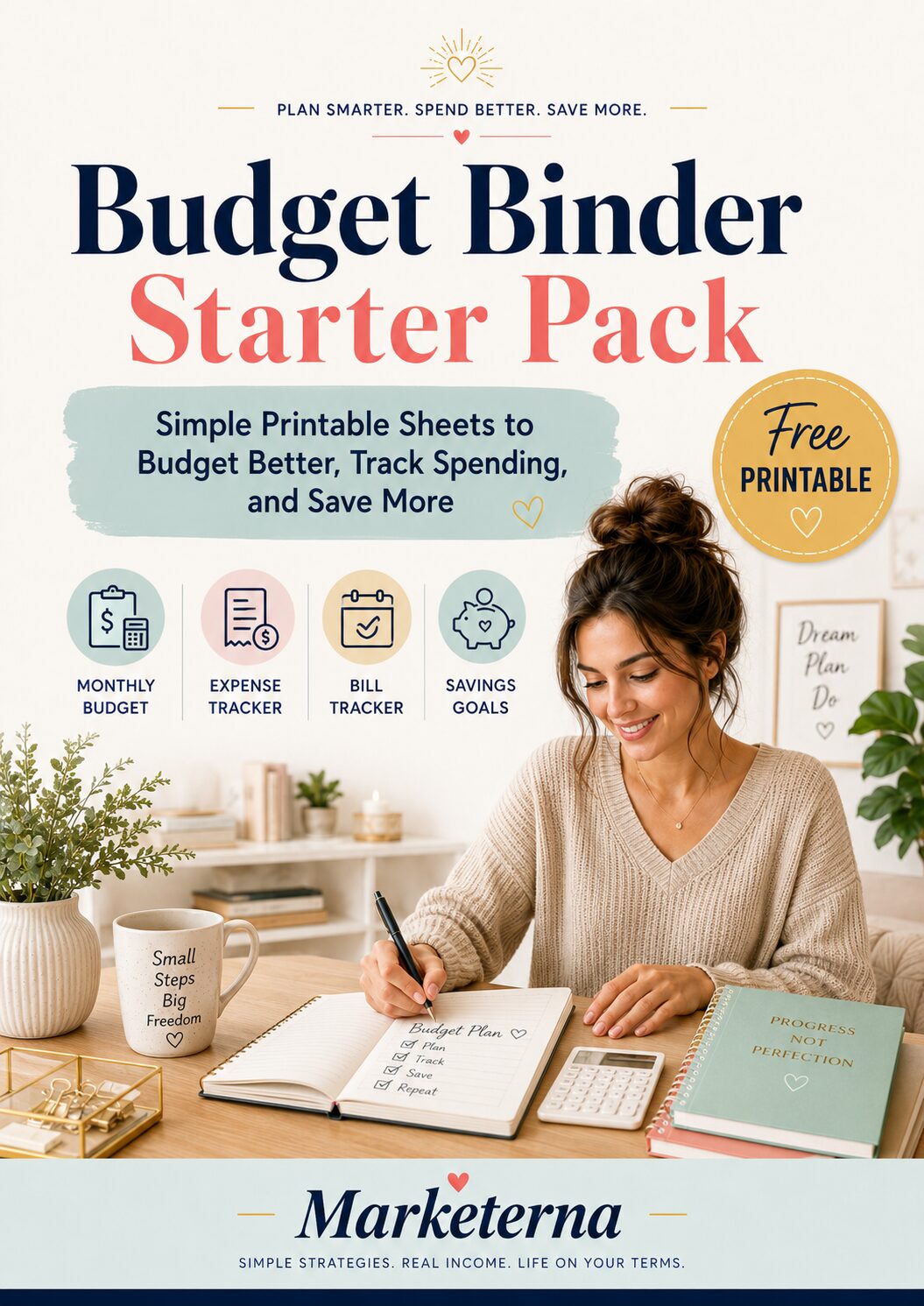
Get the Free Budget Binder Starter Pack
Download simple printable budget sheets to plan your monthly money, track expenses, organize bills, and start building better money habits without feeling overwhelmed.
You’ll get this free PDF plus access to the full Marketerna Save More & Earn More PDF Kit. No spam. Unsubscribe anytime.
1. Know Your Starting Number

Before you can plan where you're going, you need to know exactly where you are. Grab a notebook or open a notes app—it's time to tally up every dollar you own. Checking accounts, savings, cash in your wallet, even that crumpled $5 in your coat pocket.
No judgment, just facts. This is your starting line.
Most people guess their balance and are off by hundreds. Don't guess. Log into your accounts, count your cash, and write down the total.
That number is your financial foundation. It might be small, but it's yours.
Why This Matters
You can't make a realistic budget without knowing your starting point. It prevents overspending and helps you set achievable goals. Think of it as the first step on a map—you need to know where you are before you can navigate anywhere else.
How To Do It Right
Check all your accounts: bank, PayPal, Venmo, cash apps, and physical cash. Write each balance next to the source, then add them up. Don't forget any hidden money—gift cards, emergency stashes, or that jar of coins on your dresser.
What If It's Zero Or Negative?
That's okay. Zero is still a number, and it's honest. If you're in overdraft or have debt, include that too.
Knowing the full picture—even if it's ugly—gives you a clear place to start. From here, every step forward is progress.
2. Track Every Dollar for One Week
You can't fix what you don't see. Before you build a budget, you need a clear picture of where your money actually goes. The easiest way to get that is a one-week spending audit.
Grab a notes app or a small notebook. For seven days, write down every single purchase, no matter how small. That coffee, the bus fare, a random app subscription—log it all.
At the end of the week, look for patterns. You might be surprised how much you spend on snacks or late-night online shopping.
Why One Week Is Enough
A week gives you a solid snapshot without feeling overwhelming. You'll see your regular habits—morning coffee, lunch out, after-work drinks—and any one-off expenses. That's enough data to spot the leaks.
What To Look For
Focus on three things: fixed costs (rent, phone bill), variable needs (groceries, gas), and wants (eating out, entertainment). The wants category is where most surprises hide. Circle any expense that doesn't align with your priorities.
Make It Painless
Set a daily reminder on your phone to log expenses. Or use a simple app like Notes or Google Keep. The goal is effortlessness—if it's hard, you won't stick with it.
After seven days, you'll have a clear starting point for your budget.
Free PDF Download
Get the Free Budget Binder Starter Pack
Download simple printable budget sheets to plan your monthly money, track expenses, organize bills, and start building better money habits without feeling overwhelmed.
You’ll get this free PDF plus access to the full Marketerna Save More & Earn More PDF Kit. No spam. Unsubscribe anytime.
3. Separate Needs from Wants
It sounds simple, but most people blur the line between what they need and what they want. That blur is where budgets fall apart. By drawing a clear line, you give yourself permission to spend on wants—just not before the needs are covered.
Grab your bank statement or a note app. List every expense from the last month. Next to each one, write 'need' or 'want. ' Needs are things like rent, utilities, groceries, transportation, and minimum debt payments.
Wants are takeout, streaming services, new clothes, coffee runs—anything you could live without. Be honest. That daily latte?
Want. The internet bill? Need.
Once you see them side by side, you'll know exactly where your money is going and where you can cut back if needed.
The 50/30/20 Shortcut
If you want a simple rule, try the 50/30/20 budget. Put 50% of your income toward needs, 30% toward wants, and 20% toward savings or debt. Your needs-wants list makes this easy to calculate.
If your needs are over 50%, you might need to downsize or find ways to lower fixed costs. If wants are under 30%, you have room to treat yourself without guilt.
The 24-hour Rule For Wants
Before buying anything that's not a need, wait 24 hours. This pause kills impulse spending. You'll realize half the things you 'want' aren't worth the money.
Put the item in your cart, close the tab, and come back tomorrow. If you still want it, and it fits your budget, go ahead. Most times, you'll forget about it.
Revisit Your List Monthly
Your needs and wants change over time. Maybe you started a new job and need a bus pass instead of gas. Or you realized you never watch that streaming service.
Once a month, update your list. It keeps your budget accurate and helps you spot new ways to save.
4. Use the 50/30/20 Rule as a Starting Point
If you're brand new to budgeting, the 50/30/20 rule is the simplest framework to get started. It splits your after-tax income into three big buckets: 50% for needs, 30% for wants, and 20% for savings or debt repayment. The beauty of this rule is its flexibility—you can tweak the numbers as your life changes, but the structure keeps you on track.
The 50/30/20 rule isn't a strict law; it's a guideline to help you balance spending and saving. Start by calculating your monthly take-home pay, then assign each dollar to one of the three categories. Needs include rent, groceries, utilities, and minimum loan payments.
Wants cover dining out, streaming subscriptions, and hobbies. Savings and debt go beyond minimums—think emergency fund, retirement, or extra debt payments.
What Counts As A Need?
Needs are things you must have to survive and work: rent, utilities, groceries, transportation, insurance, and minimum debt payments. If you're unsure, ask yourself: Can I live without this for a month? If yes, it's probably a want.
What About Wants?
Wants are everything else that makes life enjoyable but isn't essential: streaming services, takeout, concert tickets, new clothes, and travel. The 30% cap gives you permission to spend guilt-free—as long as you stay within the limit.
Adjusting The Percentages
Your situation might call for different splits. If you have high rent, your needs might take 60%. That's okay—just reduce wants or savings accordingly.
The key is to keep the three-bucket structure so you're always aware of where your money goes.
Free PDF Download
Get the Free Budget Binder Starter Pack
Download simple printable budget sheets to plan your monthly money, track expenses, organize bills, and start building better money habits without feeling overwhelmed.
You’ll get this free PDF plus access to the full Marketerna Save More & Earn More PDF Kit. No spam. Unsubscribe anytime.
5. Open a Separate Savings Account

Keeping your savings in the same checking account you use for daily spending is like keeping cookies next to your treadmill—temptation wins too often. A separate savings account creates a mental and physical barrier between your money and your impulse buys. Out of sight really does mean out of mind.
Choose An Online High-yield Account
Online banks like Ally, Marcus, or SoFi offer savings accounts with interest rates far above traditional brick-and-mortar banks. Many have no minimum balance and no monthly fees. The extra step of logging into a separate app makes impulse transfers feel like a deliberate choice.
Automate Your Transfers
Set up an automatic transfer from checking to savings every payday—even $20 adds up. Treat it like a bill you pay to your future self. Automation removes the willpower struggle and makes saving a non-negotiable habit.
Name Your Account For Motivation
Give your savings account a meaningful label like "Emergency Fund" or "Europe Trip 2026. " Seeing a goal name instead of a generic number makes you less likely to dip into it for random purchases. It's a small psychological trick with big results.
6. Automate One Small Transfer
Willpower is overrated. The best way to save consistently is to remove the decision entirely. By automating a tiny transfer on payday, you trick your brain into treating savings like a bill—non-negotiable and easy to ignore.
Start with an amount so small it feels ridiculous—$10 or $20 per paycheck. The goal isn't to build wealth overnight; it's to build the habit. Once the transfer is set, you'll adapt your spending to the smaller balance without even noticing.
Pick A Number That Feels Like Nothing
If $20 makes you flinch, start with $5. Seriously. The amount matters less than the consistency.
You can always increase it later when the habit feels automatic.
Sync It With Payday
Set the transfer for the same day your paycheck hits. That way, the money leaves before you have a chance to spend it. Most banking apps let you schedule recurring transfers in under two minutes.
Watch It Multiply
$20 a week doesn't sound like much, but that's over $1, 000 in a year. Plus, once you see the balance grow, you'll feel motivated to bump it up. It's a snowball effect that starts with one tiny push.
7. List Your Fixed Monthly Bills
Before you can decide where the rest of your money goes, you need to know what's already spoken for. Fixed bills are the non-negotiables—the ones that show up every month with the same amount. Rent, utilities, phone plan, streaming subscriptions, gym membership, car payment, insurance.
Write them all down. Then subtract that total from your monthly income. What's left is your flexible spending money.
This step alone can prevent that end-of-month panic when you realize you don't have enough for rent because you spent too much on takeout.
Grab a piece of paper or open a simple notes app. List every fixed bill you have. Don't guess—check your bank statements or the apps.
Include the amount and the due date. Add them up. That's your monthly baseline.
Subtract that from your after-tax income. The number you get is what you have left for groceries, gas, fun, and savings. If that number is negative, you know immediately you need to cut something or earn more.
No surprises.
Why Fixed Bills Come First
Fixed bills are the foundation of your budget. They're predictable, so they're easy to plan around. By covering them first, you ensure your essentials are taken care of.
Anything left over is yours to allocate. This order prevents you from accidentally spending money that's already owed.
How To Track Them Without A Spreadsheet
You don't need fancy software. A simple list in your phone's notes app works. Or use a free budgeting app that automatically categorizes your spending.
The key is to update it monthly and check it before you spend. Set a reminder the day after payday to review your list.
What About Variable Bills?
Some bills, like electricity or water, can change each month. For those, use an average of the last three months. Round up a little to be safe.
If the actual bill is lower, you have extra money. If it's higher, you're prepared. Over time, you'll get better at estimating.
8. Give Every Dollar a Job
Think of your income like a team of employees. If you don't assign them specific tasks, they'll wander off and do whatever they want—usually something unproductive. The same goes for your money.
When you don't tell every dollar where to go, it tends to vanish on takeout, random Amazon buys, or subscription services you forgot about. Zero-based budgeting is the solution. You start with your income, subtract your expenses, and aim for zero left over.
Not zero in your bank account—zero unassigned. Every dollar gets a purpose, whether it's rent, groceries, savings, or fun money. This method forces you to be intentional and makes your spending plan crystal clear.
Zero-based budgeting is the solution. You start with your income, subtract your expenses, and aim for zero left over. Not zero in your bank account—zero unassigned.
Every dollar gets a purpose, whether it's rent, groceries, savings, or fun money. This method forces you to be intentional and makes your spending plan crystal clear.
How To Start
List your monthly income. Then list every expense you can think of—fixed bills, variable costs, savings goals, even a small fun category. Subtract everything from your income until you hit zero.
If you have money left, assign it to something: an extra debt payment, a savings buffer, or a treat. Use a simple spreadsheet or a budgeting app like YNAB or EveryDollar.
Why It Works
It removes the guesswork. When you've already decided that $50 goes to coffee and $200 to dining out, you don't feel guilty spending it. And when the coffee money runs out, you stop buying coffee without second-guessing.
That clarity reduces stress and helps you stay on track.
Common Pitfall
Don't forget irregular expenses like car insurance, annual subscriptions, or gifts. Set up a sinking fund—a small monthly amount set aside for those predictable but non-monthly costs. That way you're not blindsided when the bill arrives.
9. Use Cash Envelopes for Problem Categories

Some spending categories just seem to bleed money. Eating out, entertainment, clothes—no matter how much you budget, you always go over. That's where the cash envelope system shines.
It forces a hard stop when the money runs out.
Pick one or two categories where you consistently overspend. Each payday, withdraw the budgeted amount in cash and put it in a labeled envelope. When you're out of cash, you're done spending in that category until next payday.
No exceptions.
Why Cash Works Better Than Cards
Swiping a card feels abstract. Handing over physical cash triggers a psychological pain that makes you think twice. Studies show people spend less when using cash because they feel the loss more directly.
How To Start Without Overcomplicating
Don't try to envelope every category. Start with just one problem area—maybe dining out. Withdraw your monthly eating-out budget in cash on the 1st.
Once it's gone, cook at home or invite friends over instead.
What If You Have Cash Left Over?
Roll it into next month's envelope or treat yourself. The goal isn't to spend every dollar—it's to stay within your limits. Leftover cash means you're winning.
10. Plan Your Meals Around Sales
Grocery shopping on autopilot is a fast track to blowing your food budget. When you walk in without a plan, you're at the mercy of eye-level displays and impulse buys. The fix is simple: let the sales decide what's for dinner.
Check your local store's weekly flyer or a grocery app before you even open the fridge. Build your meal plan around what's marked down—not what you're craving. This one shift can cut your grocery bill by 20-30% without sacrificing taste or variety.
By planning meals around sales, you stop paying full price for staples and start treating discounts as your menu guide. It takes a few minutes each week but pays off immediately.
Start With The Flyer
Most grocery stores release weekly ads on Tuesday or Wednesday. Flip through them online or grab a paper copy. Circle the best deals on proteins, produce, and pantry items.
These become the backbone of your meals.
Build A Flexible Menu
Don't lock in specific meals until you know what's on sale. If chicken thighs are cheap, plan a few chicken-based dinners. If bell peppers are on sale, add them to stir-fries or salads.
Flexibility is your friend.
Stock Up Strategically
When non-perishables or freezer-friendly items hit rock-bottom prices, buy extra. Canned tomatoes, rice, pasta, and frozen vegetables keep for months. This builds a mini pantry that saves you from paying full price later.
Use Apps To Compare
Apps like Flipp or the store's own app let you compare deals across multiple stores without leaving home. Some even offer digital coupons that stack with sale prices. A quick scan before you shop can uncover hidden savings.
11. Cut One Subscription Immediately
Subscriptions are sneaky. They quietly drain your bank account month after month, often for services you barely use. The fix is simple: pick one and cancel it today.
That's $10–$15 back in your pocket every month, no effort required.
Review your subscriptions and cancel the one you use the least. That's $10–$15 back in your pocket every month.
Find The Lazy Subscriptions
Open your bank or credit card statements from the last three months. Look for recurring charges under $20—streaming services, apps, gym memberships, or subscription boxes. Highlight the ones you haven't touched in weeks.
The One That Goes First
Pick the subscription you'd miss the least. Maybe it's that second streaming service you only use for one show, or the fitness app you downloaded but never opened. Cancel it right now.
Most cancellations take less than two minutes online.
What To Do With The Savings
Redirect that $10–$15 to your savings or a debt payment. It's not life-changing alone, but it's a win. Plus, you'll feel motivated to review other subscriptions next month.
12. Negotiate Your Bills Once a Year
Most people set up a bill and never think about it again. That's costing you. Companies expect you to ask for a better deal—they literally have retention departments for this.
A single 10-minute phone call can put hundreds back in your pocket.
Once a year, go through your recurring bills—internet, phone, insurance, even streaming services. Call each provider and say something like, 'I'm looking at my budget and need to cut costs. Can you help me find a better rate? ' Be polite but firm.
If they say no, ask about loyalty discounts, promotions, or competitor pricing. Often they'll match or beat it.
What To Negotiate
Start with the biggest expenses: internet, cell phone, car insurance, and renters insurance. Even a $10 monthly reduction adds up to $120 a year. Don't forget subscription services—some will give you a discount if you threaten to cancel.
How To Prepare
Before calling, research current offers from competitors. Have your account details and a rough idea of what you're willing to pay. Write down key points so you don't get flustered.
And remember: the person on the phone is just doing their job—stay friendly and you'll get better results.
Set A Calendar Reminder
Pick a month—maybe your birthday month or January—and make it your annual bill negotiation day. Set a recurring reminder on your phone. After the first year, it becomes a quick habit that pays for itself.
13. Use the 24-Hour Rule for Non-Essentials

Impulse buys are budget killers. That $25 candle, the random gadget on sale, or the fast fashion top you'll wear once—they add up fast. The 24-hour rule is a simple trick to stop those small leaks before they drain your wallet.
It works because most purchases are emotional. You see something, get a dopamine hit, and want it now. Waiting a day lets that feeling fade.
By tomorrow, you'll probably realize you didn't need it after all.
Before buying anything over $20 that isn't a need, wait 24 hours. Most impulse purchases lose their appeal by the next day. This rule helps you separate wants from needs and saves you from buyer's remorse.
How To Make It Stick
When you feel the urge to buy, add the item to a wishlist or take a screenshot. Set a phone reminder for 24 hours later. When the timer goes off, ask yourself: Do I still want this?
Is it worth the money? Often, the answer is no.
What Counts As A Non-essential
Essentials are things like groceries, gas, rent, and bills. Non-essentials are everything else—clothes, takeout, entertainment, decor. If you're unsure, ask: Can I live without it for a day?
If yes, it's non-essential.
When You Still Want It After 24 Hours
If the desire persists, check your budget. Do you have extra money in your fun category? If yes, go ahead guilt-free.
If not, wait another 24 hours or decide if it's worth cutting from other spending. This builds discipline without deprivation.
14. Build a Tiny Emergency Fund First
Before you start budgeting for fun stuff or long-term goals, you need a tiny safety net. Aim for $500 or one month of essential expenses—whichever comes first. This small cushion keeps small emergencies from turning into big debt.
A $500 emergency fund might not sound impressive, but it's a game-changer. It covers a flat tire, a minor medical bill, or a last-minute repair without swiping a credit card. Once you hit that goal, you'll feel a weight lift off your shoulders.
Why $500 First?
Bigger goals like three to six months of expenses can feel overwhelming. Starting with $500 is doable and gives you immediate protection. It's the perfect first milestone—small enough to reach fast, big enough to matter.
How To Save It Fast
Sell something you don't use, pick up a side gig for a week, or redirect any windfall (birthday cash, tax refund) straight into this fund. Cut one small expense temporarily, like takeout, and watch the balance grow.
Keep It Separate
Don't mix your emergency fund with your checking account. Open a free high-yield savings account online. Out of sight, out of mind—and you'll earn a little interest while it sits.
15. Find Free Versions of Paid Things
You don't need a big budget to enjoy life. Many of the things you pay for have free alternatives that work just as well. The trick is knowing where to look and being willing to swap convenience for savings.
Your Local Library Is A Goldmine
Libraries aren't just for books. Most offer free movies, music, audiobooks, and even video games. Many also have digital lending apps like Libby or Kanopy.
You can access thousands of titles without spending a dime.
Free Fitness, No Gym Required
Gym memberships can cost hundreds a year. Instead, try free workout apps like Nike Training Club or YouTube channels like Yoga with Adriene. Public parks and trails are perfect for running, bodyweight exercises, or just walking.
Entertainment Without The Price Tag
Skip the movie theater and check out free community events, concerts in the park, or museum free days. Many museums offer free admission on certain days or have pay-what-you-wish options. You can also host a game night or potluck with friends.
16. Review Your Budget Every Sunday
A budget isn't a set-it-and-forget-it tool. It's more like a living document that needs regular check-ins to stay useful. That's where a Sunday review comes in—a quick, low-pressure habit that keeps your finances on track without feeling like homework.
Set aside 10 minutes every Sunday evening to look over your spending from the past week and adjust your plan for the week ahead. This small routine catches overspending early, helps you celebrate wins, and makes budgeting feel manageable. Consistency matters more than perfection—a quick weekly review beats a perfect budget you never touch.
Why Sunday Works Best
Sunday is a natural reset point. The week is over, and you're mentally preparing for what's next. It's also a low-energy moment—perfect for a quick, no-stress task.
Plus, checking your budget before Monday helps you start the week with clarity and intention.
What To Check In 10 Minutes
Open your banking app or budget tracker. Compare your actual spending to what you planned. Did you overspend on takeout?
Great, now you know. Did you save more than expected? Awesome, roll that extra into a goal.
Then adjust your upcoming week's categories if needed—maybe shift some money from dining to groceries.
Make It A Ritual, Not A Chore
Pair your review with something you already enjoy—a cup of tea, a favorite playlist, or a cozy spot on the couch. The goal is to build a habit that feels natural, not forced. Over time, this 10-minute check-in becomes second nature, and your budget will thank you.
17. Avoid Lifestyle Creep When You Get a Raise

Getting a raise feels amazing. You immediately start dreaming about a nicer apartment, a newer car, or that vacation you've been putting off. But here's the trap: if you let your spending rise with your income, you'll never build real wealth.
The key is to lock in your savings increase first, before your lifestyle adjusts.
When your income goes up, increase your savings rate first, not your spending. Your future self will thank you.
The Raise Reflex
Most people get a raise and instantly upgrade their lifestyle. A bigger paycheck feels like permission to spend more. But that's exactly how you stay stuck.
Instead, commit to saving at least half of any raise before you change a thing about your daily life.
Automate The Gap
Before your raise even hits your checking account, set up an automatic transfer to savings or investments. If you never see the money, you won't miss it. This simple move turns a temporary income bump into lasting financial progress.
Delayed Gratification Pays Off
Give yourself 30 days before making any big purchase after a raise. You'll likely realize you don't need it. That extra money, invested over time, can grow into a much bigger reward later.
Your future self will thank you.
18. Use a Budgeting App That Works for You
You don't need a finance degree to manage money. A good budgeting app does the heavy lifting for you. The trick is finding one that fits your style, not the other way around.
Free apps like Mint, YNAB, and EveryDollar are popular for a reason. They automate tracking, categorize spending, and show you where your cash goes. But the best app is the one you'll actually open.
Download two or three, test them for a week, and keep the one that feels natural.
Why An App Beats A Spreadsheet
Spreadsheets work, but they require manual entry and discipline. Apps sync with your bank accounts, so transactions appear automatically. That convenience means you're more likely to stick with it.
How To Pick The Right One
Start with free versions. Mint is great for a big-picture overview. YNAB is ideal if you want to assign every dollar a job.
EveryDollar follows a similar zero-based approach. Choose based on what feels less like a chore.
One Rule For Success
Check your app daily for the first month. A quick glance each morning keeps you aware of your spending. After that, weekly check-ins are usually enough to stay on track.
19. Set One Small Financial Goal per Month
Big financial goals can feel impossible when you're starting from zero. That's why the best strategy is to shrink your focus down to one tiny target each month. Pick something simple—like saving $50 or cutting one subscription—and crush it.
That single win gives you proof that you're in control.
When you try to fix everything at once, you burn out fast. Instead, treat each month like a mini experiment. You're not trying to transform your finances overnight; you're just building evidence that you can follow through.
Each small success makes the next one easier.
Start With A Goal That Feels Too Easy
Your first monthly goal should be embarrassingly simple. Maybe it's packing lunch three times a week or saving $20 from every paycheck. The point isn't the money—it's proving to yourself that you can stick with something.
Once you hit that easy win, you'll have momentum for a slightly bigger goal next month.
Track Progress Without Obsessing
You don't need a fancy app or a color-coded spreadsheet. A sticky note on your mirror or a simple checklist in your phone works fine. The key is to check in once a week, not every day.
Give yourself space to make mistakes without quitting. If you slip up, just adjust and keep going.
Celebrate The Win, Then Set The Next One
When the month ends, take a moment to acknowledge what you did. Maybe treat yourself to a coffee or a movie—something small that reinforces the habit. Then pick a new goal for next month.
Over time, these monthly wins stack up into real financial progress without the overwhelm.
20. Talk About Money with a Trusted Friend
Money talk can feel awkward, especially when you're just starting out. But keeping your goals to yourself makes them easier to ignore. Sharing your budgeting journey with someone supportive changes the game—it turns a solo struggle into a shared mission.
When you tell a friend about your savings goal or spending limit, you create a gentle but powerful commitment. That person can check in, celebrate wins, and help you reset when you slip. Accountability isn't about pressure—it's about having someone in your corner who gets what you're trying to do.
Choose The Right Person
Pick someone who is non-judgmental and financially responsible—or at least willing to learn with you. A partner, sibling, or close friend works well. Avoid people who make you feel embarrassed or competitive about money.
Set Up Simple Check-ins
Agree on a quick weekly or biweekly chat. It doesn't need to be formal—a text, a coffee, or a five-minute call. Share one win and one challenge.
That's it. Over time, these check-ins build momentum and make budgeting feel normal.
Celebrate Progress Together
When you hit a milestone—like saving your first $100 or sticking to your budget for a month—acknowledge it. Maybe treat yourselves to a small, budget-friendly reward. Celebrating keeps motivation high and makes the journey feel less like a grind.
21. Celebrate Every Milestone

Budgeting isn't just about restriction—it's about building a life you love. When you hit a financial goal, big or small, acknowledging that win keeps you motivated and makes the whole process feel less like a chore.
Paying off a credit card or hitting a savings target is a big deal, especially when you started from zero. Celebrating those moments reinforces positive habits and reminds you why you're doing this. It doesn't have to be expensive—a small treat or a fun activity can do the trick.
The key is to make it meaningful to you.
Why Celebrating Matters
Your brain loves rewards. When you celebrate a milestone, you're training yourself to associate budgeting with positive feelings. That makes it easier to stick with your plan long-term.
Plus, it breaks up the monotony of saving and gives you something to look forward to.
Ideas For Low-cost Celebrations
You don't need to blow your budget to celebrate. Try a movie night at home with your favorite snacks, a hike with a friend, or buying that book you've been eyeing. Even just taking an evening off to relax guilt-free can feel like a reward.
Keep It Proportional
Your celebration should match the size of your win. For small goals, keep it small—maybe a fancy coffee. For bigger ones, you can splurge a little more, but always stay within your budget.
The idea is to enjoy the moment without derailing your progress.
FAQ
What's the best budgeting method for someone with zero savings?
Start with the 50/30/20 rule because it's simple and flexible. Focus on building a small emergency fund first, then adjust the percentages as you get comfortable.
How much should I save each month if I'm starting from zero?
Even $20 a month is a great start. The habit matters more than the amount. Once you're consistent, increase the amount gradually.
Should I pay off debt or save first?
Build a $500 emergency fund first, then focus on high-interest debt (like credit cards). After that, you can balance saving and debt repayment.
How do I stick to a budget when I have irregular income?
Use a zero-based budget based on your lowest-earning month. In higher-earning months, save the extra or put it toward debt.
What's the biggest mistake young adults make with budgeting?
Being too restrictive. If your budget doesn't allow for any fun, you'll abandon it quickly. Include a small 'fun money' category to keep it sustainable.
Conclusion
You don't need to master every tip at once. Pick one or two that feel doable—maybe the 50/30/20 split or a no-spend weekend—and try them for 30 days.
That small win builds momentum without the overwhelm. Over time, these small steps add up, turning budgeting from a chore into a habit that puts you in control of your money.
Free PDF Download
Get the Free Budget Binder Starter Pack
Download simple printable budget sheets to plan your monthly money, track expenses, organize bills, and start building better money habits without feeling overwhelmed.
You’ll get this free PDF plus access to the full Marketerna Save More & Earn More PDF Kit. No spam. Unsubscribe anytime.