17 Simple Budget Plan Ideas for People Who Hate Budgeting
Last updated on May 5th, 2026 at 03:42 pm
Let's be honest: traditional budgeting feels like a punishment. You're told to track every coffee, categorize every purchase, and feel bad about your spending. It's no wonder so many people give up before they start.
But here's the thing—you don't need a rigid system to get your finances in order. You just need a method that works with your brain, not against it. These 17 budget ideas are designed for people who want financial control without the headache.
Pick one, try it for a month, and see how it feels. No guilt, no spreadsheets, just progress.
Free PDF Download
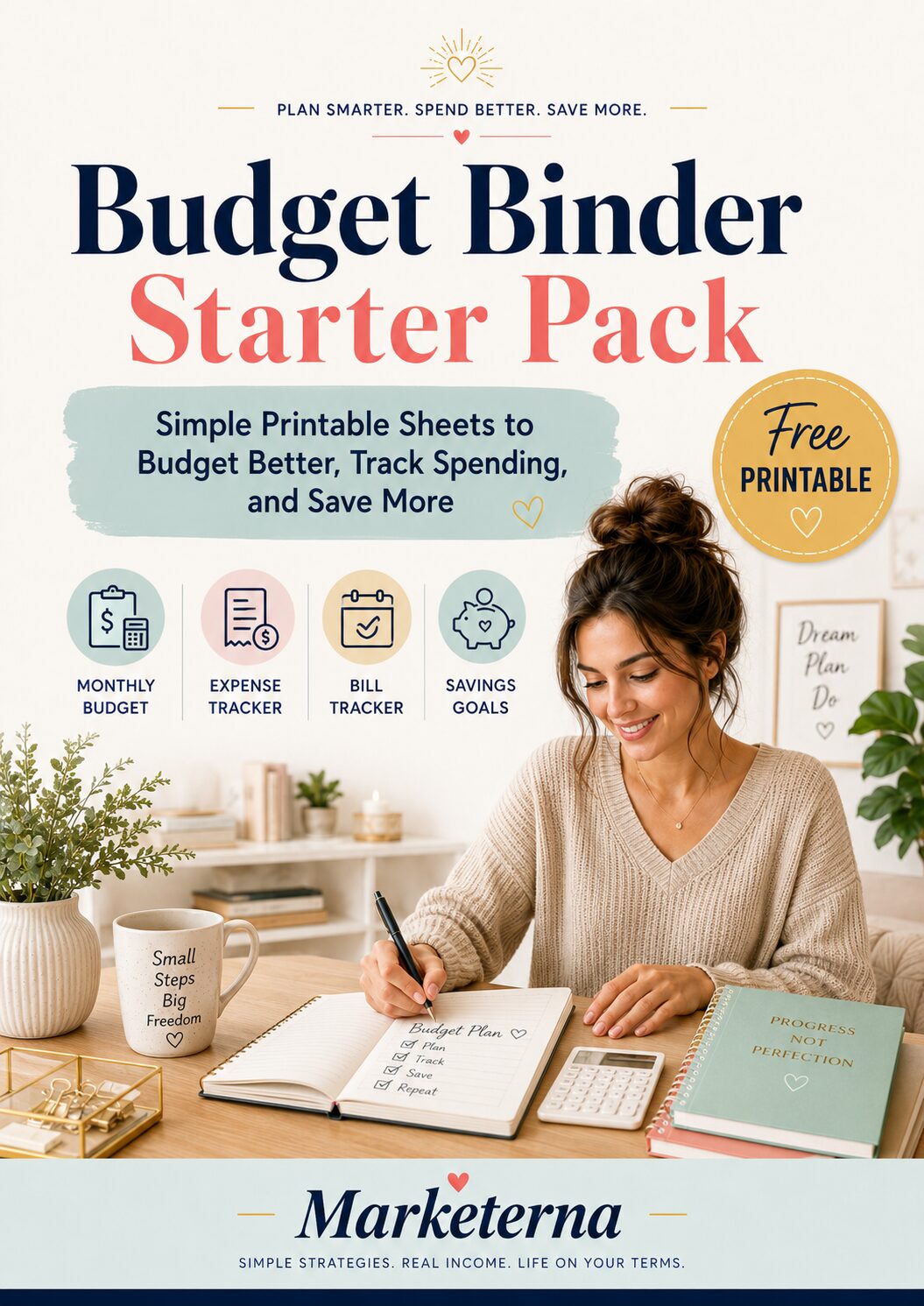
Get the Free Budget Binder Starter Pack
Download simple printable budget sheets to plan your monthly money, track expenses, organize bills, and start building better money habits without feeling overwhelmed.
You’ll get this free PDF plus access to the full Marketerna Save More & Earn More PDF Kit. No spam. Unsubscribe anytime.
1. The 50/30/20 Rule (The Classic That Actually Works)
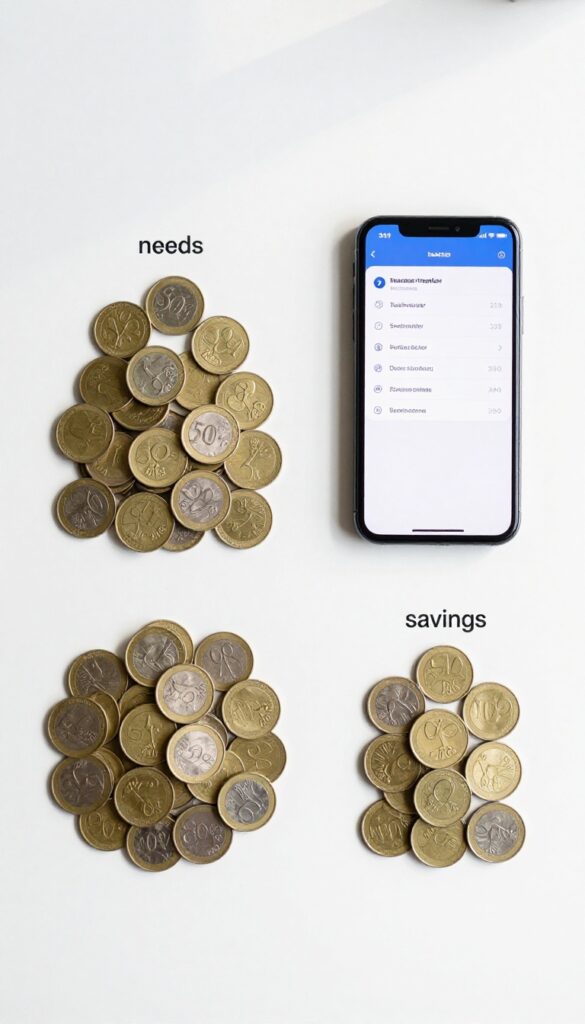
If you want a budget that practically runs itself, the 50/30/20 rule is your best friend. No daily tracking, no guilt—just three simple buckets. After-tax income gets split: 50% for needs, 30% for wants, and 20% for savings or debt.
It’s the set-it-and-forget-it approach that works for real people.
The beauty of this method is its simplicity. You don’t need to track every latte; just check that your spending stays within each bucket. Most banks and apps let you set up automatic transfers, so you can literally automate your way to financial health.
How To Set It Up In 10 Minutes
Figure out your monthly after-tax income. Multiply by 0. 5 for needs (rent, utilities, groceries), 0.
3 for wants (dining out, Netflix, hobbies), and 0. 2 for savings or debt. Set up automatic transfers on payday to move money into separate accounts or categories.
Done.
Where People Get Stuck (and How To Fix It)
The biggest hiccup? Needs sometimes creep above 50%. If that happens, adjust the percentages temporarily—maybe 60/20/20 until your income grows.
The rule is flexible, not rigid. The goal is progress, not perfection.
Why It Works For Budget Haters
No spreadsheets, no daily logging, no shame spiral. You get a clear boundary without feeling deprived. Plus, the 20% savings bucket builds momentum fast—watching your money grow is way more motivating than cutting coupons.
2. The Reverse Budget (Pay Yourself First)
This one flips the script completely. Instead of budgeting for expenses first and saving whatever's left (which is often nothing), you automatically move money to savings or investments on payday. Then you spend the rest however you want—no tracking, no guilt.
The reverse budget is perfect for people who hate micromanaging their money. You decide on a fixed amount to save each month—say 20% of your income—and set up an automatic transfer right after payday. That's it.
The rest of your money is yours to spend freely. No need to categorize or track every latte.
Why It Works
It removes the willpower struggle. You never see the money you save, so you don't miss it. And because you're allowed to spend the rest without judgment, you're less likely to rebel against the system.
How To Start
Pick a percentage or a fixed dollar amount that feels doable—start small if you need to. Set up an automatic transfer from checking to a savings or investment account on payday. Then adjust over time as your income or goals change.
Who It's For
This method is ideal if you have a steady income and don't want to track spending categories. It's also great if you've tried traditional budgets and felt suffocated. You still need to cover your bills, but after that, freedom.
Free PDF Download
Get the Free Budget Binder Starter Pack
Download simple printable budget sheets to plan your monthly money, track expenses, organize bills, and start building better money habits without feeling overwhelmed.
You’ll get this free PDF plus access to the full Marketerna Save More & Earn More PDF Kit. No spam. Unsubscribe anytime.
3. The Envelope System (Cash Only for Variable Spending)
If you've ever swiped a card and felt a little sick afterward, this one's for you. The envelope system makes spending physical again. You pull out cash for the categories that tend to get away from you—groceries, eating out, fun money—and put that cash in labeled envelopes.
When the envelope is empty, you're done. No overdraft, no guilt, no math.
The beauty of this system is that it's impossible to cheat. You can't tap your phone and pretend it doesn't count. The cash is right there, shrinking as the month goes on.
It's visual, tactile, and oddly satisfying. Plus, it forces you to make real trade-offs: if you want that extra coffee, you have to take it from somewhere else.
Which Categories Work Best
Stick to variable spending—things that change month to month. Groceries, dining out, entertainment, personal care, and clothing are perfect. Fixed bills like rent and utilities stay on autopay.
You only need envelopes for the areas where you tend to overspend.
How Much To Put In Each Envelope
Look at what you spent last month on these categories, then set a realistic target. Round down a little to build in some savings. If you're not sure, start with a trial month and adjust.
The goal is to feel a slight squeeze, not starvation.
What To Do With Leftover Cash
At the end of the month, anything left in an envelope can roll over to next month, go into savings, or treat yourself. That's the reward for sticking to your limits. Over time, you'll naturally spend less because you see the cash disappearing.
4. The Zero-Based Budget (Every Dollar Has a Job)

This method is for people who want total control without tracking every single purchase. You start with your monthly income and assign every dollar to a category—bills, groceries, savings, fun money—until you hit exactly zero. It sounds intense, but it's actually freeing because you know exactly where your money is going.
The zero-based budget forces you to be intentional. Instead of hoping you have enough left over, you decide upfront. You can do it on paper, in a simple spreadsheet, or with an app.
The key is that every dollar has a purpose, so there's no guilt when you spend your allocated fun money.
How To Set It Up In 10 Minutes
List your total monthly income. Then list all your expenses: rent, utilities, groceries, subscriptions, debt payments, savings goals. Subtract expenses from income.
If there's money left, assign it to extra savings or debt. If negative, cut something. That's it.
Why It Works For Budget Haters
You only have to think about money once a month. After that, you just follow the plan. No daily tracking, no guilt.
Plus, you can adjust categories anytime—it's flexible, not rigid.
Common Mistakes To Avoid
Don't forget irregular expenses like car insurance or gifts. Build a small buffer for unexpected costs. And be realistic about fun money—if you set it too low, you'll abandon the budget.
Free PDF Download
Get the Free Budget Binder Starter Pack
Download simple printable budget sheets to plan your monthly money, track expenses, organize bills, and start building better money habits without feeling overwhelmed.
You’ll get this free PDF plus access to the full Marketerna Save More & Earn More PDF Kit. No spam. Unsubscribe anytime.
5. The 80/20 Rule (Set It and Forget It)
What if you could save money without ever looking at a spreadsheet? No categories, no tracking, no guilt trips. Just one automatic transfer each month, and you're done.
The 80/20 rule is the laziest, most effective budget on the planet. You save 20% of your income automatically, and spend the other 80% however you want. That's it.
No restrictions, no judgment, no stress.
Set up an automatic transfer from your checking to your savings account on payday. Aim for 20% of your take-home pay. If that's too much, start with 10% or even 5%.
The key is automation—once it's set, you don't have to think about it again. The remaining 80% is yours to spend freely. Coffee runs, takeout, streaming subscriptions—go ahead.
You've already paid yourself first, so there's no need to feel guilty about the rest.
Why It Works
The 80/20 rule removes the biggest barrier to saving: decision fatigue. You don't have to decide every day whether to save or spend. The decision is made once, automatically.
Your brain gets a break, and your savings grow without effort.
How To Automate It
Log into your bank account and set up a recurring transfer for the day after payday. If your employer offers direct deposit splitting, even better—send 20% straight to savings before you ever see it. Out of sight, out of mind.
When To Adjust
If you're not hitting your savings goals with 20%, bump it up a few percent. If 20% feels tight, start lower. The beauty of this method is its flexibility.
You can change the percentage anytime without redoing your whole system.
6. The No-Spend Challenge (Reset Your Habits)
Sometimes you need a hard reset. The no-spend challenge is exactly that—a short, intense period where you only spend on absolute essentials. It's not a long-term solution, but it's incredibly effective at snapping you out of autopilot spending and showing you where your money actually goes.
Pick a timeframe that feels doable: a day, a week, or even a full month. The rules are simple—no spending on anything that isn't strictly necessary. That means no takeout, no new clothes, no streaming subscriptions you forgot about.
Rent, utilities, groceries (the basics), and transportation count. Everything else is off-limits. The goal isn't deprivation; it's awareness.
You'll be amazed at how many small purchases you normally make without thinking.
How To Choose Your Challenge Length
If you're new to this, start with a no-spend weekend. It's low pressure and gives you a taste of the experience. For a bigger reset, try a full week.
A month-long challenge is intense but can dramatically shift your spending habits. Pick a period that challenges you without feeling impossible.
What Counts As 'essential'?
Essentials are non-negotiables: rent/mortgage, utilities, basic groceries, transportation to work, and necessary healthcare. Everything else—dining out, entertainment, shopping—is off the table. Be honest with yourself.
If you're unsure, ask: 'Can I live without this for the challenge period? ' If yes, it's not essential.
What You'll Learn (and Save)
Most people discover they spend a shocking amount on convenience and impulse buys. After the challenge, you'll naturally question each purchase: 'Do I really need this? ' Many find they can cut non-essential spending by 20-30% without feeling deprived. Plus, the money you save during the challenge can go straight to debt or savings.
7. The One-Category Budget (Focus on Your Weak Spot)
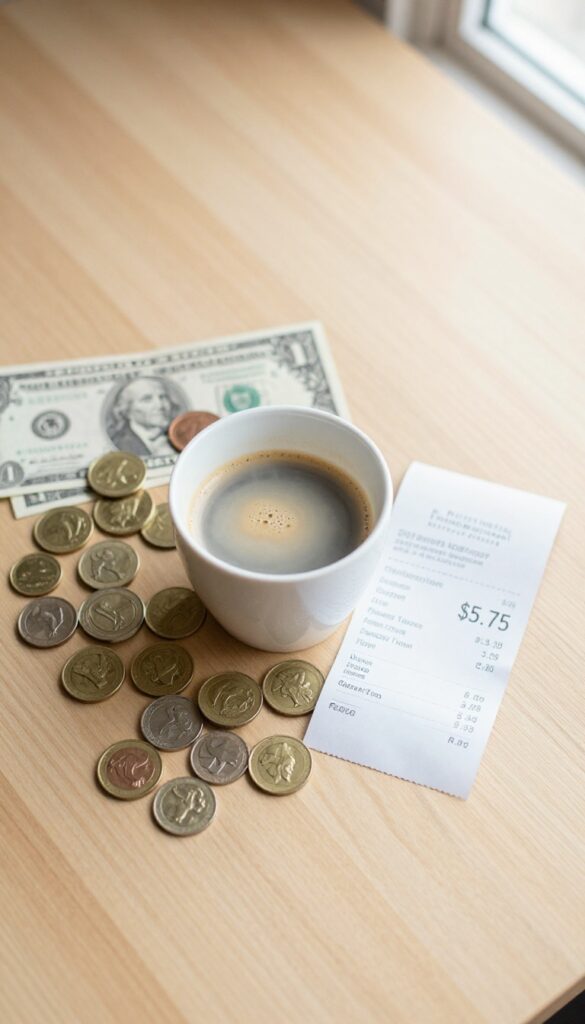
Most budgets fail because they try to fix everything at once. But what if you only had to worry about one thing? That's the idea here: pick the single category where you consistently overspend—maybe it's takeout, online shopping, or coffee runs—and budget only that.
Everything else? Free to flow. It's low effort, high impact, and perfect for anyone who hates restrictions.
By zeroing in on your biggest money leak, you stop the bleeding without overhauling your entire life. The rest of your spending stays automatic, so you don't burn out. It's like plugging the biggest hole in a leaky bucket—suddenly, you're keeping more without patching every crack.
How To Pick Your One Category
Look at your bank statements from the last two months. Which area makes you wince? Dining out, Uber Eats, Amazon impulse buys, or maybe those daily lattes?
Choose just one. Don't overthink it—go with the one that feels most painful. That's your target.
Set A Simple Limit
Decide on a monthly cap for that category. For dining out, maybe $150. For online shopping, $100.
Write it down or set a phone alert. That's it—no tracking other expenses. Just stay under that number, and you're winning.
What About The Rest?
Everything else—rent, utilities, groceries, gas—stays on autopilot. You already know those bills get paid. The one-category budget frees you from micromanaging.
It's a gentle nudge, not a financial straitjacket.
8. The 24-Hour Rule (Curb Impulse Spending)
Impulse purchases are the silent budget killers. You see something shiny, your brain releases a little dopamine, and before you know it, you're $50 lighter for a gadget you'll use twice. The 24-Hour Rule is the simplest fix: just wait one full day before buying anything non-essential.
No spreadsheets, no guilt trips—just a pause button for your wallet.
The beauty of this rule is its simplicity. When you feel the urge to buy something you don't absolutely need, set a timer for 24 hours. Most of the time, the craving fades.
If it doesn't, you can buy it with a clearer head—and often with a better price after some quick research.
How To Apply It Without Overthinking
Keep a note on your phone or a small notebook. Jot down the item, price, and why you want it. Then walk away.
The next day, review the list. You'll be surprised how many items feel silly or unnecessary 24 hours later.
When To Break The Rule
This rule isn't for emergencies or essentials like groceries or medicine. It's for that cute sweater, the new kitchen gadget, or the latest tech accessory. For anything under $10, feel free to skip the wait—but for bigger buys, stick to it.
Why It Works
The 24-hour delay interrupts the emotional impulse and gives your rational brain time to catch up. It's a psychological trick that turns 'I want it' into 'Do I actually need it? '—no math required.
9. The Subscription Audit (Cut the Leaks)
Subscriptions are sneaky. You sign up for a free trial, forget to cancel, and suddenly you're paying $14. 99 a month for a service you haven't opened in months.
The worst part? Most people have no idea how much they're leaking each month. A subscription audit is a one-time effort that plugs those leaks automatically.
How To Do It
Go through your bank and credit card statements from the last three months. Highlight every recurring charge—Netflix, gym memberships, app subscriptions, meal kits, even that random cloud storage you forgot about. List them all in one place.
The Purge
For each subscription, ask yourself: Did I use this in the last 30 days? Would I miss it if it were gone? If the answer is no, cancel it right then.
Don't wait. Most cancellations take less than five minutes online.
Set A Quarterly Reminder
Put a recurring event on your calendar for the first day of every quarter. Spend 15 minutes repeating the audit. New subscriptions pop up, old ones pile up, and this keeps your spending lean without ongoing effort.
10. The Cash-Only Week (Reset Your Spending)
Plastic money makes spending too easy. Swipe and forget—until the statement arrives. A cash-only week breaks that cycle by forcing you to hand over actual bills.
It's a short, painless experiment that resets your relationship with money.
For seven days, leave your debit and credit cards at home. Withdraw enough cash to cover your essential expenses—groceries, gas, a coffee or two—and nothing more. When the cash runs out, you stop spending.
No overdraft, no 'I'll pay it later. ' Just a clean, hard stop that makes you think twice before every purchase.
Why It Works
Cash is tactile. Handing over a $20 bill feels different than tapping a card. That physical friction gives your brain time to ask, 'Do I really need this? ' Most people naturally spend 15–30% less during a cash-only week without feeling deprived.
How To Set It Up
Start on a Monday. Withdraw a fixed amount for the week—say $100 for incidentals plus your regular grocery budget. Put your cards in an envelope or leave them with a trusted friend.
Track your cash balance daily so you know where you stand.
What To Expect
Day one feels weird. By day three, you'll notice how often you reach for plastic out of habit. By day seven, you'll have a clearer sense of what you actually value.
Keep the experiment going once a month to stay grounded.
11. The Percentage Budget (Flexible and Forgiving)
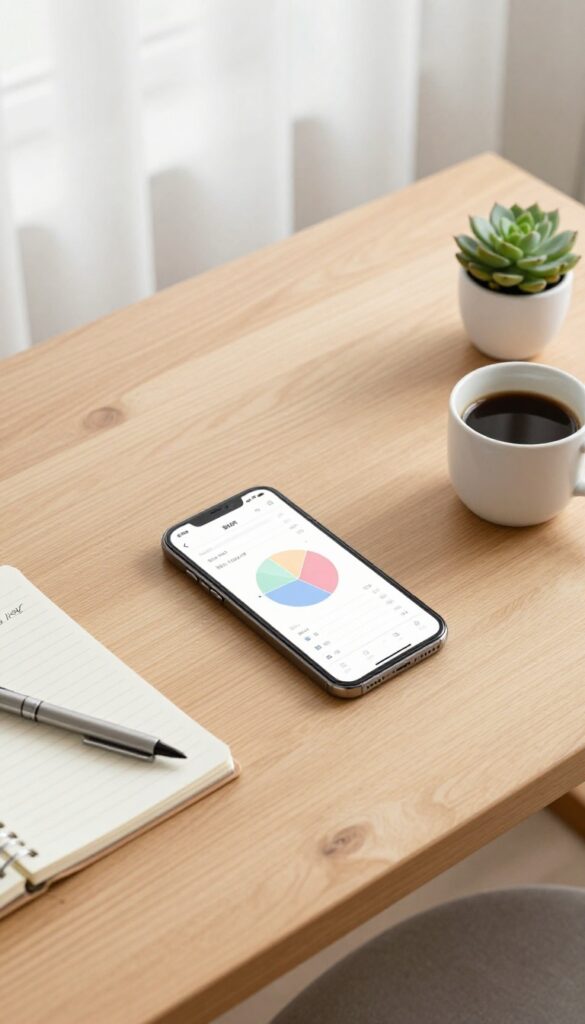
If you hate tracking every penny, the percentage budget is your best friend. Instead of rigid dollar amounts, you set broad targets for major categories like housing, food, and savings. You check in once a month to see if you're in the ballpark.
No daily logging, no guilt over a latte—just a monthly reality check.
This method works because it focuses on the big picture. You decide what percentage of your after-tax income goes to each area. Common guidelines: housing 30%, food 15%, transportation 10%, savings 20%, and everything else 25%.
But you can tweak these to fit your life. The key is to review your actual spending against your targets at the end of each month. If you're over in one category, adjust next month.
No shame, just awareness.
Set Your Percentages
Start with the 50/30/20 rule as a baseline: 50% needs, 30% wants, 20% savings. Or customize it. For example, if your rent is high, allocate 35% to housing and trim elsewhere.
Write down your target percentages and stick them on your fridge.
Check In Monthly
Once a month, pull up your bank and credit card statements. Add up spending in each category and compare to your targets. If you're close, great.
If not, decide what to shift next month. No need to track daily—just a 15-minute monthly review.
Adjust As Life Changes
Your percentages aren't set in stone. Got a raise? Increase your savings percentage.
Moved to a cheaper place? Give yourself a bigger fun money category. This budget bends with your life, making it sustainable long term.
12. The Automated Bill Pay (Never Miss a Due Date)
If your brain treats bill due dates like background noise, automation is your rescue. Set up autopay for every fixed expense—rent, utilities, insurance, subscriptions. Once that's done, your only job is to manage the money that's left.
No more late fees, no more mental clutter. You free up headspace for what actually matters.
Automation turns your budget into a set-it-and-forget-it system. Fixed bills get paid automatically from a dedicated account. Variable spending (groceries, gas, fun) comes from a separate account or leftover funds.
This separation makes it painfully obvious what you have left to spend. You stop worrying about missing a payment and start focusing on the money you can actually use.
Pick One Account For Autopay
Open a separate checking account just for fixed bills. Have your paychecks deposited there, or set up a recurring transfer from your main account. Then link every fixed bill to that account.
This way, you never accidentally spend bill money on takeout. You know exactly how much is spoken for each month.
Schedule A Monthly Review
Autopay doesn't mean total neglect. Once a month, spend five minutes checking your bill account to confirm payments went through and no unexpected charges popped up. Set a recurring calendar reminder.
This tiny check keeps you in control without the daily grind.
Keep A Cushion For Surprises
Bills can fluctuate—utility costs spike in summer, insurance premiums change. Keep a small buffer in your bill account, say $100–200. That way, if a payment is higher than usual, you won't overdraft.
Top it back up after the surprise passes.
13. The Sinking Fund Method (Save for Irregular Expenses)
Big, irregular expenses—like car insurance, holiday gifts, or annual memberships—often derail even the best intentions. Instead of scrambling when they hit, the sinking fund method lets you save a little each month so those bills feel like small bumps, not financial avalanches. Think of it as paying yourself in installments for future costs.
The idea is simple: identify your predictable irregular expenses, estimate their annual cost, divide by 12, and set that amount aside monthly in a separate account. You don't need to track every coffee; you just need to automate a few transfers. Over time, you build a buffer that makes big bills feel routine.
How To Set Up Your Sinking Funds
Start by listing expenses that occur less than monthly: car insurance, property taxes, vacations, holiday shopping, or even annual subscriptions. Total them up, divide by 12, and that's your monthly contribution. Open separate savings accounts or use sub-accounts within your bank—many online banks let you create "buckets" for free.
Automate transfers on payday so you never forget.
Why It Works For Budget Haters
This method removes the guesswork and guilt. You're not restricting spending; you're just smoothing out cash flow. When the bill arrives, the money is already there, so you don't have to cut back elsewhere.
It turns a stressful lump sum into a manageable monthly habit.
Pro Tips To Keep It Simple
Don't overdo it—stick to 3–5 sinking funds max. Use a high-yield savings account to earn a little interest. And if you're short one month, just adjust next month's contribution.
The goal is progress, not perfection.
14. The 30-Day Rule (Delay Major Purchases)
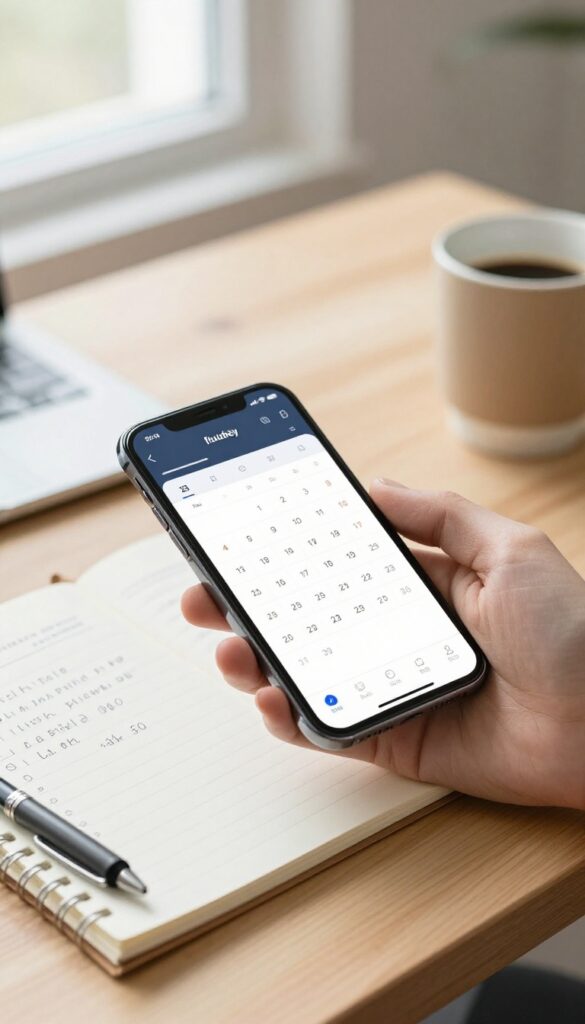
Impulse buys are budget killers. That shiny new gadget, the trendy jacket, or the latest kitchen gadget—they feel urgent in the moment, but most of the time, the urge fades fast. The 30-Day Rule puts a simple pause between you and your wallet.
For any non-essential purchase over a certain amount (say $50), you wait 30 days. If you still want it after that, go ahead. You'll be surprised how many things you forget about entirely.
This rule works because it separates genuine needs from fleeting wants. It also gives you time to research, compare prices, and maybe find a better deal. Plus, the delay itself can be satisfying—it proves you're in control, not your impulses.
Set Your Threshold
Pick a dollar amount that makes sense for your income and spending habits. $50 is a common starting point, but you might choose $30 or $100. The key is to apply the rule consistently to everything above that line—except essentials like groceries or gas.
Make It Easy To Track
Use a notes app, a whiteboard, or a simple spreadsheet to log the item, date, and price. Set a reminder in your phone for 30 days later. When the alarm goes off, review your list.
Most items will feel irrelevant, and you can delete them with a sense of victory.
Enjoy The Wait
Instead of feeling deprived, reframe the waiting period as a game. You're testing your resolve and building a habit of mindful spending. After 30 days, if you still want the item, buy it guilt-free—you've earned it by proving it's a real need, not a whim.
15. The Digital Envelope System (Apps That Do the Work)
Remember the envelope system where you stuff cash into labeled envelopes for groceries, gas, and fun money? It works, but carrying wads of cash is a pain. The digital version does the same thing inside an app—without the hassle of ATM runs or losing an envelope.
Apps like YNAB, EveryDollar, and Goodbudget let you set spending limits for each category. When you spend, the app deducts from that category's digital envelope. If you hit zero, you're done spending there until next month.
No math, no spreadsheets, just a quick tap to check your balance.
Why It Works For Budget Haters
You don't have to track every penny manually. The app syncs with your bank, categorizes transactions, and shows you exactly how much is left in each envelope. It's like having a budget assistant that never complains.
Which App Should You Try?
YNAB is the most hands-on but powerful. EveryDollar (free version) is simpler and great for beginners. Goodbudget is the easiest—it's literally digital envelopes with no frills.
Pick one, connect your accounts, and set your first envelope limits.
One Rule To Keep It Simple
Don't create too many envelopes. Start with 5–7 big categories like Bills, Groceries, Dining Out, Fun, Savings, and Miscellaneous. Too many tiny envelopes get overwhelming fast.
16. The Income-Based Spending Cap (Live Below Your Means)
What if you could budget without actually budgeting? The income-based spending cap does exactly that. You decide to spend only 80% or 90% of your income—the rest goes straight to savings.
It's a simple rule that forces you to live below your means without tracking every dollar. No categories, no spreadsheets, just a mindset shift.
This method works because it's automatic. You set up a direct deposit or automatic transfer from your paycheck into a savings account before you ever see the money. Then you spend whatever's left in your checking account guilt-free.
The cap ensures you're saving consistently, and you can adjust the percentage if needed. Start with 90% spending, then try 80% as you get comfortable.
How To Set It Up
Figure out your after-tax monthly income. Multiply by 0. 8 or 0.
9 to get your spending cap. Set up an automatic transfer to savings for the difference on payday. That's it.
No further tracking required.
Why It Works
It removes the need for willpower. The money is gone before you can spend it. Plus, it's flexible—if you have a high-income month, you save more; if you have a low-income month, you spend less.
It adapts to your life.
17. The Weekly Check-In (Low-Effort Awareness)

Most budget systems ask for daily tracking—and that's where they lose you. The Weekly Check-In flips the script: just one 10-minute session per week. No categories, no guilt, no spreadsheets.
Just a quick look at your bank balance and upcoming bills. It's awareness without the chore.
This method works because it's low friction. You're not trying to control every dollar; you're just staying in the loop. Over time, that weekly glance builds a natural sense of your spending patterns.
You'll start noticing where money goes without anyone telling you to.
Pick A Regular Time
Choose a consistent slot—Sunday evening, Monday morning, or whenever you have a quiet 10 minutes. Put a recurring reminder on your phone. The key is making it a habit, not a hassle.
Look At Two Things Only
Open your banking app and check two numbers: your current balance and any pending bills for the next week. That's it. No need to analyze every transaction.
Just note if anything looks off or if a big payment is coming.
Adjust Only If Needed
If you see a low balance, you might decide to skip takeout this week. If a bill is higher than expected, you can move money from savings. No guilt—just a small course correction.
Most weeks, you'll just nod and close the app.
FAQ
What is the easiest budget for someone who hates budgeting?
The 80/20 rule or the reverse budget are the easiest. You just set up one automatic transfer to savings and spend the rest freely. No tracking needed.
Can I really budget without a spreadsheet?
Absolutely. Many methods like the envelope system, cash-only weeks, or the 50/30/20 rule require no spreadsheets. You can use pen and paper, an app, or just your bank's online tools.
How do I stick to a budget if I'm not motivated?
Start with a no-spend challenge or a one-category budget. Short-term experiments build momentum without overwhelming you. Also, automate savings so you don't have to think about it.
What if I have irregular income?
Try the percentage budget or the reverse budget. With irregular income, focus on saving a percentage of each paycheck and keeping your fixed costs low. A sinking fund also helps smooth out big expenses.
How often should I check my budget?
For low-effort methods, once a week or even once a month is enough. The weekly check-in is a great starting point. The key is consistency, not frequency.
Conclusion
You don't need a perfect system—just one that works for you. Pick the simplest idea from this list, like the envelope method or a no-spend day, and try it for a week.
Small, painless steps build momentum without the dread. Before you know it, you'll have a budget that actually fits your life, no spreadsheet required.
Free PDF Download
Get the Free Budget Binder Starter Pack
Download simple printable budget sheets to plan your monthly money, track expenses, organize bills, and start building better money habits without feeling overwhelmed.
You’ll get this free PDF plus access to the full Marketerna Save More & Earn More PDF Kit. No spam. Unsubscribe anytime.