15 Payday Budget Routine Ideas for Beginners
Last updated on May 5th, 2026 at 03:43 pm
Payday hits, and suddenly your bank account looks healthy. But if you're like most beginners, that money seems to vanish before the month ends. The secret isn't earning more—it's having a simple routine the moment your salary lands.
A payday budget routine takes the stress out of money management. You decide where every dollar goes before life decides for you. No guilt, no surprises, just a clear plan that takes less than 30 minutes.
These 15 ideas are designed for real people with real lives. Pick one, try it for a month, and watch your financial confidence grow. You don't need a finance degree—just a willingness to start.
Free PDF Download
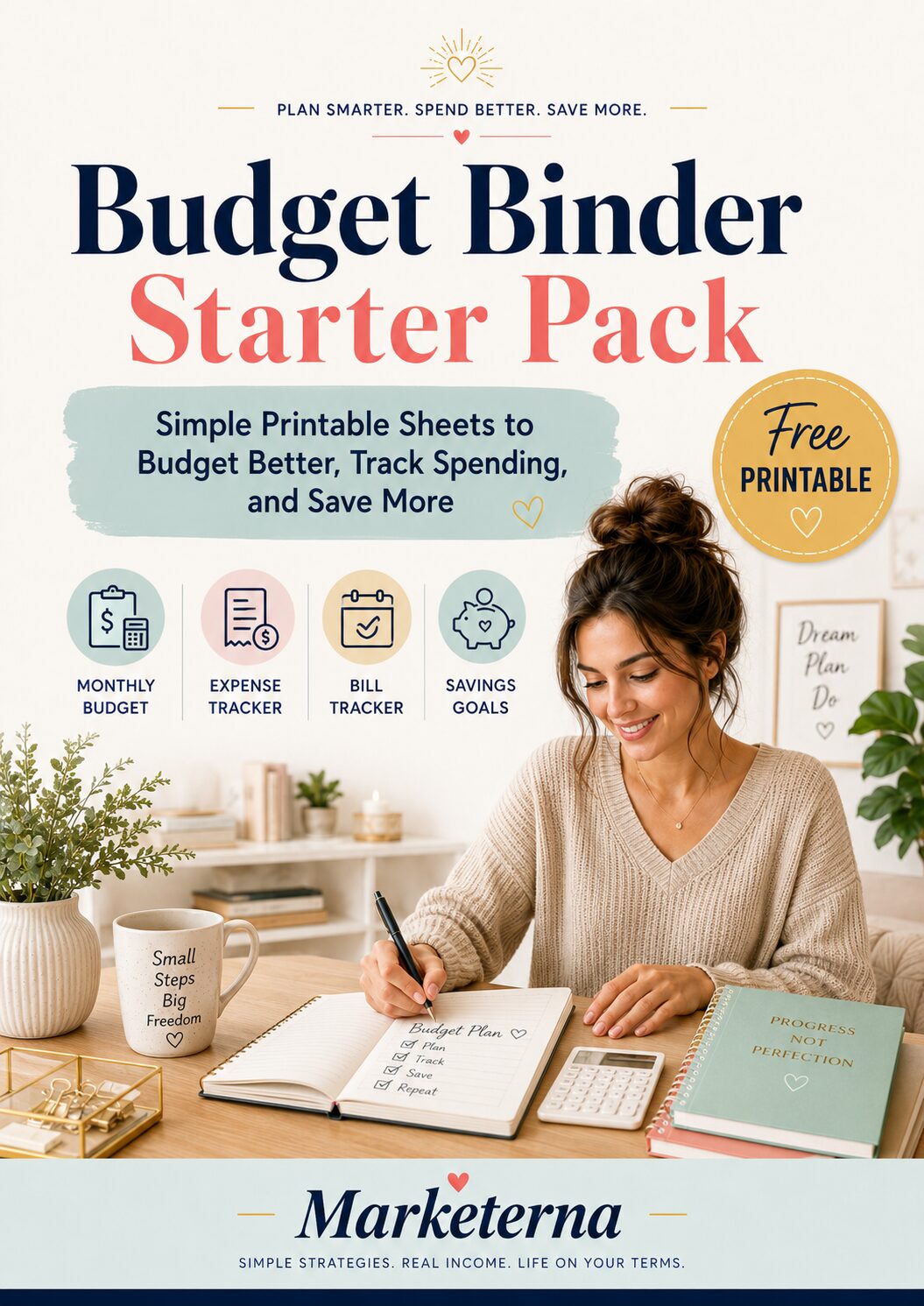
Get the Free Budget Binder Starter Pack
Download simple printable budget sheets to plan your monthly money, track expenses, organize bills, and start building better money habits without feeling overwhelmed.
You’ll get this free PDF plus access to the full Marketerna Save More & Earn More PDF Kit. No spam. Unsubscribe anytime.
1. The 50/30/20 Split: Your Payday Anchor
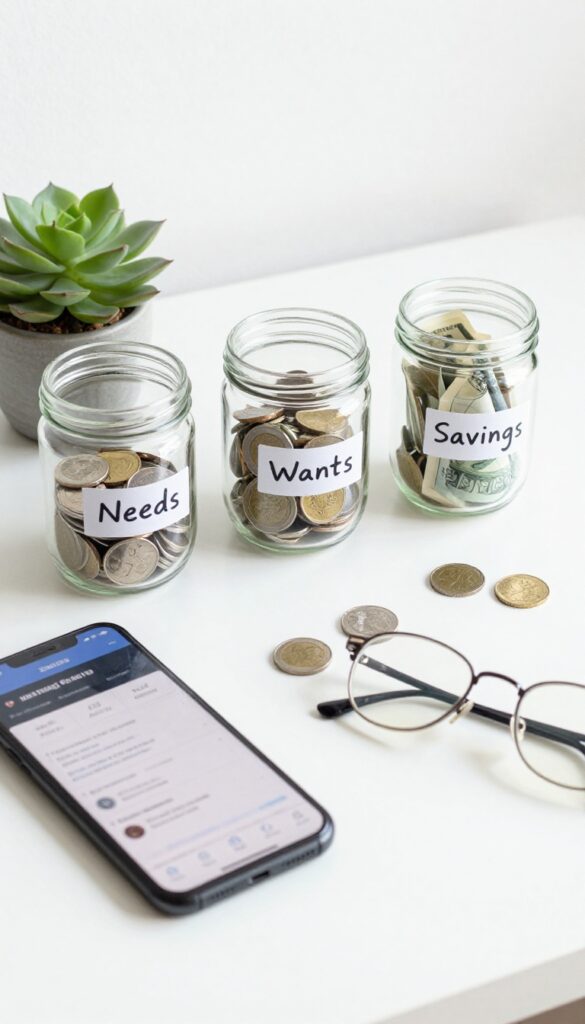
The moment your salary lands, it's tempting to pay bills, buy groceries, and maybe treat yourself—all at once. But without a plan, that money can slip through your fingers. The 50/30/20 rule gives you a simple, powerful framework to divide your income into three clear buckets: needs, wants, and savings.
It's the anchor that keeps your budget steady without needing to track every latte.
This classic budgeting method is perfect for beginners because it's flexible and forgiving. You don't have to categorize every single expense—just aim for the big percentages. Over time, you'll get a feel for where your money naturally goes and can adjust as needed.
How To Set It Up On Payday
When you get paid, immediately transfer 20% of your income into a savings or debt repayment account. Then, pay your essential bills (rent, utilities, groceries) from the 50% needs bucket. The remaining 30% is yours to spend guilt-free on dining out, entertainment, or shopping.
What Counts As Needs Vs. Wants
Needs are things you must have to survive and work: rent, minimum loan payments, utilities, groceries, transportation. Wants are everything else—takeout, streaming subscriptions, new clothes, vacations. Be honest with yourself: that daily coffee shop run is a want, not a need.
Adjusting The Percentages For Your Life
The 50/30/20 split is a starting point, not a law. If your rent eats up 60% of your income, adjust the needs bucket accordingly and shrink wants or savings. The goal is to find a balance that works for your reality, not to force a perfect ratio.
2. Zero-Based Budgeting: Give Every Dollar a Job
Instead of hoping your money lasts, zero-based budgeting makes you decide exactly where every dollar goes. You start with your paycheck amount, then list all your expenses—bills, groceries, savings, fun money—until your income minus expenses equals zero. This doesn't mean you spend everything; it means you assign every dollar a purpose, including savings and debt payments.
It's a powerful way to stay intentional and spot leaks in your spending.
Zero-based budgeting forces beginners to account for every single dollar. By writing down all expenses and making them match your income, you eliminate the guesswork. This method works especially well for irregular incomes because you adjust each month.
The key is to include categories for savings, emergencies, and even small treats so your budget feels realistic, not restrictive.
How To Set It Up In 5 Steps
Start by listing your monthly income at the top. Then write every expense category: rent, utilities, groceries, transportation, subscriptions, dining out, savings, debt payments, and fun. Subtract each category from your income until you hit zero.
If you have money left, assign it to savings or an extra debt payment. If you're over, cut back on non-essentials.
Common Beginner Mistakes To Avoid
Don't forget irregular expenses like car insurance or annual subscriptions—break them into monthly amounts. Also, avoid being too rigid; leave a small buffer (say $50–$100) for unexpected costs. And remember, zero doesn't mean broke—it means every dollar has a job, including fun money.
Why It Works For Beginners
Zero-based budgeting removes the mystery of where your money went. It teaches you to prioritize and makes overspending obvious. After a few months, you'll naturally start spending less on things that don't matter and saving more for what does.
Free PDF Download
Get the Free Budget Binder Starter Pack
Download simple printable budget sheets to plan your monthly money, track expenses, organize bills, and start building better money habits without feeling overwhelmed.
You’ll get this free PDF plus access to the full Marketerna Save More & Earn More PDF Kit. No spam. Unsubscribe anytime.
3. The Envelope System for Variable Expenses
If tapping your card makes it too easy to overspend, cash might be your answer. The envelope system is old-school but brutally effective. You withdraw cash for flexible categories and physically see your budget shrink.
When the envelope is empty, you stop. No exceptions.
This method works best for spending categories that tend to fluctuate: groceries, dining out, entertainment, and personal care. By using cash, you create a natural friction that makes you think twice before spending. It's especially helpful if you tend to lose track with digital payments.
How To Set It Up
List your variable expenses from last month. Choose 3 to 5 categories where you overspend most. Label an envelope for each, and on payday, withdraw the exact amount you've budgeted.
Put the cash in the envelopes and store them somewhere safe but accessible.
Staying Consistent
The real challenge is sticking to the system. Keep your envelopes in your bag or car so you always have them. Track what's left each week.
If you have money left over at month's end, roll it into next month or treat yourself. The goal is awareness, not deprivation.
When To Skip It
The envelope system isn't for everyone. If you rarely carry cash or live in a mostly digital area, it might feel inconvenient. Also, avoid using envelopes for fixed bills like rent or utilities—those are better automated.
Use it only for the spending you want to control.
4. Pay Yourself First: Automate Savings on Payday
Most people save whatever is left after spending. That rarely works. Flip the script: move money to savings the moment it hits your account.
Treat it like a bill you can't skip. You'll be amazed how quickly your nest egg grows when you never see that cash in your checking account.
Set up an automatic transfer to your savings or investment account the same day you get paid. Treat savings like a non-negotiable bill. You'll build wealth without thinking about it.
Pick Your Number
Start with an amount that feels almost too easy—maybe 5% or 10% of your paycheck. You can always increase it later. The goal is to make it automatic, not painful.
Choose The Right Account
Use a separate savings account, not the one linked to your debit card. Out of sight, out of mind. High-yield savings or a simple investment account both work.
The key is that it's hard to touch.
Schedule It For Payday Morning
Set the transfer for the same day your salary lands, ideally early morning. That way the money moves before you have a chance to spend it. Most banks let you schedule recurring transfers in minutes.
Free PDF Download
Get the Free Budget Binder Starter Pack
Download simple printable budget sheets to plan your monthly money, track expenses, organize bills, and start building better money habits without feeling overwhelmed.
You’ll get this free PDF plus access to the full Marketerna Save More & Earn More PDF Kit. No spam. Unsubscribe anytime.
5. The 24-Hour Rule for Non-Essential Purchases
Payday excitement can make anything feel like a need. That new gadget, a fancy dinner, or a spontaneous shopping spree—they all seem justified when your account is full. But those impulse buys often derail your budget before the month really starts.
The 24-hour rule is a simple brake for your spending. It gives you time to separate wants from needs, and helps you stick to your financial goals without feeling deprived.
Before buying anything non-essential on payday, wait 24 hours. This simple pause prevents impulse buys and gives you time to decide if the purchase aligns with your goals.
Why It Works
Your brain craves instant rewards, especially when you have cash on hand. Waiting a day lets the initial excitement fade. You'll often realize you don't want the item as much as you thought.
This rule also creates a habit of mindful spending, which is key to long-term budgeting success.
How To Apply It
When you see something you want but don't need, add it to a wishlist or take a photo. Set a reminder for 24 hours later. When the time comes, ask yourself: Do I still want this?
Does it fit my budget? Can I afford it without sacrificing my savings or bills? If yes, go ahead.
If no, skip it.
Exceptions To The Rule
This rule is for non-essential purchases only. Groceries, gas, rent, and bills don't need a waiting period. Also, if it's a genuine emergency or a time-sensitive deal, use your judgment.
But for most wants, a day is all it takes to make a smarter choice.
6. Bill Pay Day: Knock Out Fixed Expenses First
There's a reason financial pros say "pay yourself first. " But before that, you need to pay the bills that keep a roof over your head and the lights on. Scheduling all your fixed expenses to come out on payday is a simple way to make sure the essentials are covered before anything else.
Once rent, utilities, subscriptions, and loan payments are handled, you'll see exactly how much is left for flexible spending. No more guessing whether you can afford takeout or a new pair of shoes. That leftover number is your real spending money for the next two weeks.
The logic is straightforward: fixed expenses don't change much, so they're easy to automate. Set up automatic payments or schedule transfers to bill accounts on payday. This removes the mental load of remembering due dates and avoids late fees.
Plus, seeing a smaller balance afterward can actually be freeing—you know your obligations are met.
List All Fixed Bills
Start by listing every recurring expense that's the same amount each month: rent or mortgage, car payment, insurance, streaming services, gym membership, and any subscriptions. Don't forget quarterly or annual bills—divide them by the number of pay periods and set aside that amount each payday.
Automate The Payments
Use your bank's bill pay feature or set up autopay directly with each provider. Schedule them for the day after payday to avoid any processing delays. If cash flow is tight, stagger due dates across two paychecks, but keep the principle the same: fixed costs get paid first.
Know What's Left For Fun
After fixed bills are paid, subtract that total from your pay. The remainder is your flexible money for groceries, gas, dining out, and savings. This clarity helps you spend without guilt—you've already taken care of what matters.
7. The Payday Review: 10-Minute Money Check-In

A quick monthly review can transform how you handle money. It's not about digging through every receipt—just a focused 10-minute check-in to see where you stand. Consistency is what builds the habit, not the amount of time you spend.
Set aside 10 minutes on payday to review last month's spending, update your budget, and set a simple goal for the new month. This small ritual keeps you aware and in control without overwhelming you.
What To Review In 10 Minutes
Look at your bank and credit card statements. Note any big surprises or recurring expenses you forgot about. Compare your actual spending to your budget—no judgment, just awareness.
Set One Goal For The Month
Pick one financial goal to focus on, like eating out less or saving an extra $50. Write it down and keep it visible. A single clear goal is easier to stick with than a long list.
Make It A Habit With A Reminder
Schedule this 10-minute block on your calendar every payday. Use your phone's reminder or a sticky note on your laptop. After a few months, it will feel automatic.
8. Debt Snowball Payment: Attack Smallest Debt First
Debt can feel like a weight that never lifts. But there's a strategy that turns your payday into a powerful tool for freedom: the debt snowball. It's simple, motivating, and perfect for beginners who want to see real progress fast.
Instead of tackling every debt at once, you focus all your extra energy on the smallest one. That quick win builds momentum, and before you know it, you're rolling through your debts one by one.
List your debts from smallest to largest, ignoring interest rates for now. On payday, make minimum payments on everything except the smallest debt. Throw every extra dollar you can at that one.
Once it's gone, celebrate—then roll that payment amount onto the next smallest. The snowball grows as you go.
Why Small Wins Matter
Paying off a small debt feels amazing. That emotional boost keeps you motivated when the process gets tough. You're not just crunching numbers—you're building confidence.
Each victory proves you can do this.
How To Set It Up On Payday
Before payday, list all your debts with their balances. Rank them smallest to largest. When your salary lands, immediately schedule minimum payments for all but the smallest.
Then transfer any leftover cash to that smallest debt. Automation helps you stay consistent.
What To Do After Each Win
Once a debt is gone, take a moment to enjoy it. Then update your list and redirect that entire payment amount to the next smallest debt. Your snowball keeps growing, and so does your momentum.
9. The 80/20 Rule for Irregular Income
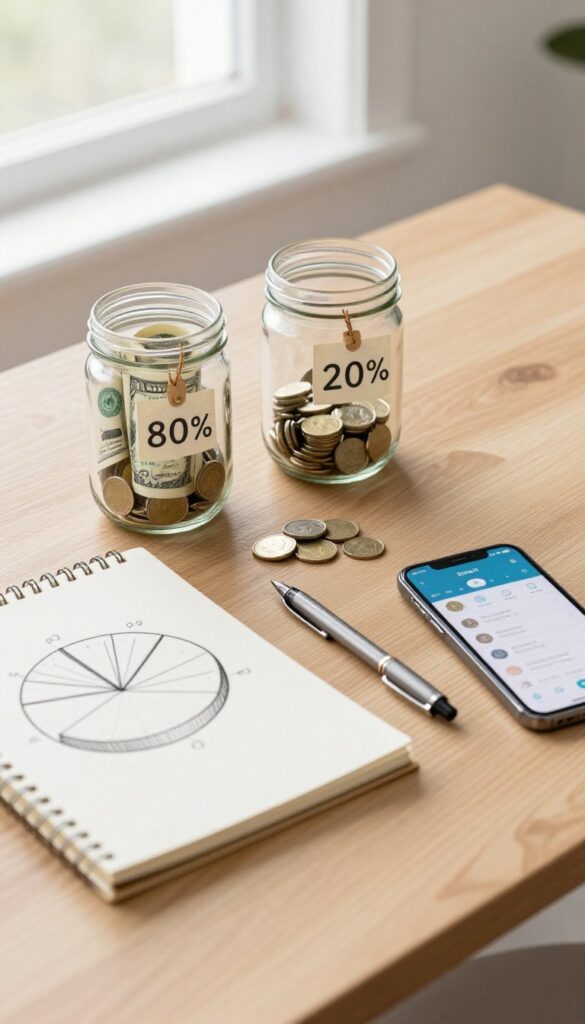
Variable income can feel like a roller coaster. One month you're flush, the next you're scraping by. The 80/20 rule gives you a simple framework that works with the ups and downs.
No complicated formulas, just a clear split that keeps your finances stable.
When your paycheck arrives, immediately set aside 80% for your essentials and savings goals. The remaining 20% is yours to use flexibly—for fun, unexpected extras, or to top up any shortfall in leaner months. This buffer smooths out the natural fluctuations without requiring you to budget every single dollar.
Why 80/20 Works For Variable Income
Traditional budgets assume a fixed amount each month. But when your income changes, rigid categories can cause frustration. The 80/20 rule acknowledges reality: you can't predict exactly what you'll earn, but you can control how you allocate it.
By treating 20% as a flexible cushion, you remove the stress of trying to forecast every expense.
How To Set Up The Split
Open two separate accounts: one for your 80% (bills, rent, groceries, savings) and another for your 20% (discretionary spending). On payday, transfer 80% to the first account and leave 20% in your checking. If you have a lean month, you can dip into the 20% fund to cover essentials—but aim to keep it for non-essentials as much as possible.
Adjusting The Ratio Over Time
The 80/20 split is a starting point, not a permanent rule. If you find your essentials consistently eat up more than 80%, try 70/30 or even 60/40. The goal is to find a ratio that feels sustainable.
As your income grows, you can shift more toward savings and investments.
10. Payday Meal Prep: Save on Food Immediately
Food is one of the biggest budget busters right after payday. Your bank account feels full, so ordering takeout or grabbing lunch out seems harmless. But those small splurges add up fast.
Meal prepping on payday flips that script. You invest a couple of hours to lock in savings for the whole week. A full fridge means you're less likely to order pizza when you're tired or stressed.
It's a simple way to protect your budget from your own cravings.
Pick Your Payday Recipes
Choose 3 to 4 meals that use overlapping ingredients to save money and reduce waste. Think batch-friendly dishes like chili, stir-fry, pasta bakes, or sheet pan dinners. Keep it simple—you don't need gourmet.
The goal is to have ready-to-eat meals that beat the temptation of delivery apps.
Shop Once, Cook Once
Go grocery shopping right after payday with a list based on your chosen recipes. Then set aside a block of time—maybe Sunday afternoon—to cook everything. Portion meals into containers so you can grab and go.
This one session covers lunches and dinners for the first week, when your spending impulse is strongest.
Treat Your Freezer Like A Bank
Freeze half of what you prep for the end of the month. That way, when money gets tight, you have a backup plan. Label containers with dates and contents.
A stocked freezer is like a savings account you can eat. It keeps you from ordering out when your budget is running low.
11. The No-Spend Payday Weekend
The weekend after payday is when temptation strikes hardest. Your balance looks good, and suddenly every coffee shop, sale rack, and takeout menu seems to call your name. That's exactly why declaring a no-spend weekend can be a game-changer for beginners.
This isn't about deprivation—it's about hitting pause. For two days, you commit to spending zero extra money beyond essential bills or pre-planned expenses. You'll be amazed how much clarity comes from simply not buying anything unnecessary.
A no-spend payday weekend resets your financial mindset. It proves you can survive—and even enjoy—a couple of days without spending. Plus, it gives your budget a head start before the month's temptations pile up.
Plan Your Free Fun
Think of activities that cost nothing: a long walk, a movie marathon at home, a board game night, or visiting a free museum. The key is to have a loose plan so you don't end up bored and reaching for your wallet.
Catch Up On Chores
Use the time to meal prep, clean out a closet, or organize your finances. Productive tasks keep you busy and make you feel accomplished—without spending a dime.
Reflect On Your Spending
At the end of the weekend, jot down what you noticed. Did you feel tempted? What triggered the urge to buy?
This reflection builds awareness that helps you make smarter choices all month.
12. Sinking Funds for Irregular Expenses
Irregular expenses—car insurance, annual subscriptions, holiday gifts—have a way of sneaking up on you. One month you're fine, the next you're scrambling to cover a $600 bill. A sinking fund is your antidote: a separate savings pot for those predictable but non-monthly costs.
By setting aside a little each payday, you spread the pain across the year and keep your budget smooth.
A sinking fund is simply a savings account (or sub-account) earmarked for a specific irregular expense. You calculate the annual cost, divide by the number of pay periods, and transfer that amount each payday. When the bill arrives, you withdraw from the fund—no stress, no debt.
Start with one or two big-ticket items, like car insurance or a vacation fund, then expand as you get comfortable.
Pick Your Biggest Annual Bills
List your irregular expenses that are $100 or more per year. Common ones: car insurance, property taxes, holiday gifts, annual subscriptions, and vet visits. Rank them by urgency and start with the one that's due soonest or causes the most anxiety.
Calculate Your Per-payday Amount
Divide each annual cost by the number of paydays you have in a year (26 if biweekly, 12 if monthly). For example, a $600 car insurance bill split over 26 paychecks is about $23 per check. Automate that transfer to a separate savings account right after payday.
Keep Funds Separate But Accessible
Use a high-yield savings account or an envelope system within your bank. Label each sinking fund clearly (e. g. , "Car Insurance"). Avoid investing this money—it needs to be liquid and penalty-free.
Review your list quarterly and adjust amounts if costs change.
13. The 30-Day Savings Challenge on Payday
Turning saving into a game makes it stick. The 30-day savings challenge turns payday into the starting line of a small but powerful habit. You begin with a tiny amount and increase it daily, so by the end you've built a mini emergency fund without feeling the pinch.
This challenge works because it's low-pressure and short-term. You're not committing to a huge lifestyle change—just a month of small, daily actions that add up. Plus, it's oddly satisfying to watch the balance grow.
Start by transferring $5 from your payday money into a separate savings account on day one. Each day after, add one more dollar. So day 2 is $6, day 3 is $7, all the way to day 30 where you add $34.
Total saved after 30 days? $585. That's a solid starter emergency fund or a guilt-free treat fund. Set up an automatic daily transfer from checking to savings if your bank allows it.
Or do it manually each morning with your coffee. The key is consistency, not perfection. Miss a day?
Just double up the next day and keep going.
Why Start On Payday?
Payday is when your account is most flush, so the initial $5 feels like nothing. Starting then also ties the habit to a recurring event—your salary deposit. That mental anchor makes it easier to repeat next month.
Keep It Fun With A Visual Tracker
Print a simple calendar or use a savings app that shows your progress. Color in each day as you save. Seeing the chain grow is motivating and turns the challenge into a game you'll want to win.
What To Do With The $585
Leave it in savings as a mini emergency fund for unexpected car repairs or medical copays. Or use it for a planned splurge that won't derail your budget. Either way, you've built momentum for bigger savings goals.
14. Budget Buddy: Accountability Check-In
Budgeting alone can feel like a chore, but sharing the journey makes it easier. A budget buddy is someone who checks in with you on payday—and you do the same for them. It's a simple way to stay on track and make money management feel less isolating.
Partner with a friend or family member who also wants to get better with money. On payday, send each other a quick text or have a short call sharing your top three budget goals for the month. Knowing someone else is watching can be a powerful motivator to stick to your plan.
Why It Works
Accountability taps into our natural desire to follow through on commitments. When you know you'll be reporting to someone, you're more likely to avoid impulse buys and stick to your budget. Plus, it turns budgeting into a shared experience, reducing the feeling of going it alone.
How To Find A Budget Buddy
Look for someone you trust who has similar financial goals. It could be a partner, sibling, or close friend. If no one in your circle is interested, try online communities or budgeting apps with built-in accountability features.
The key is consistency—agree on a regular check-in schedule, like every payday.
Make It Fun And Rewarding
Celebrate milestones together. If you both hit your savings targets for the month, treat yourselves to a small reward—like a coffee or a movie night. Positive reinforcement keeps the habit going and makes budgeting something to look forward to.
15. The Payday Reward: Celebrate Small Wins

Budgeting doesn't have to mean saying no to everything. In fact, the most sustainable budgets include a little fun. By setting aside a tiny reward on payday, you train your brain to associate budgeting with positive feelings, not deprivation.
Allocate a tiny portion of your pay—say $10—for a guilt-free treat. A coffee, a movie rental, or a new book reinforces the habit and makes budgeting sustainable. This small celebration keeps you motivated and prevents burnout.
Why A Reward Works
Behavioral science shows that immediate rewards help form lasting habits. When you pair budgeting with a small pleasure, your brain starts to crave the routine. Over time, you'll look forward to payday budgeting instead of dreading it.
How To Choose Your Treat
Pick something that feels like a genuine treat but won't derail your budget. A fancy coffee, a single movie rental, or a cheap e-book are great options. Avoid big-ticket items or anything that leads to ongoing costs.
Keep It Consistent
Make your reward a non-negotiable part of your payday routine. Set aside the money first, then enjoy it guilt-free. Consistency turns the reward into a powerful anchor for your entire budgeting habit.
FAQ
What is the best payday budget routine for a complete beginner?
Start with the 50/30/20 rule. It's simple, requires no tracking of every dollar, and gives you a clear structure. Automate your savings first, then pay bills, and use the rest freely within the percentages.
How long should a payday budget routine take?
Aim for 15 to 30 minutes on payday. As you get comfortable, it may take even less. The key is consistency, not perfection.
A quick check-in beats a perfect plan you never do.
What if my income is irregular? How do I budget on payday?
Use the 80/20 rule: set aside 80% for essentials and savings, and treat 20% as flexible. Build a buffer fund during high-income months to cover low-income periods. Focus on what you can control.
Should I pay off debt or save first on payday?
It depends on your situation. If you have high-interest debt (like credit cards), prioritize that. Otherwise, build a small emergency fund first (e. g. , $1, 000) before aggressively paying debt.
Both are valid.
How do I stick to a payday budget routine long-term?
Make it easy and rewarding. Automate as much as possible, start with one or two routines, and celebrate small wins. If you slip, just restart next payday.
Consistency over time builds the habit.
Conclusion
Building a payday budget routine doesn't have to be complicated. The best routine is the one you actually stick with, so start small and adjust as you go. Each payday is a fresh chance to take control of your money.
Pick one idea from this list and try it for your next paycheck. You'll be surprised how a simple 15-minute habit can transform your financial life. Your future self will thank you.
Free PDF Download
Get the Free Budget Binder Starter Pack
Download simple printable budget sheets to plan your monthly money, track expenses, organize bills, and start building better money habits without feeling overwhelmed.
You’ll get this free PDF plus access to the full Marketerna Save More & Earn More PDF Kit. No spam. Unsubscribe anytime.