19 Household Budget Ideas for Busy Families
Last updated on May 5th, 2026 at 03:42 pm
You check your bank balance and feel a knot in your stomach. Between school runs, work deadlines, and endless activities, tracking every dollar feels impossible. But keeping your finances on track doesn't require a spreadsheet obsession.
The truth is, small, intentional changes can free up hundreds of dollars each month. You don't need a complicated system—just a few realistic tweaks that fit your family's rhythm. These 19 budget ideas are designed for real life.
No guilt trips, no rigid rules. Just practical moves that help your money go further while you focus on what matters most.

Free PDF Download
Get the Free Budget Binder Starter Pack
Download simple printable budget sheets to plan your monthly money, track expenses, organize bills, and start building better money habits without feeling overwhelmed.
You’ll get this free PDF plus access to the full Marketerna Save More & Earn More PDF Kit. No spam. Unsubscribe anytime.
1. The No-Spend Weekend Challenge

Pick one weekend per month where you commit to spending zero dollars. Plan free activities like park visits, movie nights at home, or board games. It resets your spending habits and shows how much fun you can have without opening your wallet.
The no-spend weekend is a powerful reset button for your family's budget. By choosing just one weekend each month to spend nothing, you break the cycle of impulse buying and mindless spending. It's not about deprivation—it's about rediscovering free fun and realizing how much money you can save without feeling like you're missing out.
Plan Ahead For Success
Look at your calendar and pick a weekend with no birthdays, parties, or planned outings that require cash. Stock up on groceries before the weekend so you don't need to run to the store. Let family and friends know you're doing a no-spend challenge so they don't invite you to paid events.
Fill The Weekend With Free Fun
Make a list of free activities your family loves—hiking, library visits, baking with pantry ingredients, or a family game tournament. Rotate who picks the activity so everyone feels invested. The key is to keep everyone busy and engaged so spending never crosses your mind.
Reflect On What You Learned
After the weekend, talk with your family about what you enjoyed most. Did you miss takeout? Probably not as much as you thought.
Use that insight to cut back on small daily expenses that add up. Each no-spend weekend can save you $50–$200, depending on your normal weekend spending.
2. Meal Prep Sunday for the Win
Dedicating two hours on Sunday to plan and prep meals for the week can transform your family's budget. Chopping veggies, cooking grains, and portioning snacks cuts down on last-minute takeout and reduces food waste. It's a simple routine that saves both time and money.
Start With A Simple Plan
Before you shop, take five minutes to sketch out a weekly menu. Focus on meals that share ingredients—like using leftover roast chicken for tacos and salads. This reduces waste and keeps your grocery list tight.
Batch Cook Your Staples
Cook a big pot of rice, quinoa, or pasta, and roast a sheet pan of veggies. Grill several chicken breasts or brown ground beef in bulk. Store them in containers so you can mix and match all week.
Portion Snacks And Lunches
Divide nuts, fruit, yogurt, or crackers into individual bags or containers. Grab-and-go portions prevent overeating and make school lunches a breeze. It also stops the midweek temptation to buy expensive convenience packs.
Free PDF Download
Get the Free Budget Binder Starter Pack
Download simple printable budget sheets to plan your monthly money, track expenses, organize bills, and start building better money habits without feeling overwhelmed.
You’ll get this free PDF plus access to the full Marketerna Save More & Earn More PDF Kit. No spam. Unsubscribe anytime.
3. The 24-Hour Rule for Non-Essentials
Impulse buys are budget killers. That cute top on sale, the latest gadget, or a spontaneous takeout order can quickly add up. The 24-hour rule is a simple way to stop those spur-of-the-moment purchases before they happen.
Here's how it works: whenever you feel the urge to buy something that isn't a necessity, force yourself to wait a full day. That pause is enough to let the initial excitement fade and think clearly. You'll often realize you don't actually need it—and your wallet will thank you.
Why It Works
Our brains are wired to seek instant gratification. Marketers know this and use flash sales, limited-time offers, and emotional triggers to get you to buy now. The 24-hour rule interrupts that impulse loop.
It gives your rational brain time to catch up and ask, "Do I really need this? " More often than not, the answer is no.
How To Make It Stick
Keep a running list on your phone or a sticky note. When you see something you want, write it down with the date and price. Then walk away.
After 24 hours, revisit the list. If you still want it and it fits your budget, you can consider buying it. But most items will feel less urgent by then.
What Counts As Non-essential
Essentials are things like groceries, gas, medicine, and bills. Everything else—clothes, decor, gadgets, dining out, entertainment—is fair game for the 24-hour rule. Be honest with yourself.
If you're not sure, ask: "Can I live without this for one more day? " If yes, wait.
4. Automate Your Savings Like a Boss
Payday hits and suddenly the money's gone—not on anything big, just lots of little things. What if you could save without thinking about it? That's the magic of automation.
Set up an automatic transfer from checking to savings on payday, even if it's just $25. Out of sight, out of mind. Your future self will thank you when that vacation fund or emergency stash is actually growing.
Start Small, Think Big
Even $25 a week adds up to $1, 300 a year. That's a nice buffer for car repairs or holiday gifts. You won't miss what you never see.
Pick an amount that feels painless. $10? $50? Whatever works. The key is consistency, not size.
Pick The Right Account
Open a separate savings account at a different bank. No debit card, no easy access. Out of sight really means out of mind.
High-yield savings accounts earn a little interest, too. Every bit helps.
Schedule It For Payday
Set the transfer for the same day your paycheck lands. That way, savings happen before you can spend. Treat it like a bill you pay to yourself.
Most banks let you automate this online in under five minutes. Do it now, while you're thinking about it.
Free PDF Download
Get the Free Budget Binder Starter Pack
Download simple printable budget sheets to plan your monthly money, track expenses, organize bills, and start building better money habits without feeling overwhelmed.
You’ll get this free PDF plus access to the full Marketerna Save More & Earn More PDF Kit. No spam. Unsubscribe anytime.
5. The Envelope System for Variable Expenses
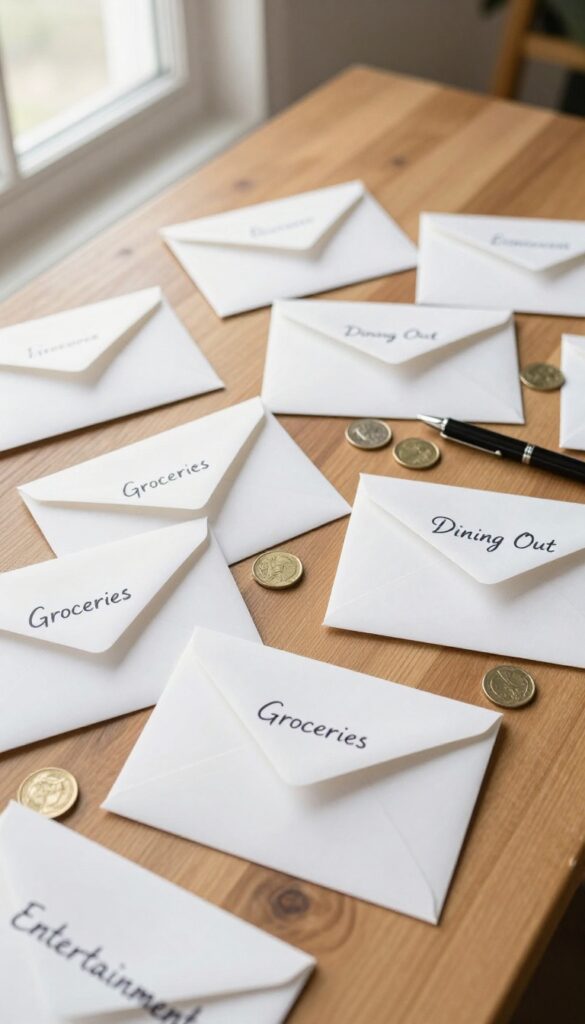
Cash might feel old-school, but it works. The envelope system gives you a clear, physical limit for flexible spending categories like groceries, dining out, and entertainment. Once the cash in an envelope is gone, that's it—no more spending in that category until next month.
It's a simple way to stay on budget without tracking every receipt.
This method turns abstract numbers into something you can see and touch. You decide how much to allocate to each category, withdraw that amount in cash, and put it in labeled envelopes. When you pay for something, you take cash from the right envelope.
When it's empty, you stop spending. No guilt, no guesswork.
Set Up Your Envelopes
Start with your most variable categories—groceries, eating out, entertainment, and maybe personal spending. Write the category and monthly amount on each envelope. Withdraw the total cash from your bank and distribute it.
Keep the envelopes somewhere safe but accessible, like a drawer or a small safe.
Make It Work For Your Family
If carrying cash feels risky, try a hybrid approach: use the envelope for just one or two problem categories. Or, go digital with apps that mimic the system, like Goodbudget or Mvelopes. The key is the same—once the budget for that category is spent, you pause until next month.
Handle Leftover Cash
If you have money left in an envelope at month's end, you have options. Roll it into next month's same category, put it toward a savings goal, or treat your family to a small reward. Seeing that leftover cash is a great motivator to keep spending in check.
6. Audit Your Subscriptions Quarterly
It's easy to sign up for a free trial and forget about it. Before you know it, you're paying for four streaming services, a meal kit you never use, and an app your kid downloaded once. A quarterly subscription audit takes 20 minutes and can save you hundreds a year.
Set a recurring calendar reminder for the first week of every quarter. Pull up your bank or credit card statements and highlight every recurring charge. Then decide: have you used it in the last 30 days?
If not, cancel it. Those $10 and $15 fees add up fast.
Spot The Sneaky Charges
Look for small, monthly fees you might have missed—like cloud storage, a gym membership you haven't used, or a magazine subscription that auto-renewed. Even $5 a month is $60 a year.
Make Canceling Easy
Keep a list of your subscriptions with login info and cancellation links. Use a tool like Rocket Money or just a simple spreadsheet. When you find a service to cancel, do it immediately—don't put it off.
Reassess What You Actually Need
Maybe you only need one streaming service at a time. Rotate them monthly. Or share accounts with family.
The goal is to pay only for what your family genuinely uses and enjoys.
7. Use Cashback and Rewards Apps Strategically
You're already buying groceries, gas, and household essentials. Why not get a little money back for those routine purchases? Cashback and rewards apps are a low-effort way to recoup some of what you're spending, without changing your shopping habits.
Apps like Rakuten, Ibotta, and Fetch Rewards let you earn cashback on everyday purchases. You simply scan your receipts or click through their links before shopping online. The amounts add up slowly—think $20 to $50 a month—but that's real money for almost zero extra work.
Which Apps Are Worth Your Time
Rakuten gives you a percentage back at thousands of online stores, paid quarterly via check or PayPal. Ibotta offers cashback on specific grocery items and lets you stack offers. Fetch Rewards awards points for any receipt, which you can redeem for gift cards.
Start with one or two to avoid feeling overwhelmed.
How To Maximize Without Going Crazy
Don't buy things just because they offer cashback. Instead, check the app before you shop to see if there's a deal on something you already need. For online purchases, always activate the cashback offer first.
And make it a habit to scan your receipts once a week—set a reminder on your phone.
8. The Pantry Challenge Before Grocery Shopping

Before you grab your keys and head to the store, pause. Take ten minutes to peek into your pantry, fridge, and freezer. You might be surprised by what you already have.
Planning meals around those items cuts down on waste and stops you from buying duplicates. It's a simple habit that shaves dollars off your grocery bill every week.
The pantry challenge is straightforward: commit to using up what you already own before restocking. It's not about deprivation—it's about resourcefulness. You'll discover forgotten cans, half-used bags of rice, and frozen veggies that need a home.
Building meals around these finds reduces food waste and saves you from buying ingredients you already have.
How To Do A Quick Pantry Audit
Start by emptying your fridge and pantry shelves one at a time. Group similar items together—grains, canned goods, spices, frozen proteins. Check expiration dates and set aside anything near its end.
Make a list of what you have, then brainstorm meals that use those ingredients. For example, canned tomatoes, pasta, and ground beef become spaghetti night.
Meal Planning From Your Inventory
Once you know your stockpile, plan 3 to 5 meals around it. Fill in gaps with a small shopping list of fresh produce or dairy. This approach keeps your grocery list short and focused.
You'll avoid impulse buys because you're shopping with a purpose—not guessing what you need.
Turn It Into A Family Game
Get the kids involved by making it a challenge: who can create the most creative meal from pantry items? Let them pick a can or a package and build a meal around it. This teaches them about budgeting and reduces picky eating because they helped choose.
Plus, it makes grocery shopping faster and cheaper.
9. Negotiate Your Bills Annually
You might be paying hundreds more than you need to for internet, cable, and insurance. Providers often raise rates on loyal customers, but they'll lower them if you ask. A single phone call each year can put that money back in your pocket.
Set a calendar reminder to review your bills once a year. Call each provider and ask for a better rate—mention competitor offers or say you're considering switching. Be polite but firm.
Many reps have authority to lower your bill or add perks to keep you.
Do Your Homework First
Check current deals from competitors before calling. Write down the offer details so you can reference them. This gives you leverage and shows you're serious about switching.
What To Say On The Call
Start with, "I've been a loyal customer, but I noticed a better deal elsewhere. Can you match it? " If they say no, ask to speak to retention or loyalty department.
Often they have better offers.
Don't Forget Insurance Bundles
Call your auto and home insurance providers too. Ask about bundling discounts or loyalty rates. Even a small percentage drop can save hundreds annually.
10. Host a Clothing Swap with Friends
Kids grow fast, and their closets are constantly overflowing with outgrown clothes. Instead of heading to the store every season, gather a few families for a clothing swap. It's a fun, free way to refresh everyone's wardrobe without spending a cent.
How To Organize It
Pick a date and invite 4–6 families. Ask everyone to bring clean, gently used clothes, shoes, and accessories. Set up tables by size or type so it's easy to browse.
Let people take what they need—no trading required.
Make It A Social Event
Turn it into a mini party. Offer snacks, coffee, or even a potluck. While adults shop, kids can play together.
It turns a chore into a fun catch-up session.
Donate Leftovers
Whatever doesn't get claimed can go to a local charity or shelter. That way nothing goes to waste, and you're helping others while helping your budget.
11. Use a Sinking Fund for Irregular Expenses
Irregular expenses—car repairs, holiday gifts, annual insurance premiums—can wreck a budget if you're not ready. Instead of scrambling when they pop up, set up a sinking fund. It's a separate savings account or envelope you contribute to monthly, so when the bill arrives, the money is already there.
No stress, no credit card panic.
A sinking fund turns unpredictable costs into manageable monthly chunks. Decide which irregular expenses hit you hardest—maybe car maintenance, back-to-school shopping, or property taxes. Open a dedicated savings account or grab a labeled envelope.
Each month, deposit a fixed amount. When the expense comes due, you pay from that fund. It's that simple.
Pick Your Targets
Start with the biggest or most stressful irregular costs. Common ones: car repairs, holiday gifts, annual insurance, vet bills, or home maintenance. List them out and estimate how much you'll need each year.
Divide by 12 to get your monthly contribution. For example, if you spend $1, 200 on holiday gifts, save $100 a month.
Automate It
Set up automatic transfers from your checking account to your sinking fund on payday. Even $25 a week adds up. Automating removes the temptation to skip a month and keeps your fund growing without effort.
Most banks let you create sub-accounts or label savings goals.
Keep It Separate
Don't mix sinking fund money with your emergency fund or everyday checking. A separate account or envelope prevents accidental spending. Online banks with high-yield savings accounts work great—your money earns a little interest while you wait.
12. The One-In-One-Out Rule for Toys and Gear

Kids accumulate stuff fast. Between birthday gifts, holiday hauls, and your own purchases, toy bins overflow and gear piles up. The one-in-one-out rule is a simple way to keep things under control: for every new item that enters the house, one similar item must leave.
This prevents clutter and helps you resist impulse buys. Donate or sell the outgoing piece to free up space and recoup a little cash.
This rule works best when you make it a habit. Before buying a new toy or piece of gear, decide which old item will go. Keep a donation box handy so you can drop off items regularly.
For bigger gear like strollers or car seats, sell them online or pass them to a friend. The rule also applies to gifts—when your child receives a new toy, have them choose one to give away. This teaches them about letting go and sharing with others.
How To Make It Stick
Start by choosing a designated spot for outgoing items, like a bin in the closet. Involve your kids in the process—let them pick which toys to donate. For gear, set a reminder to list items for sale after a new purchase.
Consistency is key; the rule becomes second nature after a few rounds.
What Counts As 'in' And 'out'
The rule applies to similar categories: toys for toys, books for books, gear for gear. A new tricycle means an old ride-on goes. A new puzzle means a completed one is donated.
This keeps the system fair and manageable. For consumables like art supplies, the rule doesn't apply—just use them up and restock.
Bonus: Save Money And Space
By curbing impulse buys, you'll spend less on items that quickly lose appeal. Plus, selling used gear puts money back in your pocket. The rule also makes cleanup faster and rooms feel more open.
It's a win for your budget and your sanity.
13. DIY Cleaning Supplies for Pennies
Store-bought cleaners are expensive and packed with chemicals you don't need around your kids. The good news? You can whip up effective, non-toxic alternatives with ingredients you probably already have in your pantry.
It's safer for your family, kinder to the planet, and way easier on your wallet.
Making your own cleaning supplies is one of the simplest ways to slash your household budget. A single bottle of all-purpose cleaner costs pennies to make, and you can customize the scent with essential oils. Plus, you'll cut down on plastic waste since you can reuse spray bottles.
The All-purpose Wonder Cleaner
Mix equal parts white vinegar and water in a spray bottle. Add 10–15 drops of lemon, tea tree, or lavender essential oil for a fresh scent and extra antibacterial power. This cleaner works on countertops, windows, mirrors, and most surfaces.
Just avoid using it on natural stone like granite or marble.
Glass & Mirror Magic
For streak-free windows and mirrors, combine 1 cup of water, 1 cup of rubbing alcohol, and 1 tablespoon of white vinegar. Shake gently and spray. Wipe with a microfiber cloth or crumpled newspaper for a crystal-clear shine.
This solution costs a fraction of commercial glass cleaners.
Scrub For Tough Stains
Need to tackle soap scum or baked-on grime? Make a paste with baking soda and a little water or vinegar. Apply it to the stain, let it sit for a few minutes, then scrub with a sponge.
For extra power, add a squirt of dish soap. Rinse well and enjoy a sparkly clean surface.
14. Plan a Free or Low-Cost Date Night
Date nights don't have to mean a $100 dinner and a sitter. With a little creativity, you can reconnect without the price tag. Think of it as a chance to break the routine and actually talk—without the kids interrupting every two minutes.
Swap expensive dinners out for a picnic in the park, a hike, or a movie night at home. Get creative with activities that cost little to nothing. Your relationship—and your wallet—will benefit.
At-home Date Ideas
Cook a new recipe together, have a board game tournament, or build a blanket fort and stream a classic movie. The key is to put away phones and focus on each other. Even a fancy dessert you make from scratch can feel special.
Free Local Adventures
Check your community calendar for free concerts, art walks, or outdoor movies. Many towns host events that are perfect for a low-cost outing. A walk through a botanical garden or a sunset at a scenic overlook costs nothing but creates memories.
Swap Babysitting With Friends
Trade childcare with another couple so you both get a night out without paying a sitter. It's a win-win: you watch their kids one Friday, they watch yours the next. That alone can save $50 or more per date.
15. Use the Library for More Than Books

Your local library is probably doing way more than you realize. Beyond the shelves of books, many libraries now lend out things like movies, video games, audiobooks, and even museum passes. Some have tool libraries where you can borrow a power drill or a cake pan.
All of this is free with your library card, which means you can entertain your family without spending a dime.
Think of your library as a community resource hub. Instead of renting a movie on streaming, check out a DVD. Instead of buying a new board game, borrow one for the weekend.
Many libraries also offer free passes to zoos, science centers, and state parks. A quick trip to the library website can uncover dozens of free activities you didn't know existed.
Free Entertainment For All Ages
Libraries stock popular movies, TV series, and video games for all ages. You can reserve the latest releases online and pick them up curbside. This alone can save you $20–$50 a month on rentals or streaming subscriptions.
Borrow Experiences, Not Just Things
Many library systems partner with local attractions to offer free or discounted admission. You can check out a museum pass just like a book. Some libraries even lend out fishing poles, hiking backpacks, or gardening tools.
These are perfect for a low-cost family outing.
Tool And Equipment Lending
Need a pressure washer for a weekend project? Or a sewing machine for a costume? Your library might have one.
Tool libraries save you from buying expensive equipment you'll only use once. Just borrow, use, and return.
16. Track Your Spending for One Week
You might think you know where your money goes, but the truth often hides in the small stuff. For just seven days, write down every single purchase—every coffee, every snack, every quick online order. It's a simple experiment that reveals patterns you didn't notice before.
Grab a notebook or use a notes app. Each time you spend money, jot it down right away. Don't judge or change your habits yet—just observe.
At the end of the week, look for surprises. Maybe you're spending $30 a week on takeout coffee, or that forgotten streaming subscription is still charging you. Awareness is the first step to making small, painless changes.
What To Track
Include everything—cash, card, subscriptions, even small change. Don't skip anything. The goal is a complete picture, not a perfect one.
How To Spot Patterns
After seven days, group your spending into categories like food, transport, and entertainment. Look for the biggest categories and ask yourself: does this match what I value?
What To Do Next
Pick one or two small changes from what you learned. Maybe swap one coffee run for homemade, or cancel a subscription you forgot about. Tiny tweaks add up fast.
17. The 50/30/20 Budget Made Simple
If you're overwhelmed by complex budgeting systems, the 50/30/20 rule is a breath of fresh air. It splits your after-tax income into three simple categories: 50% for needs, 30% for wants, and 20% for savings and debt. No tracking every coffee—just a clear framework that gives you freedom while keeping you on track.
The beauty of this method is its flexibility. Needs include rent, groceries, utilities, and minimum loan payments. Wants cover dining out, streaming services, and hobbies.
Savings and debt go to emergency funds, retirement, or extra payments. Adjust percentages slightly to fit your family, but keep the core structure.
How To Set It Up In Minutes
Start by calculating your monthly after-tax income. Then multiply by 0. 5, 0.
3, and 0. 2 to get your dollar limits for each bucket. Use a free app like EveryDollar or a simple spreadsheet to track expenses.
Many banks also offer spending categorization tools that automatically sort transactions.
Real-life Tweaks For Families
If 50% for needs feels tight, consider trimming wants first—like swapping one streaming service or eating out less. Or temporarily shift to 60/20/20 until your income grows. The key is consistency: automate your 20% savings so it happens before you can spend it.
Common Pitfalls To Avoid
Don't confuse wants with needs. That gym membership might feel essential, but it's a want. Also, revisit your budget monthly—life changes.
And don't stress about perfection; if you overspend on wants one month, just adjust the next. The goal is progress, not precision.
18. Cut the Cord on Expensive Cable
That monthly cable bill is probably one of your biggest expenses. With so many streaming options available, you can easily replace cable for a fraction of the cost. Many families save $50–$100 per month by making the switch, and you won't miss much—if anything.
Switching to streaming services or an antenna gives you access to most of the same content without the bloated price tag. You can pick and choose what you actually watch, and cancel anytime. It's a simple change that puts money back in your pocket every month.
What You'll Need
A smart TV or a streaming device like Roku, Fire Stick, or Apple TV. An over-the-air antenna for local channels. A reliable internet connection.
Best Streaming Combos
Pair one or two major services (Netflix, Hulu, Disney+) with a free ad-supported option like Pluto TV or Tubi. Add an antenna for live news and sports. Total cost: around $30–$50 per month instead of $100+.
How To Break Up With Cable
Call your provider and cancel. Expect retention offers—politely decline. Return equipment promptly to avoid fees.
Then set up your new services and enjoy the savings.
19. Involve the Kids in Budgeting

Getting your kids on board with budgeting might sound like a stretch, but it's actually one of the smartest moves you can make. When children understand the value of money early, they're less likely to beg for every toy at the store. Plus, it takes some pressure off you to explain every "no.
"
Give each child a small weekly allowance and three clear jars labeled Save, Spend, and Give. Let them decide how to split their money among the jars. This hands-on approach teaches budgeting, delayed gratification, and generosity without any lectures.
Make It Visual
Kids respond to what they can see. Use clear jars so they watch their coins grow. When they want a pricey item, they can see exactly how much more they need to save.
This builds patience and planning skills naturally.
Set A Family Goal
Pick something fun like a pizza night or a trip to the water park. Have everyone contribute a little from their Give jar or a shared family jar. It teaches teamwork and shows that saving together leads to rewards.
Keep It Simple And Consistent
Don't overcomplicate it. Stick to the same routine each week. Let them make mistakes with small amounts—like blowing all their money on candy.
Those early lessons are cheap tuition for smart money habits later.
FAQ
How can I start budgeting if I'm already overwhelmed?
Start small. Pick just one idea from this list, like the no-spend weekend or tracking spending for a week. Don't try to do everything at once.
Small wins build momentum without adding stress.
What's the easiest way to save money without feeling deprived?
Automate your savings so you never see the money. Then focus on cutting expenses that don't add value, like unused subscriptions or impulse buys. You'll save without feeling like you're missing out.
How do I get my spouse on board with budgeting?
Have a calm conversation about shared goals, like a family vacation or paying off debt. Focus on what you both want, not restrictions. Then pick one or two ideas to try together as a team.
Are budgeting apps worth it for busy families?
Yes, if you choose one that's simple and automated. Apps like YNAB, EveryDollar, or Mint can sync with your accounts and categorize spending. But a simple spreadsheet or envelope system works just as well.
How often should I review my budget?
Aim for a quick weekly check-in (10 minutes) and a deeper monthly review. The weekly check keeps you on track, while the monthly review helps you adjust for upcoming expenses or changes in income.
Conclusion
Budgeting as a busy family doesn't have to be a chore. These 19 ideas are meant to be picked and chosen based on what fits your life right now. You don't need to implement them all at once.
Start with one or two that feel doable. Maybe it's the no-spend weekend or automating your savings. Small steps lead to big changes over time, and your family will thank you for the extra breathing room in your budget.
Free PDF Download
Get the Free Budget Binder Starter Pack
Download simple printable budget sheets to plan your monthly money, track expenses, organize bills, and start building better money habits without feeling overwhelmed.
You’ll get this free PDF plus access to the full Marketerna Save More & Earn More PDF Kit. No spam. Unsubscribe anytime.