19 Savings Tracker Ideas for Money Goals
Tracking your savings can turn a vague goal into a tangible reality. The right tracker keeps you motivated and shows progress at a glance. But with so many options, which one fits your lifestyle?
You don't need a complicated system to stay on top of your money goals. Sometimes a simple visual cue or a weekly check-in is all it takes. The key is finding a method you'll actually use.
We've rounded up 19 savings tracker ideas that range from tech-savvy to hands-on. Whether you're saving for a vacation, an emergency fund, or a big purchase, there's an idea here for you.

Free PDF Download
Not Sure Which Side Hustle Fits You Best?
Take the free Side Hustle Matchmaker Quiz and get a simple 7-day starter plan to help you choose a beginner-friendly idea based on your time, skills, comfort level, and goals.
You’ll get this free PDF plus access to the full Marketerna Save More & Earn More PDF Kit. No spam. Unsubscribe anytime.
1. The Classic Spreadsheet

A spreadsheet puts you in the driver's seat. You decide the layout, the categories, and the formulas. It's flexible, free, and works for any savings goal.
Whether you use Google Sheets or Excel, you can customize it to match your exact needs.
Start by listing your goal, monthly target, and actual savings. Use simple formulas to calculate your progress percentage and remaining amount. Add conditional formatting to turn cells green when you hit milestones.
Over time, you'll see trends that help you adjust your habits.
Set Up Your Columns
Create columns for date, goal name, monthly target, actual saved, difference, and progress %. Keep it minimal—too many columns can overwhelm you. Add a notes column for wins or setbacks.
Use Built-in Templates
Google Sheets has free savings tracker templates. Search for 'savings goal tracker' in the template gallery. You'll find pre-made layouts with charts and progress bars ready to go.
Automate With Formulas
Use SUM to total your savings, and simple division to calculate progress. For example, =SUM(actual)/SUM(target) gives you a percentage. Add a sparkline chart to visualize your progress in one cell.
2. Bullet Journal Savings Log
If you love putting pen to paper and enjoy a bit of creativity, a bullet journal savings log might be your perfect match. It's flexible, personal, and turns saving into a visual game. You can design it exactly how you want, whether that's a simple grid or an elaborate thermometer that fills up as your balance grows.
Start by setting aside a dedicated page in your bullet journal. Draw a thermometer, a stack of coins, or a series of boxes—one for each savings milestone. Every time you add money to your goal, color in the corresponding section.
The act of coloring feels satisfying and gives you a clear snapshot of your progress. Plus, you can customize colors, add stickers, or write motivational notes alongside your tracker.
Choose Your Tracker Style
The thermometer is a classic: draw a vertical outline, mark increments, and fill it from bottom to top as you save. Alternatively, try a grid where each cell represents a dollar or a percentage. For a more artistic approach, draw a jar and add coins or bills.
Pick a style that makes you smile and want to use it.
Make It A Weekly Ritual
Set aside 5 minutes each week to update your tracker. Pair it with a relaxing activity like having tea or listening to music. Consistency is key, but keep it low-pressure.
The goal is to build a habit, not a chore.
Add Extra Motivation
Write a short affirmation or a reminder of your goal at the top of the page. You can also track mini-rewards—like treating yourself to a coffee after coloring in 10% of the thermometer. This keeps the process fun and reinforces positive behavior.
Free PDF Download
Not Sure Which Side Hustle Fits You Best?
Take the free Side Hustle Matchmaker Quiz and get a simple 7-day starter plan to help you choose a beginner-friendly idea based on your time, skills, comfort level, and goals.
You’ll get this free PDF plus access to the full Marketerna Save More & Earn More PDF Kit. No spam. Unsubscribe anytime.
3. Envelope System for Goals
Cash is making a comeback, and for good reason. The envelope system turns saving into a hands-on experience. You label envelopes for each goal, then drop in cash regularly.
Watching the stack grow gives you a real sense of accomplishment.
This method works best for visual learners who need to see progress to stay motivated. It also helps you avoid overspending because once the envelope is empty, you stop. No swiping, no guessing.
Set Up Your Envelopes
Grab a few envelopes and write one goal per envelope—like "Holiday Trip" or "New Laptop. " Decide how much to save each week or month. You can use a simple cash budget to determine the amount.
Make Deposits Routine
Pick a regular day to add cash, like payday or every Sunday evening. Treat it like a non-negotiable bill. The physical act of putting money in reinforces the habit.
Track Without Tech
No app needed. Just stack the envelopes somewhere visible, like a drawer or a shelf. Flip through them to see your progress.
It's satisfying and keeps you on track.
4. Savings Challenge Printables
If you thrive on visuals and love the satisfaction of crossing things off a list, printable savings challenges are a fantastic fit. They turn a long-term goal into a series of small, daily or weekly wins. Plus, you don't need an app or spreadsheet—just a printer and a pen.
Print a 52-week or 100-envelope challenge. Each week or envelope has a dollar amount. Cross off as you go—it gamifies the process.
Why It Works
The visual progress is incredibly motivating. Seeing that chart fill up or those envelopes get checked off gives you a dopamine hit every time. It breaks a big goal into tiny, manageable steps, so you never feel overwhelmed.
How To Get Started
Search for free printable challenges online—there are tons of designs. Pick one that matches your goal amount and timeline. Print it, stick it on your fridge or in your planner, and start crossing off.
For the envelope version, label envelopes with amounts, then stash cash inside as you go.
Tips For Success
Make it a habit: check in every Sunday or payday. If you miss a week, just double up the next. You can also customize the amounts to fit your budget—no rule says you have to follow the original numbers exactly.
Free PDF Download
Not Sure Which Side Hustle Fits You Best?
Take the free Side Hustle Matchmaker Quiz and get a simple 7-day starter plan to help you choose a beginner-friendly idea based on your time, skills, comfort level, and goals.
You’ll get this free PDF plus access to the full Marketerna Save More & Earn More PDF Kit. No spam. Unsubscribe anytime.
5. Digital App: YNAB
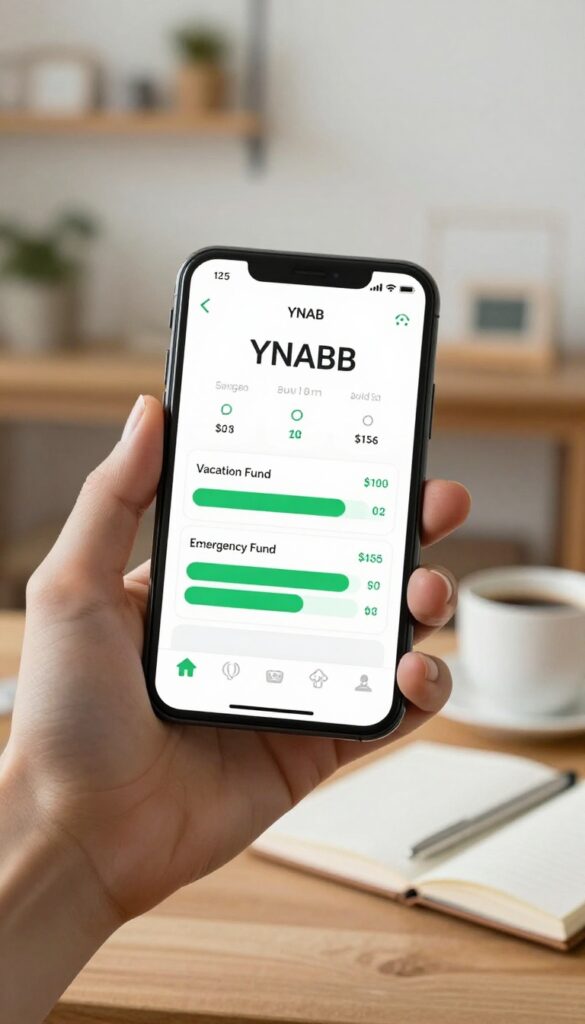
YNAB (You Need A Budget) takes a proactive approach to money management. Instead of just tracking what you've spent, it asks you to assign every dollar a job before you spend it. This mindset shift makes saving intentional rather than an afterthought.
You can create specific savings categories—like "Vacation" or "Emergency Fund"—and watch your progress update in real time as you allocate funds. It's detailed, yes, but also incredibly motivating when you see those category balances grow.
YNAB's core philosophy is giving every dollar a purpose. When you set up a savings goal, the app helps you break it into manageable monthly targets. Each time you log income, you decide how much goes to savings first.
The app then tracks your progress with clear visual indicators, so you always know if you're on track. It's perfect for people who want a structured, hands-on system that forces them to prioritize savings.
Set Up Savings Categories
Start by creating a category for each savings goal. YNAB lets you name them anything—"New Car Fund" or "Rainy Day Savings. " Then set a target amount and a deadline.
The app calculates how much you need to set aside each month to hit that goal. You can even split a single paycheck across multiple savings categories, ensuring every dollar has a job.
Track Progress Visually
YNAB's dashboard shows a progress bar for each savings goal. As you allocate money, the bar fills up. This visual feedback is surprisingly satisfying and keeps you motivated.
You can also run reports to see how your savings grow over time, which helps you stay committed to your long-term goals.
Adjust On The Fly
Life happens, and sometimes you need to shift money between categories. YNAB makes it easy to move funds without messing up your budget. If an unexpected expense pops up, you can pull from a less urgent savings goal and then adjust your plan next month.
The app keeps everything balanced, so you're always in control.
6. Digital App: Mint
Mint automates the boring parts of saving. Link your bank accounts, credit cards, and investments, and it pulls everything into one dashboard. You can set specific savings goals and Mint tracks your progress without any manual entry.
It's perfect if you want a hands-off approach and a big-picture view of your finances.
Link And Forget
Once your accounts are connected, Mint categorizes your transactions automatically. You can see where your money goes each month and adjust your spending to hit savings targets. No spreadsheets, no receipts—just real-time data.
Goal Tracking Made Simple
Set a goal like “Save $5, 000 for a trip” and Mint shows a progress bar. It even suggests how much to save each month to reach your deadline. You'll get alerts when you're on track or if you overspend.
Alerts That Keep You Honest
Mint sends notifications for unusual spending, low balances, or when you're close to a budget limit. These gentle nudges help you stay focused without feeling micromanaged.
7. Digital App: Qapital
Qapital makes saving feel like a game. Instead of manually moving money, you set rules that do the work for you. It’s perfect if you want to save without thinking about it.
Qapital connects to your bank account and uses triggers to save automatically. You can round up every purchase to the nearest dollar, save a fixed amount each week, or even set a “guilt-free” rule that saves when you spend on certain categories. The app also lets you create custom savings goals with fun names and progress bars.
It’s effortless and keeps you motivated with notifications and achievements.
How The Rules Work
You pick a rule that fits your spending habits. The Round-Up rule saves the change from every debit or credit card purchase. The Weekly rule moves a set amount every Monday.
The Guilt-Free rule saves a little extra when you treat yourself—like after buying coffee or ordering takeout. You can combine multiple rules for faster progress.
Why It Works
Automation removes the temptation to skip a transfer. You don’t have to remember to save—it happens in the background. The app also shows your progress with colorful charts, which makes hitting goals feel rewarding.
Plus, you can withdraw anytime without fees, so your money stays accessible.
Best For
Qapital is ideal for people who want a hands-off approach. If you struggle with discipline or forget to save regularly, the rules keep you on track. It’s also great for visual learners who enjoy seeing their savings grow in real time.
8. Whiteboard Tracker
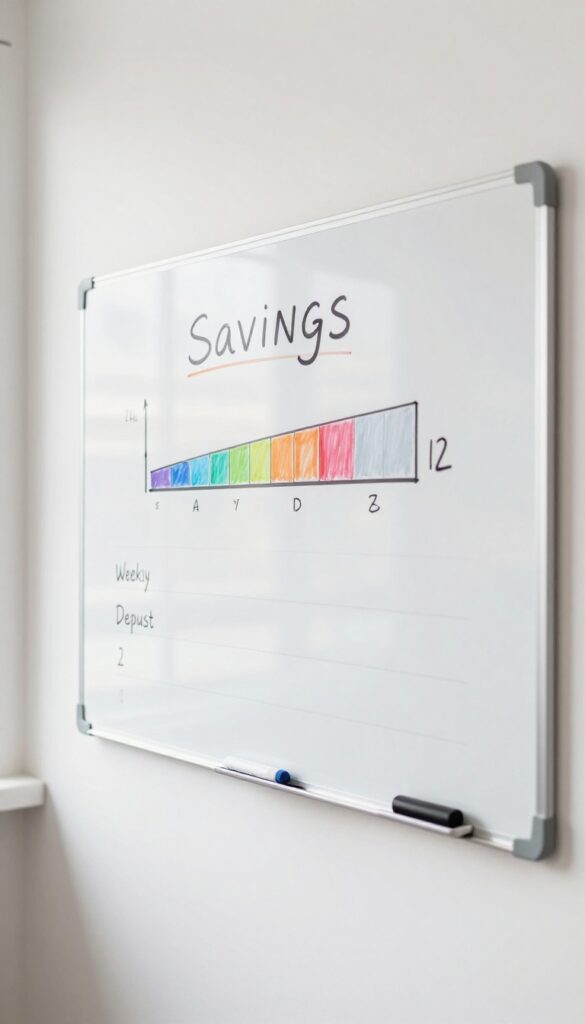
Sometimes the simplest tools are the most effective. A whiteboard tracker turns your savings goal into a daily visual cue that's hard to ignore. Hang it where you'll see it every day—your kitchen, home office, or even the bathroom mirror.
The act of updating it weekly keeps you accountable without feeling like a chore.
Draw A Progress Bar
Sketch a simple bar graph on the whiteboard. Divide it into segments representing milestones—$100 increments, for example. Each week, color in the progress you've made.
Watching the bar fill up is oddly satisfying and gives you a clear picture of how far you've come.
Write Your Goal Big
Put your target amount and deadline in bold letters at the top. Add a motivational phrase like "You've got this! " or "Almost there!
" Seeing the numbers every day reinforces your commitment and keeps the goal front and center.
Track Weekly Deposits
Create a simple table with rows for each week. Every time you transfer money to savings, jot down the date and amount. This creates a record of your consistency and helps you spot patterns—like weeks when you tend to save more or less.
9. Jar or Piggy Bank
There's something oddly satisfying about watching your savings grow in a clear jar or a classic piggy bank. This tactile method works wonders for short-term goals, like a new gadget or a weekend getaway. You don't need an app or a spreadsheet—just spare change or a set amount each day.
Choose a jar or bank that's transparent so you can see the progress. Place it somewhere you'll see often, like your desk or kitchen counter. Every time you drop in coins or a bill, you're reinforcing the habit.
It's simple, visual, and surprisingly motivating.
Set A Daily Or Weekly Target
Decide on a small, consistent amount to add. For example, put in $1 every day or $5 every Friday. This turns saving into a routine rather than an afterthought.
You'll be amazed how quickly it adds up.
Make It A Family Activity
Get everyone involved—kids especially love dropping coins into a shared jar. It teaches money habits while working toward a common goal, like a family movie night or a trip to the zoo. Plus, it's a fun way to bond over saving.
Cash Out At Milestones
When the jar is full or you hit a certain amount, celebrate by transferring the money to your bank account or spending it on your goal. The physical act of counting and cashing out reinforces the reward.
10. Savings Thermometer Printable
A savings thermometer is one of those classic trackers that never gets old. You print out a thermometer graphic, set your goal at the top, and color it in as you get closer. It's simple, visual, and oddly satisfying.
Hang it somewhere you'll see every day—like the fridge or a wall near your desk. Each time you add money to your savings, you fill in a little more red. Before you know it, you're watching the mercury rise toward your goal.
The beauty of a savings thermometer is how it turns an abstract number into a clear visual. You don't need an app or a spreadsheet—just a printer, some markers, and a bit of wall space. It works especially well for short-term goals like a vacation fund or a holiday shopping budget.
To get started, download a free thermometer template online or draw your own. Mark the increments (every $50 or $100, depending on your goal). Then commit to coloring in a section each time you transfer money to savings.
The physical act of filling in the thermometer reinforces your progress and keeps you motivated.
Where To Display It
Visibility is everything with a paper tracker. Stick it on your refrigerator, a bathroom mirror, or a bulletin board you pass daily. The more you see it, the more you'll think about your goal.
Some people even tape it inside a cabinet door for a private reminder.
Make It A Family Activity
If you're saving as a household, get everyone involved. Let kids color in the thermometer when you hit a milestone. It turns saving into a team effort and teaches money habits in a fun way.
You can even use different colors for different contributors.
Customize Your Thermometer
Don't settle for a plain template. Add stickers, washi tape, or hand-drawn doodles that match your goal. For a beach vacation, draw little waves and palm trees.
For a new laptop, sketch a tiny computer at the top. Personalizing it makes the tracker feel like yours.
11. Habit Tracker Hybrid
What if your savings tracker doubled as a habit tracker? That's the idea behind this hybrid approach. Each time you transfer money to your savings, you mark it like a daily habit—just like logging a workout or drinking water.
It builds consistency and links saving to your everyday routine, making it feel less like a chore and more like a positive ritual.
The beauty of this method is that it leverages the psychology of habit formation. By treating saving as a habit, you're more likely to stick with it long-term. You can use a simple paper habit tracker, a bullet journal, or an app like Habitica or Streaks.
The key is to set a specific trigger—like after lunch or before bed—and mark off each successful save. Over time, the streak becomes its own reward, and your savings grow almost automatically.
How To Combine Them
Pick a savings goal and decide how often you'll save (daily, weekly, or monthly). Then add a habit tracker column or checkbox for each saving event. For example, if you're saving $5 every day, draw a 30-day grid and check off each day you transfer the money.
Watching the chain of checks grow is surprisingly motivating.
Best Tools For This Method
Paper planners work great for the tactile reward of checking a box. Digital options include Habitica, which gamifies habits and lets you create a custom 'Save Money' task, or Streaks, which tracks up to 12 habits. You can also use a simple spreadsheet with conditional formatting to turn cells green when you log a save.
Why It Works
Habit stacking—adding a new habit onto an existing one—makes saving automatic. Plus, the visual progress of a habit tracker gives you a double dose of dopamine: one from saving, another from checking off the habit. It turns saving from a passive goal into an active daily practice.
12. Google Sheets with Graphs

A digital spreadsheet might sound basic, but Google Sheets is actually a powerhouse for tracking savings. You can build a custom dashboard that updates automatically and shows your progress in colorful charts. Plus, it's free and accessible from your phone, tablet, or laptop.
Google Sheets lets you create a dynamic savings tracker that goes beyond simple numbers. With a few formulas, you can automate calculations like running totals, percentage of goal achieved, and even projected completion dates. The real magic comes from adding pie charts or line graphs that visually represent your journey.
A line graph can show your balance climbing over weeks or months, while a pie chart can break down how much you've saved versus what's left. Because it's cloud-based, you can update it on the go or check your progress from any device. Share it with a partner or keep it private—it's totally up to you.
Set Up Your Dashboard
Start with columns for date, deposit amount, and running total. Then add a column for your goal amount. Use simple formulas like =SUM to keep the running total accurate.
For a quick visual, insert a chart that highlights your progress. Google Sheets makes it easy to customize colors and labels so your dashboard feels personal.
Automate With Templates
You don't have to build from scratch. There are free templates online designed for savings trackers. Look for ones that already include graphs and conditional formatting.
Conditional formatting can automatically turn cells green when you hit milestones, which adds a satisfying visual reward.
Access Anywhere, Anytime
The best part of Google Sheets is that it's always with you. Download the app on your phone and update your savings right after you make a deposit. No more waiting until you get home to log it.
This real-time tracking keeps you engaged and motivated.
13. Savings Calendar
A savings calendar turns your goal into a daily or weekly challenge. You mark a calendar with specific savings targets—say, $5 a day or $50 a week—and cross off each day you hit the mark. It's a visual, low-pressure way to build momentum, especially for short-term goals like a vacation fund or a holiday shopping budget.
The act of crossing off a day feels like a small win, and those wins add up fast.
A savings calendar works best for goals that need frequent, small contributions. You can use a physical wall calendar, a printable, or a digital calendar app. The key is to set realistic targets that fit your cash flow.
If you miss a day, no big deal—just pick up the next day. The calendar keeps you accountable without the guilt.
How To Set It Up
Pick a calendar you'll see every day—kitchen wall, phone lock screen, or desk. Decide your time frame: 30 days, 90 days, or until a specific date. Then calculate your daily or weekly amount.
For example, to save $300 in 30 days, you'd need $10 a day. Write each target on the calendar, and cross off days as you go.
Why It Works
The savings calendar taps into the psychology of streaks and visual progress. Seeing a row of crossed-off days motivates you to keep going. It also breaks a big goal into bite-sized steps, making it feel achievable.
Plus, it's flexible—you can adjust targets if your budget changes.
14. Sticker Chart for Adults
Who says sticker charts are just for kids? There's a reason they work so well—they make progress visible and satisfying. By creating a chart with milestones and adding a sticker each time you hit a savings target, you turn a mundane task into a playful reward system.
It's a simple, low-cost way to keep your motivation high and your goals on track.
A sticker chart adds a layer of fun to your savings journey. You can design it on a poster board or use a printable template. Each time you reach a savings milestone—like saving $50 or hitting 10% of your goal—you get to place a sticker.
Over time, the chart fills up, giving you a colorful visual of your progress.
Choose Your Milestones
Break your main goal into smaller, achievable milestones. For example, if you're saving $1, 000, set milestones at every $100. This way, you get frequent rewards and a sense of accomplishment.
Adjust the intervals based on your savings pace—weekly or monthly targets work well.
Pick Your Stickers
The stickers themselves can be part of the fun. Choose ones that resonate with you—maybe gold stars, smiley faces, or even themed stickers related to your goal (like palm trees for a vacation fund). You can buy them cheaply online or at a craft store.
Display It Somewhere Visible
Hang your chart where you'll see it every day—on your fridge, above your desk, or in your planner. The visual reminder keeps your goal top of mind and gives you a little dopamine hit each time you add a sticker.
15. Social Accountability Group

Saving money doesn't have to be a solo mission. Sometimes a little peer pressure is exactly what you need to stay on track. A social accountability group turns your savings goal into a shared challenge where everyone cheers each other on—and calls each other out when motivation slips.
Start a group chat with friends, family, or coworkers who also have money goals. Use an app like StickK where you can put money on the line, or simply post weekly updates in a WhatsApp or Discord group. The key is regular check-ins and honest conversations.
When you know someone's going to ask how your savings are doing, you're way more likely to resist that impulse buy.
How To Set Up Your Group
Invite 3–5 people who are serious about saving. Agree on a check-in frequency—weekly usually works best. Decide if you want to add stakes, like a small financial penalty for missing a goal, or just keep it supportive.
Use a shared Google Sheet or a simple text thread to post progress.
Keep The Momentum Going
Celebrate milestones together, even small ones. A group emoji reaction or a quick voice note can go a long way. If someone falls behind, encourage them without judgment.
The goal is to build a habit, not to shame anyone.
Tools To Try
StickK lets you commit money to a goal—if you fail, the money goes to a friend or a charity you hate. For a lighter option, try the app Habitica, which turns your savings into a game. Or just use a simple group chat with regular prompts.
16. Vision Board with Tracker
A vision board is a powerful tool for keeping your eyes on the prize. When you pair it with a savings tracker, you get a constant visual reminder of why you're putting money aside. This combo turns abstract numbers into a story of progress toward something you truly want.
The key is to place your tracker right next to your vision board—or integrate them into one display. Every time you add to your savings, you see your goal getting closer. It's motivating and makes the process feel more personal.
How To Set It Up
Start with a corkboard or a large frame. On one side, pin images of your goal—a beach photo for a vacation, a house for a down payment, or a car you're saving for. On the other side, attach a simple chart or a series of envelopes that fill up as you save.
Make It Interactive
Use a dry-erase marker on a glass frame to update your savings total weekly. Or create a paper chain where each link represents a certain amount saved—add a link every time you hit a milestone. The physical act of updating keeps you engaged.
Where To Display It
Put it somewhere you see daily—above your desk, in the kitchen, or by your bedside. The more you see it, the more it reinforces your commitment. It's a constant, positive nudge to stay on track.
17. Spreadsheet with Conditional Formatting
If you're already comfortable with Excel or Google Sheets, conditional formatting takes your tracker to the next level. Instead of staring at numbers, you get instant visual feedback. Set rules so cells change color as you hit milestones—green for on track, red for behind.
It's like having a progress bar that updates automatically.
Conditional formatting turns a plain spreadsheet into a dynamic motivation tool. You can customize colors, thresholds, and even add data bars for a quick glance at your progress. The best part?
It's completely free and works offline once set up.
How To Set It Up
Create a simple income and expense log. Add a column for your savings goal and another for actual savings. Then highlight the actual column and set a rule: if the value is greater than or equal to the goal, fill green.
If it's less, fill red. You can even use gradient scales for a heatmap effect.
Why It Works
Our brains respond to colors faster than numbers. Seeing green spread across your sheet gives a sense of accomplishment. It also makes it easy to spot problem areas at a glance, so you can adjust your spending before it's too late.
Pro Tips
Use data bars inside cells for a mini progress bar without extra columns. Set up a dashboard sheet with a summary chart that updates automatically. And don't forget to add a conditional format for your total savings—watching that cell turn green is incredibly satisfying.
18. Savings Bingo Card
Turn your savings journey into a game with a bingo card. Instead of numbers, each square holds a specific savings amount or action—like "save $50 this week" or "skip takeout for a day. " Mark off squares as you complete them, and aim for a line, an X, or a full card.
It adds a playful challenge that keeps you engaged.
A bingo card works because it breaks a big goal into small, satisfying wins. You can design your own card with 5×5 or 4×4 grid, filling each square with a realistic mini-goal. Print it out and keep it somewhere visible, or use a digital version on your phone.
The visual progress and the thrill of completing a row make saving feel less like a chore.
Design Your Own Card
Start with a blank grid. For each square, write a specific savings amount (like $20, $50, or $100) or an action (like "transfer $10 to savings" or "cook dinner instead of ordering in"). Mix easy and challenging squares to keep it fun.
You can theme it around your goal—for a vacation, use amounts that add up to your trip cost.
Play Solo Or With Friends
Challenge yourself to complete a line in a week, or see how fast you can fill the whole card. For extra motivation, share your card with a friend or family member and race to see who finishes first. You can even set a small reward for yourself when you get bingo—like a movie night or a treat.
Track Your Wins
As you mark off squares, you'll see your savings grow in real time. At the end of the game, tally up the total saved from completed squares. It's a satisfying way to measure progress and gives you a clear picture of your saving habits.
Plus, you can create a new card each month with different targets.
19. Notebook with Monthly Pages
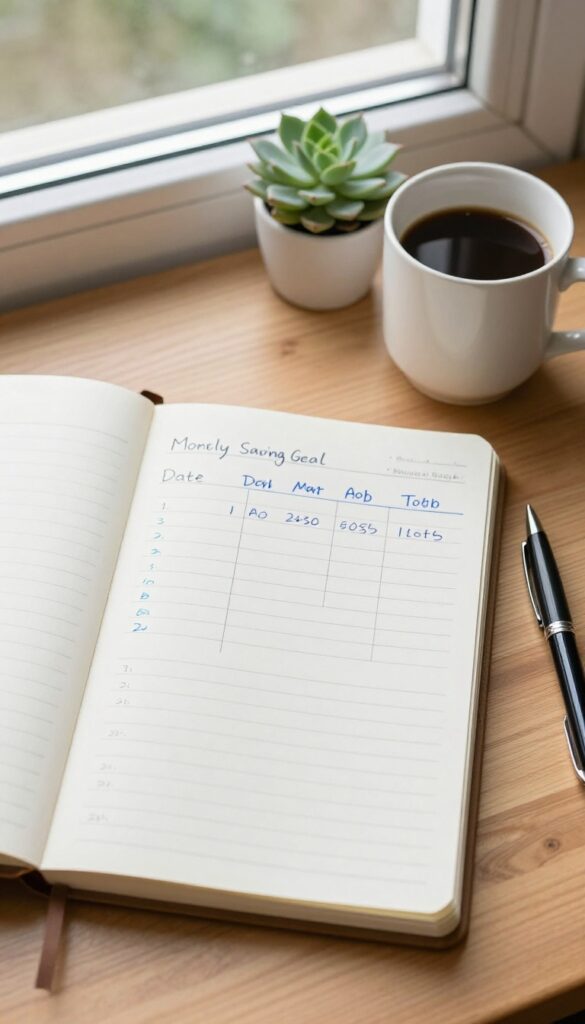
There's something satisfying about putting pen to paper when tracking your savings. A dedicated notebook gives you full control over the layout and lets you add personal notes along the way. It's a low-tech but highly effective method for anyone who enjoys a tactile experience.
Start by grabbing any notebook you like—lined, dotted, or blank. At the beginning of each month, write your savings goal at the top of a fresh page. Then, every time you deposit money, jot down the date, amount, and a quick note about the source or motivation.
Over time, flipping back through the pages reveals your consistency and progress, which can be incredibly motivating.
Set Up Your Monthly Spread
Keep it simple: a column for the date, one for the deposit amount, and one for a running total. Add a small section for notes—like "sold old furniture" or "skipped takeout. " This helps you see which habits are working.
Review Past Pages For Patterns
Every few months, look back at your entries. You might notice you save more during certain weeks or that small deposits add up faster than you thought. Use those insights to adjust your strategy.
Make It Your Own
Decorate pages with stickers, washi tape, or doodles if that keeps you engaged. The goal is to make the notebook a tool you look forward to using, not a chore.
FAQ
What is the best savings tracker method?
The best method is one you'll consistently use. Visual trackers like thermometers work well for motivation, while apps like YNAB offer detailed tracking. Try a few to see what sticks.
Do I need to track every penny?
Not necessarily. Focus on tracking progress toward your specific goal. If you're saving for a vacation, track only that.
Over-tracking can be overwhelming.
Can I use multiple trackers at once?
Yes, but keep it simple. You might use an app for daily tracking and a whiteboard for a big-picture view. Avoid duplication that causes confusion.
How often should I update my savings tracker?
It depends on your method. Daily for habit-based trackers, weekly for spreadsheets, or monthly for long-term goals. Consistency matters more than frequency.
What if I miss a savings target?
Don't stress. Adjust your timeline or the amount. The tracker is a tool, not a judge.
Use it to stay aware and motivated, not to feel guilty.
Conclusion
Finding the right savings tracker can make all the difference in reaching your money goals. Whether you prefer a digital app or a hands-on method, consistency is key. Start with one idea and tweak it as you go.
The best tracker is the one you'll actually use. Experiment with a few from this list and see what feels natural. Your future self will thank you for the progress you make today.
Free PDF Download
Not Sure Which Side Hustle Fits You Best?
Take the free Side Hustle Matchmaker Quiz and get a simple 7-day starter plan to help you choose a beginner-friendly idea based on your time, skills, comfort level, and goals.
You’ll get this free PDF plus access to the full Marketerna Save More & Earn More PDF Kit. No spam. Unsubscribe anytime.