21 Budgeting Tips for Beginners Who Want to Take Control of Money
Last updated on May 5th, 2026 at 03:44 pm
Taking control of your money doesn't require a finance degree—just a few smart habits. These 21 budgeting tips are designed to help beginners stop guessing and start saving, one practical step at a time.
From tracking every dollar to automating savings, each tip builds toward real financial confidence. Ready to feel less stressed and more in charge?
Let's dive into the strategies that actually work.
Free PDF Download
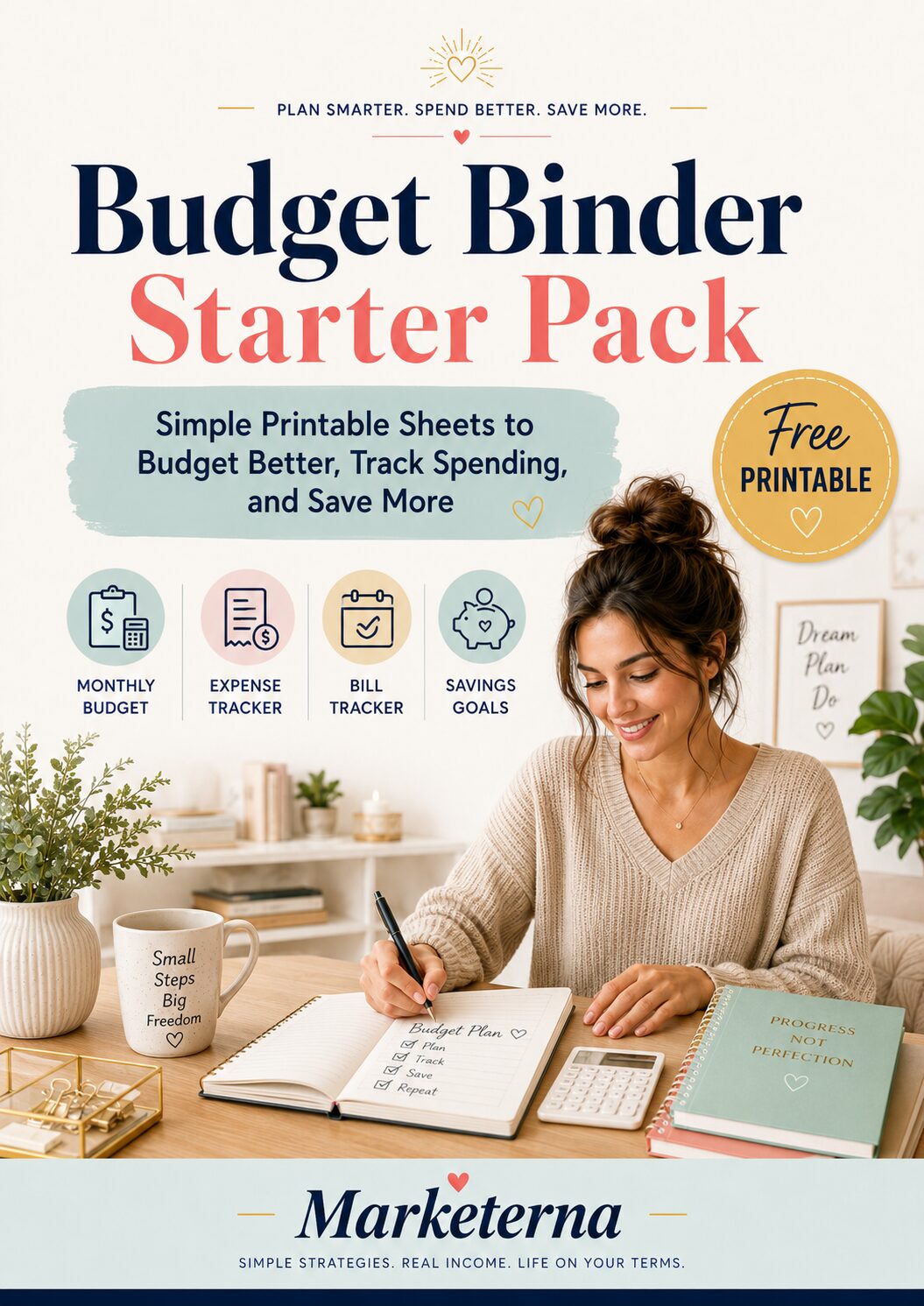
Get the Free Budget Binder Starter Pack
Download simple printable budget sheets to plan your monthly money, track expenses, organize bills, and start building better money habits without feeling overwhelmed.
You’ll get this free PDF plus access to the full Marketerna Save More & Earn More PDF Kit. No spam. Unsubscribe anytime.
1. Know Your Net Income

Before you can plan where your money goes, you need to know exactly how much you're working with. That means looking beyond your gross salary and focusing on your take-home pay—the amount that actually lands in your bank account after taxes, retirement contributions, and other deductions. This is your true starting point for any budget.
Many beginners make the mistake of budgeting based on their gross income, which sets them up for failure. Your net income is the only number that matters because it's what you can actually spend. Check your pay stub or bank deposit to find this figure.
If your income varies month to month, use an average of the last three months to get a reliable baseline.
Why Net Income Matters
Budgeting with gross income is like planning a road trip with a map that shows more gas than you have. You'll run out of fuel fast. Net income gives you a realistic picture, helping you avoid overspending and the stress that comes with it.
How To Find Your Net Income
Look at your most recent pay stub. The net pay or take-home pay line is what you want. If you're self-employed, subtract estimated taxes and business expenses from your total revenue.
For irregular income, track deposits over a few months and calculate the average.
What If Your Income Changes?
If you work hourly or have freelance gigs, your net income can fluctuate. In that case, use a conservative estimate—the lowest monthly amount you've earned in the past year. This prevents you from budgeting money you might not actually receive.
2. Track Every Dollar for One Month
You can't fix what you don't see. That's why the first real step to taking control of your money is tracking every single dollar that comes in and goes out for 30 days. It sounds tedious, but it's an eye-opener.
Most people are shocked by where their money actually goes—those daily coffees, forgotten subscriptions, and impulse buys add up fast. This one-month experiment gives you a clear, honest picture of your spending habits, so you can make informed decisions instead of guessing.
Grab a notebook, use a spreadsheet, or try a budgeting app like Mint or YNAB. The method doesn't matter—consistency does. Write down every expense, no matter how small.
At the end of the month, categorize everything (groceries, dining out, entertainment, etc. ) and look for patterns. You'll likely find a few 'leaks' you can plug immediately.
Why 30 Days?
A full month gives you a complete cycle of your spending—including weekly and monthly bills, irregular purchases, and weekend habits. It's long enough to reveal trends but short enough to stay manageable. After 30 days, you'll have a solid baseline to build your budget around.
Tools To Make It Easy
You don't need fancy software. A simple spreadsheet with columns for date, category, and amount works great. Apps like Mint automatically sync your accounts and categorize transactions.
If you prefer pen and paper, a small notebook you carry everywhere does the trick. Pick whatever feels least like a chore.
What To Do With The Data
Once you have your month of data, highlight the top three spending categories. Then ask: Are these aligned with my priorities? For example, if you're spending $200 on takeout but want to save for a trip, that's a clear leak.
Use these insights to set a realistic budget for next month—one that actually fits your life.
Free PDF Download
Get the Free Budget Binder Starter Pack
Download simple printable budget sheets to plan your monthly money, track expenses, organize bills, and start building better money habits without feeling overwhelmed.
You’ll get this free PDF plus access to the full Marketerna Save More & Earn More PDF Kit. No spam. Unsubscribe anytime.
3. Use the 50/30/20 Rule as a Starting Point
If you're new to budgeting, the 50/30/20 rule is one of the simplest frameworks to wrap your head around. It splits your after-tax income into three broad categories: 50% for needs, 30% for wants, and 20% for savings or debt payments. It's not a one-size-fits-all solution, but it gives you a clear starting line without overwhelming detail.
The beauty of this rule is its flexibility. You can adjust the percentages to match your life—maybe you need 60% for needs in a high-cost city, or you want to save 30% because you're aggressive about early retirement. The key is to start somewhere and tweak as you go.
What Counts As Needs?
Needs are the essentials: rent or mortgage, utilities, groceries, transportation, minimum debt payments, and insurance. If you can't survive without it, it's a need. Be honest here—your daily latte is a want, not a need.
Wants Are Not The Enemy
Wants are things that make life enjoyable: dining out, streaming subscriptions, hobbies, travel. The 30% cap keeps fun in check without guilt. If you're over 30%, look for small cuts—like one fewer takeout meal a week.
Making The 20% Work For You
The savings slice includes building an emergency fund, contributing to retirement, or paying down debt faster. If 20% feels impossible, start with 10% and increase by 1% each month. Consistency matters more than perfection.
4. Separate Needs from Wants
One of the quickest ways to blow a budget is confusing what you truly need with what you just want. Rent, groceries, utilities, and minimum debt payments are non-negotiable. That daily latte, new outfit, or premium streaming plan?
Those are wants. Learning to tell the difference is a game-changer.
Start by listing every expense from last month. Next to each one, write 'need' or 'want' honestly. Needs keep you alive and functional.
Wants make life nicer but aren't essential. Once you see the split, you can decide where to trim without feeling deprived.
The 30-day Rule For Wants
When you're tempted to buy something that's a want, wait 30 days. Put it on a list with the date. If after a month you still want it and it fits your budget, go ahead.
Most times, the urge fades and you save money automatically.
Cut The Obvious Wants First
Look at subscriptions, takeout, and impulse buys. Cancel anything you don't use regularly. Swap restaurant meals for home-cooked versions.
Small cuts here add up fast without hurting your quality of life.
Needs Can Be Optimized Too
Even needs like groceries and insurance have wiggle room. Compare prices, use coupons, or switch providers. Lowering a need frees up cash for savings or guilt-free wants.
Free PDF Download
Get the Free Budget Binder Starter Pack
Download simple printable budget sheets to plan your monthly money, track expenses, organize bills, and start building better money habits without feeling overwhelmed.
You’ll get this free PDF plus access to the full Marketerna Save More & Earn More PDF Kit. No spam. Unsubscribe anytime.
5. Automate Your Savings

Willpower is overrated. No matter how determined you are, it's easy to talk yourself out of saving when the money is sitting in your checking account. The fix?
Remove the choice entirely. Set up an automatic transfer from checking to savings on payday, and watch your savings grow without any mental effort.
Automation turns saving from a decision into a habit. When the money moves before you have a chance to spend it, you simply adapt to living on what's left. Most banks let you schedule recurring transfers for free, so there's no excuse to skip this step.
Start Small, Think Big
You don't need to save $500 a month to make automation worth it. Even $20 or $50 per paycheck adds up over time. The key is consistency.
Once you see the balance climbing without any pain, you can gradually increase the amount.
Pick The Right Account
A separate high-yield savings account works best. It keeps your emergency fund or goal money out of sight and out of mind. Bonus: the interest earns you a little extra for doing nothing.
Schedule It For Payday
Set the transfer to happen the same day your paycheck lands. That way, you never have a chance to miss the money. Treat it like a non-negotiable bill—because your future self is worth paying first.
6. Choose a Budgeting Method That Fits Your Style
Not all budgets are created equal—and that's a good thing. The best method is the one you'll actually use, not the one that looks perfect on paper. Let's explore a few popular styles so you can pick your fit.
Whether you prefer cash, spreadsheets, or apps, there's a budgeting method for you. The key is experimenting until one clicks.
Envelope Budgeting For Visual Learners
With envelope budgeting, you allocate cash into labeled envelopes for categories like groceries, dining out, and entertainment. Once an envelope is empty, you stop spending in that category. It's tactile and forces you to see your limits.
Great if you tend to overspend with cards.
Zero-based Budgeting For Control Freaks
Zero-based budgeting means every dollar has a job—income minus expenses equals zero. You assign funds to bills, savings, debt, and fun until nothing is left unallocated. This method gives you maximum control and clarity.
Perfect if you love spreadsheets or detailed planning.
App-based Budgeting For The Tech-savvy
Apps like YNAB, Mint, or EveryDollar automate tracking and sync with your accounts. They categorize spending, send alerts, and show progress. Ideal if you want a hands-off approach but still need visibility.
Many are free or low-cost.
7. Plan for Irregular Expenses
Car repairs, holidays, and annual subscriptions happen. Set aside a little each month so they don't derail you. These expenses are predictable in the long run, even if the exact timing is a surprise.
By planning ahead, you turn a potential budget crisis into a manageable line item. Here’s how to handle those expenses without stress.
List Your Irregular Expenses
Start by listing all the expenses that don't occur monthly—car insurance, holiday gifts, vet visits, annual subscriptions. Look back at your bank statements for the past year to catch everything.
Calculate Your Monthly Sinking Fund
Add up the total annual cost of those irregular expenses, then divide by 12. That's how much you need to set aside each month. For example, if your car insurance is $1, 200 a year, save $100 monthly.
Keep The Money Separate
Open a separate savings account or use a budgeting app with sinking fund categories. When the bill arrives, you'll have the cash ready—no scrambling needed.
8. Review Your Subscriptions
Those small monthly fees for streaming services, apps, and memberships can quietly drain your budget. It's easy to lose track of what you're actually paying for—especially when charges hit your card automatically. A quick audit can free up cash without changing your lifestyle.
Take 15 minutes to scan your bank statements for recurring charges. Cancel anything you haven't used in the last 30 days. Even a few forgotten subscriptions can save you $50 or more each month.
Spot The Hidden Fees
Look for charges you barely notice—like a $9. 99 app subscription or a $14. 99 streaming add-on.
These often slip under the radar because they're small and monthly. Set a reminder to review them every quarter.
Use A Subscription Tracker
Apps like Rocket Money or Bobby can help you see all your subscriptions in one place. They send alerts before free trials end and flag services you haven't used. It's a simple way to stay on top of recurring costs.
Negotiate Or Downgrade
If you can't bear to cancel, see if there's a cheaper plan. Many streaming services have ad-supported tiers or lower-priced options. A quick chat with customer service might also score you a discount.
9. Use Cash for Problem Categories

Plastic makes spending too easy. Swipe and forget—until the statement arrives. Cash forces you to feel every dollar leaving your hand.
Choose one category where you consistently overspend, like dining out or entertainment, and switch to cash only. When the envelope is empty, the spending stops. No excuses.
Pick Your Problem Category
Look at your last few months of bank statements. Where do you always go over? Maybe it's coffee runs, takeout, or impulse buys at the drugstore.
Pick just one category—don't try to cash-envelope everything at once. Start small to build the habit.
Set A Weekly Cash Amount
Decide how much you want to spend in that category each week. Withdraw that amount in cash on Monday. Put it in a separate envelope or wallet compartment.
Once it's gone, you're done until next week. No dipping into savings or switching to a card.
Feel The Pain Of Spending
Handing over physical bills triggers a psychological response that cards don't. You literally feel lighter as the cash leaves. That tiny discomfort makes you think twice before buying another latte or a random gadget.
Over time, you naturally spend less.
10. Build a Small Emergency Fund First
Before you start throwing money at debt or investing, give yourself a safety net. A small emergency fund of $500 to $1, 000 is your first line of defense against life's curveballs. It keeps a flat tire or a minor medical bill from derailing your entire budget.
That cushion means you won't have to rely on credit cards or loans when something unexpected pops up. Once you have it, you'll sleep better and have more confidence to tackle bigger financial goals.
Why $500–$1,000 Works
That range covers most common emergencies like car repairs, minor home fixes, or a small medical copay. It's big enough to help but small enough to save quickly—even on a tight budget. Once you hit that target, you can shift focus to paying off debt or building a full 3–6 month fund.
How To Save It Fast
Sell something you don't need, pick up a side gig for a few weeks, or cut one non-essential expense temporarily. Even saving $50 a week gets you there in 10–20 weeks. Automate transfers to a separate savings account so you don't accidentally spend it.
Keep It Separate And Accessible
Stash your emergency fund in a high-yield savings account—not your checking account. You want it easy to grab if you need it, but not so easy that you dip in for everyday wants. Out of sight, out of mind works wonders.
11. Give Every Dollar a Job
If your money doesn't have a plan, it will vanish. The zero-based budgeting method solves this by assigning every dollar you earn a specific purpose—bills, savings, groceries, fun—until nothing is left unaccounted for. This doesn't mean you can't have a "fun money" category; it just means you decide where each dollar goes before you spend it.
Zero-based budgeting forces you to be intentional. Instead of hoping you'll have money left at the end of the month, you plan every dollar's destination. It's a proactive approach that eliminates the mystery of where your cash went.
How It Works In Practice
Start with your monthly income. List every expense category—rent, utilities, groceries, transportation, savings, debt payments, entertainment. Then allocate dollars until your income minus expenses equals zero.
If you have extra, assign it to savings or debt. If you're short, cut discretionary categories.
Why It Works For Beginners
It removes guesswork. You're not tracking spending after the fact; you're directing it upfront. This builds discipline and shows exactly where your priorities lie.
Plus, it makes saving feel like a non-negotiable bill.
Tools To Make It Easy
You can use a simple spreadsheet, a budgeting app like YNAB or EveryDollar, or even a notebook. The key is consistency. Review your categories each month and adjust as needed—life changes, and your budget should too.
12. Budget for Fun
A budget that cuts out all joy is a budget that won't last. The secret to sticking with your money plan is to include room for things you actually enjoy. When you allocate a small amount each month for guilt-free spending, you're less likely to feel deprived and more likely to stay consistent.
Budgeting isn't about saying no to everything—it's about saying yes to what matters most, including fun. By giving yourself permission to spend on hobbies, treats, or outings, you create a sustainable system that feels good, not punishing.
Why Fun Money Matters
When you try to cut all non-essentials, you're setting yourself up for a binge-spend later. A small fun fund acts like a pressure valve, releasing the urge to splurge in a controlled way. It also keeps your motivation high because you can see immediate rewards from your budgeting efforts.
How Much To Set Aside
Start with 5-10% of your after-tax income. If that feels too tight, begin with a fixed dollar amount like $20 or $50 per month. The exact number matters less than the habit of giving yourself permission to spend without guilt.
Adjust as your income or goals change.
What Counts As Fun
Fun money is for anything that brings you joy without long-term value: coffee shop lattes, movie tickets, a new video game, or a night out with friends. It's not for bills or savings. The key is to spend it freely and not feel bad about it—that's the whole point.
13. Use the 'No-Spend Challenge' to Reset
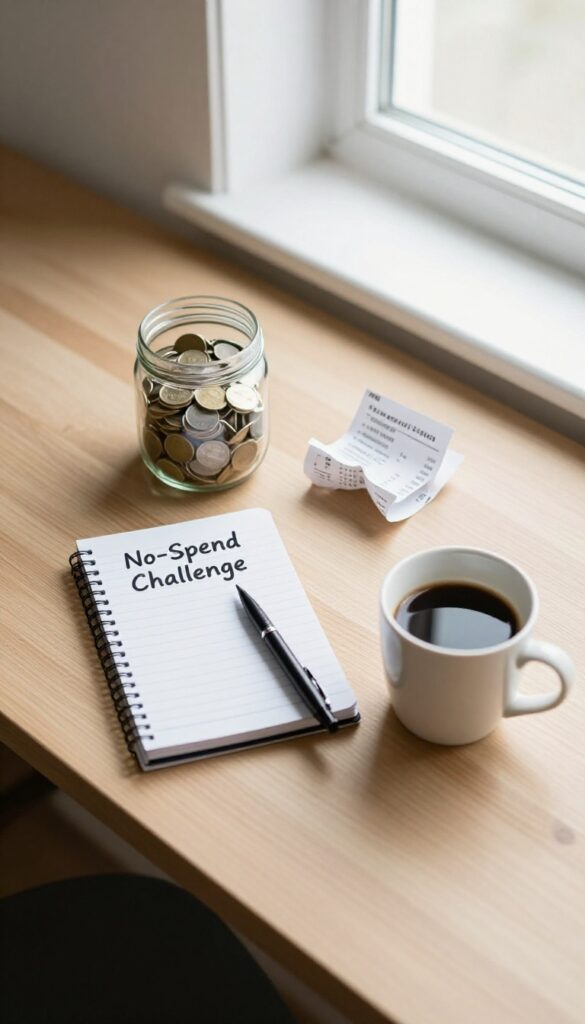
Sometimes the best way to fix a habit is to hit pause. A no-spend challenge forces you to question every purchase and rediscover what you actually need. It's like a detox for your wallet, and it can be surprisingly eye-opening.
Pick a timeframe—a weekend, a week, or even a month—and commit to spending money only on absolute essentials like rent, utilities, groceries, and transportation. Everything else gets a hard no. This isn't about deprivation; it's about breaking the autopilot of impulse buying.
Set Clear Rules
Define what counts as essential before you start. For example, coffee from home is fine, but the café latte is not. Groceries yes, takeout no.
Having clear boundaries makes the challenge easier to stick to.
Track Your Triggers
Notice when you feel the urge to spend. Boredom? Stress?
Social pressure? The no-spend period highlights patterns you might not see otherwise. Use that awareness to build healthier responses.
Celebrate The Savings
At the end of the challenge, tally up what you didn't spend. Put that money toward a goal—debt, an emergency fund, or something fun. Seeing the tangible result makes the effort feel worthwhile.
14. Pay Yourself First
Most people pay bills, buy groceries, and then save whatever is left. That leftover often ends up being nothing. Flip the script by treating savings like a non-negotiable bill.
Transfer money to savings before you pay anything else, even if it's just a small amount.
This simple shift ensures your future self gets paid before anyone else. It turns saving from an afterthought into a priority. Over time, that automatic transfer builds a cushion without requiring willpower.
Set Up An Auto-transfer
Schedule a recurring transfer from checking to savings on payday. Even $25 per week adds up to $1, 300 in a year. Automating removes the temptation to skip a month.
Start Small, Increase Later
If 20% feels impossible, start with 5% or even 1%. The key is building the habit. Every few months, bump the percentage up by 1% until you reach a comfortable savings rate.
Treat It Like Any Other Bill
Think of your savings account as a bill that must be paid. If you wouldn't skip rent, don't skip this. Label the account "Future Me" or "Emergency Fund" to give it purpose.
15. Cut One Big Expense, Not Ten Small Ones
It's easy to get caught up in cutting small luxuries like coffee or takeout. But trimming a few dollars here and there can feel like a grind for minimal payoff. Instead, focus your energy on one major expense—the kind that eats up a huge chunk of your monthly income.
One big change can save you hundreds, maybe even thousands, without making you feel deprived.
Look at your biggest monthly bills: rent, car payments, insurance, or subscriptions. Ask yourself if you can downsize, negotiate, or switch providers. Even a 10% reduction on a $1, 500 rent equals $150 saved—far more than skipping five lattes.
Start with the expense that feels heavy, and tackle it head-on.
Rethink Your Rent
Housing is usually the biggest expense. Can you move to a cheaper area, get a roommate, or negotiate a lower renewal rate? Even a small reduction adds up fast.
Audit Your Insurance
Shop around for car, health, or renter's insurance. Bundling policies or raising deductibles can slash premiums without changing your daily life.
Downsize Your Car
If you have a car payment, consider selling it for a cheaper model or paying it off early. The savings on monthly payments, gas, and insurance can be huge.
16. Use the '30-Day Rule' for Impulse Buys
Impulse buys are budget killers. That shiny new gadget or trendy piece of clothing feels urgent, but most of the time, it's not. The 30-Day Rule gives you a simple way to pause before you purchase.
By waiting a full month, you let the initial excitement fade. You'll be surprised how many things you end up not wanting at all. This one habit can save you hundreds—or even thousands—each year.
The 30-Day Rule is straightforward: whenever you feel the urge to buy something non-essential, add it to a list and set a reminder for 30 days later. If you still want it after that time, consider buying it. Most urges vanish within a few days or weeks, saving you money you would have wasted on a whim.
Why 30 Days Works
Our brains are wired to seek instant rewards. The 30-Day Rule interrupts that impulse by forcing a delay. After a few days, the emotional high fades, and you can think more clearly about whether the purchase aligns with your goals.
How To Implement It
Create a dedicated note on your phone or a small notebook. Write down the item, price, and date. Set a calendar reminder for 30 days later.
When the reminder goes off, review your list. You'll likely cross off most items without a second thought.
Exceptions To The Rule
This rule applies to non-essentials like clothes, gadgets, or home decor. Don't use it for groceries, bills, or emergencies. If something is truly urgent or necessary, you'll know.
For everything else, give it 30 days.
17. Involve Your Partner or Family

Budgeting alone is tough when the people you live with aren't on the same page. Money fights are one of the top reasons couples argue, but they don't have to be. Getting your partner or family involved turns budgeting from a solo chore into a team effort.
When everyone understands the goals, it's much easier to stick to the plan.
The key is to make money talks a regular, low-pressure thing. You don't need to nag or lecture—just share the numbers and listen to their input. This builds trust and keeps everyone accountable.
Schedule A Monthly Money Meeting
Pick a calm evening once a month to review your budget together. Order takeout or make it cozy so it feels less like a lecture. Go over what's working, what's not, and adjust as needed.
Keep it under 30 minutes to avoid burnout.
Set Shared Goals
Talk about what you both want—a vacation, paying off debt, or a new car. When the budget is tied to something exciting, it's easier to say no to impulse buys. Write the goals down and post them somewhere visible as a reminder.
Give Everyone A Role
Assign tasks based on strengths. Maybe one person tracks bills while the other monitors spending. Even kids can help by turning off lights or choosing cheap snacks.
When everyone contributes, it feels like a team win.
18. Schedule Weekly Check-Ins
A budget isn't a set-it-and-forget-it tool. It needs regular attention to stay useful. That's where a weekly check-in comes in—a short, focused time to review your spending and make small tweaks before small issues become big problems.
Block out 10 minutes each week to look at your transactions. Compare what you actually spent against what you planned. If you're over in one category, adjust the next week.
If you're under, great—move that extra to savings or debt payoff. These quick reviews keep your budget aligned with reality.
Pick A Consistent Time
Choose a day and time that works every week—Sunday evening, Monday morning, whatever fits. Put it on your calendar as a recurring event. Consistency turns it into a habit, not a chore.
Focus On One Or Two Adjustments
Don't try to fix everything at once. Pick the biggest gap between planned and actual spending, and make one small change. Maybe you cut takeout once this week or switch to a cheaper brand.
Small shifts add up without feeling overwhelming.
Celebrate The Wins
Notice when you stayed under budget or resisted an impulse buy. Acknowledging progress keeps you motivated. You're building a skill, and every check-in is a step forward.
19. Celebrate Small Wins
Budgeting isn't all about sacrifice and restriction. When you hit a savings goal or stick to your budget for a whole month, that deserves a pat on the back. Celebrating small wins keeps you motivated and makes the process feel rewarding instead of punishing.
The key is to reward yourself without undoing your progress. A small, planned treat reinforces positive behavior and helps you stay on track long-term.
Choose Low-cost Rewards
Your celebration doesn't have to be expensive. Think of a favorite coffee drink, a movie night at home, or a new book. The goal is to acknowledge your effort, not blow your budget.
Set Milestone Markers
Define clear milestones before you start. For example, after saving your first $500, treat yourself to a dinner out. Having a specific target makes the reward feel earned and keeps you focused.
Track Your Progress Visually
Use a savings tracker or a simple chart to see how far you've come. Watching the numbers grow is its own reward, and when you hit a milestone, you'll know exactly when to celebrate.
20. Don't Aim for Perfection
Nobody sticks to a budget perfectly. You'll have weeks where you overspend, forget to track a purchase, or give in to an impulse buy. That's not failure—that's being human.
A budget is a flexible guide, not a rigid test of willpower. The goal isn't flawless execution; it's progress over time.
When you slip up, resist the urge to scrap the whole budget. Instead, take a breath, note what happened, and adjust. Maybe your grocery category needs a bump, or you need a small 'fun money' line.
The real win is getting back on track next week, not never stumbling.
Why Perfection Backfires
Aiming for a perfect budget sets you up for guilt and burnout. One mistake feels like a total failure, so you quit. Real life is messy—unexpected expenses pop up, moods change, and willpower fluctuates.
A budget that allows for mistakes is one you'll actually stick with.
The Reset Rule
If you blow your budget on Tuesday, don't wait until next month to fix it. Reset at the start of the next week. Treat each week as a fresh slate.
This keeps small slip-ups from snowballing into a whole month of overspending.
Learn, Don't Lament
Every budgeting mistake is data. Did you overspend on dining out? Maybe you need a bigger restaurant category or a meal prep plan.
Did you forget to track a subscription? Set a monthly reminder. Use slip-ups to refine your system, not to beat yourself up.
21. Keep It Simple

Budgeting doesn't have to be a chore. The simpler your system, the more likely you'll stick with it. Forget complex spreadsheets or fancy apps if they feel overwhelming.
A plain notebook or a single envelope can do the trick.
The goal is to build a habit, not to create a masterpiece. Start with just one or two categories you want to track. As you get comfortable, you can expand.
But remember: a simple budget you actually use beats a perfect one you abandon.
Start With Pen And Paper
You don't need any tools beyond a notebook and a pen. Write down your income, then list your fixed expenses like rent and utilities. Subtract, and whatever's left is what you have for everything else.
That's it.
Use The 50/30/20 Rule As A Template
If you want a bit more structure, try the 50/30/20 rule: 50% for needs, 30% for wants, and 20% for savings. It's a simple framework that works for most beginners. Adjust the percentages to fit your life.
Automate What You Can
Set up automatic transfers to savings and automatic payments for bills. This way, you don't have to remember to do it each month. Automation removes friction and keeps your budget on autopilot.
FAQ
What is the easiest budgeting method for beginners?
The 50/30/20 rule is the simplest. Split your after-tax income into needs (50%), wants (30%), and savings (20%). It's flexible and easy to follow.
How much should I save each month?
Aim for at least 20% of your income, but start with whatever you can. Even $50 a month makes a difference. Increase the amount as you get comfortable.
What if I go over budget one month?
Don't panic. Review where you overspent, adjust next month's budget, and move on. Consistency matters more than perfection.
Should I use a budgeting app or a spreadsheet?
Use whatever you'll stick with. Apps like YNAB or Mint automate tracking, while spreadsheets give full control. Try both and see what feels right.
How do I budget with an irregular income?
Base your budget on your lowest-earning month. Save extra income during high months to cover lean periods. A buffer account helps smooth out the ups and downs.
Conclusion
Mastering these 21 budgeting tips puts you firmly in control of your money. Start with just one or two that feel easiest, then build from there.
Small, consistent steps lead to big financial wins over time.
Free PDF Download
Get the Free Budget Binder Starter Pack
Download simple printable budget sheets to plan your monthly money, track expenses, organize bills, and start building better money habits without feeling overwhelmed.
You’ll get this free PDF plus access to the full Marketerna Save More & Earn More PDF Kit. No spam. Unsubscribe anytime.