
19 Monthly Budget Ideas for a Simple Money Plan
Last updated on May 5th, 2026 at 03:44 pm
Building a simple money plan doesn't mean overhauling your entire life overnight. Sometimes it's just about picking one or two budgeting ideas that actually fit your spending style and sticking with them.
These 19 strategies range from classic methods like the 50/30/20 rule to creative challenges that make saving feel like a game. The key is finding what works for your real life—not a perfect system that looks good on paper but fails on payday.
Whether you're a zero-budget enthusiast or prefer a looser 80/20 approach, there's something here to help you keep more of your hard-earned cash without the stress. Ready to simplify your finances and actually enjoy the process?
Free PDF Download
Get the Free Budget Binder Starter Pack
Download simple printable budget sheets to plan your monthly money, track expenses, organize bills, and start building better money habits without feeling overwhelmed.
You’ll get this free PDF plus access to the full Marketerna Save More & Earn More PDF Kit. No spam. Unsubscribe anytime.
1. The 50/30/20 Rule
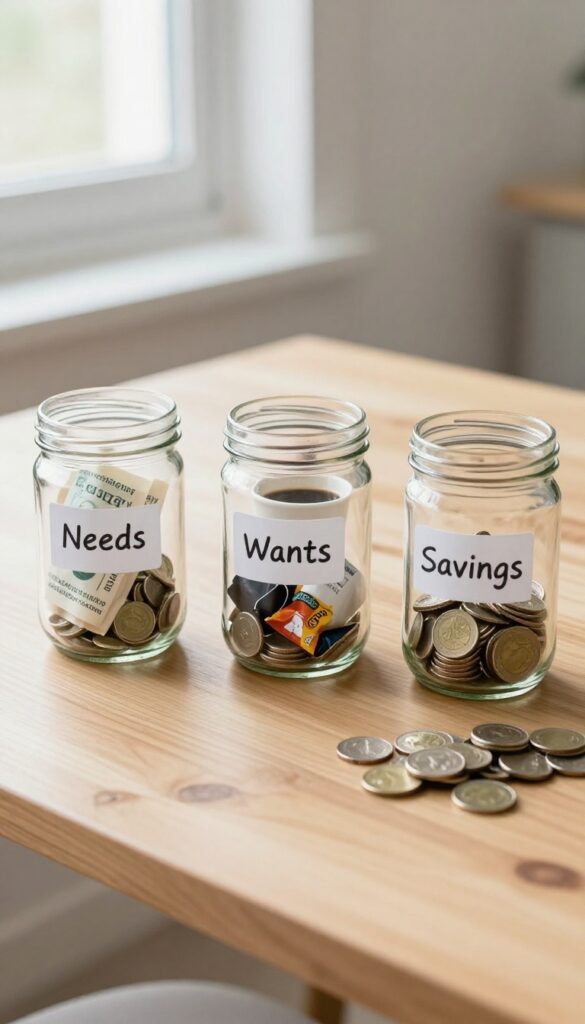
If you want a budgeting method that's simple, flexible, and proven, the 50/30/20 rule is a great place to start. It divides your after-tax income into three broad categories: needs, wants, and savings. The beauty is you don't have to track every penny—just keep your spending within these percentages.
The 50/30/20 rule works for most income levels and lifestyles. It's not about perfection; it's about balance. Once you set up automatic transfers for savings, the rest is guilt-free spending.
How To Split Your Income
Start with your take-home pay. Allocate 50% to needs like rent, utilities, groceries, and minimum debt payments. Then 30% goes to wants—dining out, hobbies, subscriptions.
The final 20% is for savings, investments, and extra debt payments.
Why It Works So Well
It's forgiving. If you overspend on wants one month, you can adjust next month without derailing your entire plan. Plus, it gives you permission to enjoy your money while still building a safety net.
Tips To Make It Stick
Use separate accounts for each category. Automate your savings on payday. Review your spending monthly to tweak the percentages if your situation changes.
It's a living plan, not a rigid rule.
2. Zero-Based Budgeting
Zero-based budgeting is a hands-on approach where you give every dollar a specific purpose until your income minus expenses equals zero. It sounds intense, but it's actually liberating because you're telling your money where to go instead of wondering where it went. This method works best if you're detail-oriented or need to rein in overspending.
How It Works
Start with your monthly income, then list every expense—bills, groceries, savings, even fun money. Assign each dollar a job until nothing is left unallocated. The goal is to end with a zero balance, not to spend everything.
Any leftover cash goes to savings or debt.
Why It's Effective
Zero-based budgeting forces you to account for every cent, which kills mindless spending. It also helps you prioritize: if you want to save more, you have to cut somewhere else. It's perfect for people who like control or are working toward specific financial goals.
Tips For Getting Started
Use a spreadsheet or a budgeting app like YNAB. Track your spending for a month first to see where your money actually goes. Be realistic—budget for occasional treats so you don't burn out.
Review and adjust each month; it gets easier with practice.
Free PDF Download
Get the Free Budget Binder Starter Pack
Download simple printable budget sheets to plan your monthly money, track expenses, organize bills, and start building better money habits without feeling overwhelmed.
You’ll get this free PDF plus access to the full Marketerna Save More & Earn More PDF Kit. No spam. Unsubscribe anytime.
3. The Envelope System
Cash is tangible. When you hand over physical bills, you feel the exchange. That’s the magic behind the envelope system.
You allocate a set amount of cash for variable spending categories—groceries, dining out, entertainment—and put it in labeled envelopes. Once the envelope is empty, you’re done spending in that category until next month. No swiping, no “just this once. ” It’s brutally effective for curbing overspending.
The envelope system works best for categories where you tend to lose track. It forces you to prioritize and make trade-offs in real time. If you blow through your dining-out envelope by mid-month, you’re cooking at home.
Simple as that. It also makes budgeting visual and immediate—no app needed.
How To Set It Up
Start with 3-5 categories you overspend on most. Common picks: groceries, restaurants, gas, personal care, and entertainment. Decide a monthly budget for each, withdraw that total in cash, and divide it into labeled envelopes.
Keep the envelopes somewhere secure but accessible—like a small cash box in your bag.
When To Use It (and When Not To)
Use it for flexible, high-temptation categories. Avoid it for fixed bills like rent or utilities—those are better automated. Also skip it for online shopping (cash doesn’t work there).
For digital purchases, consider a prepaid card loaded with your envelope amount.
Tricks To Make It Stick
If you have leftover cash at month-end, roll it into next month’s envelope or treat yourself. Some people use a “miscellaneous” envelope for unexpected small expenses. And if you’re worried about carrying cash, keep only a few days’ worth in your wallet and refill from the main stash at home.
4. Pay Yourself First
Most people save whatever is left after paying bills—which often means saving nothing. Flip that around by treating your savings like a non-negotiable expense. Set up an automatic transfer on payday, before you see the money in your checking account.
Your future self will thank you.
This approach works because it removes temptation and decision fatigue. You don't have to remember to save or rely on willpower. The money moves first, and you adjust your spending around what's left.
Over time, that small automatic transfer grows into a real safety net or investment fund.
How Much To Save
Start with whatever feels painless—maybe 5% of your income. Then bump it up by 1% every few months until you reach 15–20%. The key is consistency, not the amount.
Even $25 per paycheck adds up over a year.
Where To Send The Money
Open a separate savings or investment account that's not linked to your debit card. Online high-yield savings accounts are perfect because they're easy to set up but slightly harder to access. Out of sight, out of mind.
What If You Need The Cash Later?
That's okay—this isn't about locking money away forever. Build an emergency fund first (3–6 months of expenses). Once that's set, you can start investing for longer-term goals.
The habit of paying yourself first will stick with you for life.
Free PDF Download
Get the Free Budget Binder Starter Pack
Download simple printable budget sheets to plan your monthly money, track expenses, organize bills, and start building better money habits without feeling overwhelmed.
You’ll get this free PDF plus access to the full Marketerna Save More & Earn More PDF Kit. No spam. Unsubscribe anytime.
5. The 80/20 Rule

Sometimes the best budget is the one you barely have to think about. The 80/20 rule gives you permission to spend most of your money freely while still building savings automatically. It's perfect if you hate tracking every dollar but still want to make progress.
The concept is simple: save 20% of your income first, then spend the remaining 80% on anything you want—no categories, no guilt. This isn't about micromanaging expenses; it's about prioritizing your future self without the daily hassle of a detailed budget. The 80/20 rule works best when you automate that 20% savings right on payday, so you never see it in your checking account.
Why It Works
It removes decision fatigue. You don't have to decide if that coffee or subscription is “allowed” because you've already hit your savings goal. The 80/20 rule is forgiving—if you overspend one month, you just tighten up the next without guilt.
It's a low-stress way to stay consistent.
How To Set It Up
Set up an automatic transfer of 20% of each paycheck into a separate savings or investment account. Treat that money like it doesn't exist. The remaining 80% covers everything else—bills, fun, emergencies, whatever.
If you can't hit 20% right away, start with 10% and work your way up.
Who Should Use It
This method is ideal if you have a steady income and don't have major debt to pay off. It's also great for people who have tried detailed budgets and felt overwhelmed. The 80/20 rule keeps things simple while still building a solid savings habit.
6. The No-Spend Challenge
A no-spend challenge is exactly what it sounds like: you pick a set period—a day, a week, or even a month—and spend money only on absolute essentials like rent, utilities, and groceries. Everything else gets a hard pass. It's a reset button for your spending habits, and it almost always reveals just how much you waste on things you don't really need.
The beauty of this challenge is its flexibility. You can tailor it to your life: try a no-spend weekend first, then work up to a full week. The goal isn't to suffer—it's to become more mindful of every dollar that leaves your wallet.
By the end, you'll have a clearer picture of your true needs versus your wants.
How To Set Your Challenge Period
Start small. A no-spend day is easy and builds confidence. Then try a weekend, then a week.
For a bigger push, pick a no-spend month, but plan ahead by stocking up on essentials before it starts. Mark the dates on your calendar and tell a friend—accountability helps.
What Counts As An Essential?
Essentials are non-negotiable bills: rent/mortgage, utilities, insurance, loan payments, and basic groceries. Everything else—takeout, new clothes, streaming subscriptions, coffee runs—is off-limits. Be honest with yourself.
If you're not sure, ask: "Can I live without this for one day/week/month? "
What You'll Learn (and Save)
Most people discover they spend a shocking amount on convenience and impulse buys. The no-spend challenge forces you to get creative: cook at home, use what you already have, find free entertainment. You'll not only save money but also break the habit of reaching for your wallet out of boredom or habit.
7. The 30-Day Rule
Impulse buys can quietly wreck a budget. The 30-Day Rule gives you a cooling-off period before any non-essential purchase over a set amount. You write down the item, note the price, and wait 30 days.
If you still want it after that time, you can buy it—but more often than not, the urge fades.
This simple trick separates fleeting wants from genuine needs. It also forces you to research and compare prices, so if you do buy, you get the best deal. Over time, you'll train your brain to pause before spending, which naturally cuts down on waste.
Set Your Threshold
Pick a dollar amount that feels meaningful but not restrictive. For some, it's $30; for others, $100. Anything below that threshold you can buy freely—no guilt.
The rule only applies to purchases that might be impulsive.
Track Your Wishlist
Keep a running list of items you're waiting on. Use a notes app or a small notebook. After 30 days, review the list.
You'll likely find that many items no longer excite you. Cross them off and enjoy the savings.
Reap The Rewards
After a month, if you still want the item, go ahead and buy it. But notice how often you don't. The money you save can go toward bigger goals—like an emergency fund or a vacation.
That's a win-win.
8. The 1% Rule

Saving more money doesn't always mean slashing your budget or taking on a second job. Sometimes the smallest shifts create the biggest long-term results. The 1% Rule is about gradual, painless progress.
Instead of trying to save an extra 10% all at once, you aim to save or invest just 1% more of your income each month. Over a year, that adds up to a 12% increase—without the shock to your spending habits.
This approach works because it's almost invisible. Your brain barely registers a 1% change, so you're less likely to feel deprived or burn out. Over time, those small increases compound into serious savings.
How To Start
Look at your current savings rate. If you're saving 5% of your income, next month aim for 6%. That's it.
Automate the increase through your bank or employer so you never see the extra money hit your checking account.
Where The Extra 1% Goes
Put that extra 1% into a high-yield savings account, an emergency fund, or a retirement account like a Roth IRA. If you have debt, you can also use it to make extra payments on your highest-interest loan.
Why It Works Long-term
Because the increases are so small, you barely notice them. But after a year, you've boosted your savings rate by 12 percentage points. Over a decade, that difference can mean tens of thousands more in your accounts.
9. The 52-Week Money Challenge
Saving money can feel like a chore, but the 52-Week Money Challenge turns it into a game. You start small—just $1 the first week—and gradually increase your savings by a dollar each week. By the end of the year, you'll have stashed away $1, 378 without ever feeling a major pinch.
The beauty of this challenge is its simplicity. It's perfect for anyone who struggles to save consistently or wants a low-pressure way to build a habit. You can even customize it—try saving the largest amounts first (reverse challenge) or adjust the increments to match your income.
How It Works
Each week corresponds to a dollar amount equal to the week number. Week 1: save $1. Week 2: save $2.
Continue until week 52, when you save $52. Total savings: $1, 378. Use a jar, envelope, or separate savings account to track your progress.
Tips For Success
Automate transfers to a savings account so you never forget. If you get a raise or bonus, consider doubling up on some weeks. And don't stress if you miss a week—just pick up where you left off.
Make It Your Own
Prefer saving more upfront? Try the reverse challenge: save $52 in week 1, $51 in week 2, etc. Or choose a different starting amount, like $5 per week, to save $2, 756 in a year.
The goal is consistency, not perfection.
10. The 365-Day Penny Challenge
If you've ever thought you don't have enough money to save, this challenge proves otherwise. The idea is simple: save one penny on day one, two pennies on day two, and so on, all the way up to $3. 65 on day 365.
By the end of the year, you'll have stashed away $667. 95 without ever feeling a major pinch. It's a perfect entry point for micro-savers who want to build a habit without a big upfront commitment.
The 365-Day Penny Challenge turns saving into a daily, low-stakes game. You can use a jar, a spreadsheet, or a dedicated savings app to track your progress. The key is consistency—even on days when you're tempted to skip, remember that each penny adds up.
This challenge works best when you automate it: set up a recurring transfer of the day's amount to a separate savings account. If you miss a day, just double up the next day or start fresh. The beauty is in the slow, steady build.
How To Track Your Progress
Grab a printable calendar or use a simple notes app. Each day, mark off the amount you saved. Some people like to color in a chart as they go—it's oddly satisfying.
If you prefer digital, apps like Qapital or Acorns can automate the process by rounding up your purchases or scheduling daily transfers.
Tips For Staying On Track
Set a daily reminder on your phone. Pair the challenge with a no-spend day once a week to free up cash. If the later amounts feel steep (like $3.
65 in December), consider reversing the challenge: start with $3. 65 and work down to a penny. That way, you save more early on and ease up later.
What To Do With The $667
Once you've completed the challenge, decide where the money goes. You could pad your emergency fund, pay off a small debt, or treat yourself to something meaningful. The real win is the habit you've built—daily saving becomes second nature.
11. The 50/30/20 Reverse
What if you flipped the classic 50/30/20 rule on its head? Instead of spending half your income on needs, you save half. That's the core of this reverse approach: save 50%, spend 30% on needs, and 20% on wants.
It's a powerful shift for anyone with low fixed costs or a serious savings goal.
Who It's For
This works best if your rent or mortgage is low, you live with roommates, or you've already trimmed your essential expenses. It's also great for high-income earners who can easily cover needs with 30% of their paycheck.
How To Make It Work
Start by tracking your actual spending for a month. If your needs are under 30%, you're golden. If not, look for ways to cut—negotiate bills, downsize housing, or cook more at home.
Automate the 50% savings transfer right on payday so you never see that money.
The Mindset Shift
This isn't just a budget—it's a commitment to saving first. You'll need to be intentional about wants, since only 20% of your income is left for fun. But the payoff is huge: faster progress toward big goals like a house down payment or early retirement.
12. The 60% Solution

Finding a middle ground between strict budgeting and total freedom can be tough. The 60% Solution offers a balanced approach: cap your fixed expenses at 60% of your income, then do whatever you want with the remaining 40%. It's simple, flexible, and works for most people.
This method is great if you want structure without feeling deprived. By limiting essentials to 60%, you automatically create room for savings and fun. No need to track every coffee or subscription—just keep the big numbers in check.
What Counts As Fixed Expenses?
Fixed expenses include rent or mortgage, utilities, insurance, minimum debt payments, groceries, and transportation. Basically, anything you need to live and work. Exclude discretionary spending like dining out, travel, and entertainment.
How To Use The Remaining 40%
Split the leftover 40% however you like. A common recommendation is 20% for savings and retirement, 10% for debt repayment beyond minimums, and 10% for guilt-free fun. But you can adjust based on your goals.
Why It Works
The 60% Solution is forgiving. If your fixed costs run a bit over one month, you can compensate by cutting fun spending. It's a buffer that prevents the all-or-nothing stress of zero-based budgets.
13. The 10-10-10-70 Budget
This split gives you permission to spend freely on the 70% while still making consistent progress on three different savings goals. It's structured enough to keep you on track but flexible enough to feel natural.
The 10-10-10-70 budget divides your after-tax income into four simple buckets: 10% for retirement, 10% for long-term savings (like a down payment or emergency fund), 10% for short-term savings (vacations, gifts, or big purchases), and the remaining 70% for all living expenses. The beauty is that savings happen automatically before you touch the rest, so you never feel like you're scraping by.
Automate The First 30%
Set up automatic transfers on payday to separate accounts for retirement, long-term savings, and short-term savings. This removes the temptation to spend that money and makes the system effortless.
Live Comfortably On 70%
The remaining 70% covers rent, groceries, utilities, dining out, entertainment, and everything else. If you find yourself consistently overspending, adjust the percentages slightly—maybe 15-10-10-65—until it works for your lifestyle.
Revisit And Rebalance
Life changes, so check your allocations every few months. Got a raise? You could bump retirement to 15%.
Paid off debt? Shift that extra room into long-term savings. The framework adapts with you.
14. The 70-20-10 Budget
This method is all about balance and purpose. You split your after-tax income into three simple buckets: 70% for living expenses (both needs and wants), 20% for savings or debt repayment, and 10% for giving or investing. It's straightforward, values-driven, and takes the guesswork out of where your money goes.
The 70-20-10 budget is a flexible framework that works well if you want a simple system with room for generosity. The 70% covers everything from rent and groceries to dining out and streaming subscriptions—no need to separate needs from wants. The 20% goes straight to your future self, whether that's an emergency fund, retirement account, or paying down credit cards.
The 10% is for what matters most to you: donating to a cause, supporting a loved one, or putting extra into an investment account. This split gives you permission to spend freely on the 70% while still making consistent progress on three different goals.
How To Set It Up
Start by calculating your monthly after-tax income. Then multiply by 0. 7, 0.
2, and 0. 1 to get your dollar amounts for each bucket. Automate the 20% and 10% transfers right on payday so you don't accidentally spend them.
The 70% can stay in your checking account for everyday use.
Who It Works Best For
This budget is ideal if you want a values-based approach that includes giving without sacrificing your own financial progress. It's also great if you dislike micromanaging categories but still want a clear savings target. If you're in heavy debt, you might shift the 20% toward debt payoff first.
Common Adjustments
Some people tweak the percentages to 80-10-10 if they have low expenses, or 60-20-20 if they want to save more aggressively. The key is keeping the structure simple and the giving/investing slice intentional. You can also split the 20% further—say, 15% savings and 5% debt—as long as the total stays at 20%.
15. The 30-30-30-10 Budget

This budget splits your after-tax income into four clear buckets: 30% for housing, 30% for essentials, 30% for lifestyle, and 10% for savings. It's a visual planner's dream because each category gets equal weight, making it easy to see where your money goes at a glance. Unlike the 50/30/20 rule, this method gives lifestyle spending a bigger slice, which can feel more realistic if you value flexibility.
The trade-off is a smaller savings chunk, but the simplicity often helps people stick with it long-term.
The 30-30-30-10 budget is perfect for visual planners who like seeing their money divided into equal parts. It works best for people with moderate housing costs and a desire for guilt-free fun money.
Who It Works Best For
This budget shines if your housing costs are around 30% of your income (a common benchmark for affordability). It's also great for freelancers or anyone with variable income, because the percentages adjust automatically each month. If you tend to overspend on going out or hobbies, the dedicated 30% lifestyle bucket gives you permission to enjoy without guilt.
How To Make It Stick
Set up separate accounts or digital envelopes for each category. Automate your savings transfer on payday so the 10% is gone before you can spend it. For the lifestyle bucket, use a prepaid card or a separate checking account to avoid dipping into essentials.
Review your categories quarterly—if housing costs creep above 30%, adjust by cutting lifestyle or essentials temporarily.
Common Pitfalls To Avoid
Don't confuse essentials with lifestyle. Essentials include groceries, utilities, transportation, and minimum debt payments—not your streaming subscriptions or takeout. If your housing costs are above 30%, this budget may not work unless you can lower them.
Also, the 10% savings rate is on the lower side, so if you have big goals like retirement or a down payment, consider boosting it over time.
16. The 50-30-20-0 Budget
You know the classic 50-30-20 rule—needs, wants, savings. But what about the money that slips through the cracks? The 50-30-20-0 budget adds a simple twist: after splitting your income, any leftover dollars get assigned a job.
No idle cash allowed. It’s the same familiar framework, just with a zero-based finish that keeps every cent working for you.
How It Works
Start with your after-tax income. Put 50% toward needs (rent, groceries, utilities), 30% toward wants (dining out, hobbies, subscriptions), and 20% toward savings and debt payments. Now look at what’s left—maybe $50 or $200.
That leftover goes straight to an extra debt payment or into a savings bucket. The goal is to end at zero: every dollar has a purpose.
Why The Twist Matters
The original 50-30-20 rule can leave a small gap that often gets frittered away on nothing. By forcing that leftover into debt or savings, you accelerate progress without changing your lifestyle. It’s a gentle nudge, not a drastic overhaul—perfect for people who like the 50-30-20 structure but want a little more discipline.
Who It’s For
This variant works best if you already follow the 50-30-20 rule but notice a few dollars lingering at month’s end. It’s also great for anyone who wants to pay off debt faster or build savings without slashing their fun budget. If you hate waste and like clear assignments, this is your upgrade.
17. The 80-10-10 Budget
If generosity is a core value for you, this budget might be the perfect fit. The 80-10-10 plan splits your after-tax income into three simple buckets: 80% for living expenses, 10% for savings, and 10% for giving. It’s a minimalist approach that prioritizes both your future and your community without overcomplicating things.
This method works well for people who want a straightforward system that leaves room for spontaneous spending while still making consistent progress on savings and charity. It’s less about micromanaging every dollar and more about aligning your money with what matters most.
The 80-10-10 budget is refreshingly simple. You don’t need multiple categories or complex tracking. Just three numbers to remember.
The 80% covers everything from rent to groceries to entertainment. The 10% goes straight to savings or debt repayment. And the 10% is set aside for giving—whether that’s to a religious organization, a cause you care about, or helping out friends and family.
This structure encourages a generous mindset without guilt. You know exactly how much you can give, and you’ve already planned for it. It also prevents lifestyle creep because your spending is capped at 80% of your income.
Any raises or bonuses can be allocated to increase savings or giving without changing your spending habits.
Why 10% For Giving?
Many traditional budgets ignore giving altogether, but this one puts it front and center. Setting aside 10% ensures that generosity becomes a regular habit, not an afterthought. It also provides a clear boundary—you can give freely up to that amount without worrying about your own finances.
If you’re not into charitable giving, you could redirect that 10% to an extra savings goal or debt payoff.
How To Automate It
Set up automatic transfers on payday: move 10% to a savings account and 10% to a giving fund. Leave the remaining 80% in your checking account for all expenses. This way, you don’t have to think about it.
The money is already allocated, so you can spend the 80% guilt-free. If you have trouble sticking to the 80% limit, consider using a separate account for variable expenses or a cash envelope system.
Who It’s Best For
This budget is ideal for people with stable incomes who want a low-maintenance plan. It’s also great for those who value simplicity and generosity over detailed tracking. If your fixed costs are high (over 80% of income), you may need to adjust the percentages or work on reducing expenses first.
But for many, the 80-10-10 offers a balanced, stress-free way to manage money while making a positive impact.
18. The 60-20-20 Budget
Sometimes the classic 50/30/20 rule feels a bit tight on the 'wants' side. The 60-20-20 budget loosens things up while keeping you on track. You put 60% of your after-tax income toward fixed costs, 20% toward financial goals, and 20% toward guilt-free spending.
It's a balanced approach that leaves room for fun without derailing your savings.
What Goes In Each Bucket
The 60% fixed costs bucket covers rent or mortgage, utilities, insurance, minimum debt payments, and transportation. The 20% financial goals bucket is for savings, investments, and extra debt payments. The 20% guilt-free spending bucket is for dining out, hobbies, travel, or anything else that brings you joy—no questions asked.
Why It Works
This budget is realistic for people with higher fixed expenses, like those in expensive cities. It still forces you to save and invest, but it doesn't make you feel deprived. The guilt-free spending category helps you stick with the plan long-term because you're not constantly saying no to yourself.
How To Get Started
First, calculate your after-tax monthly income. Then track your actual spending for a month to see where your money goes. Adjust categories until they fit the 60-20-20 split.
Use separate accounts or budgeting apps to keep each bucket distinct. Review and tweak every few months as your income or expenses change.
19. The 50-30-20-10 Budget

Adding a giving category to the classic rule turns budgeting into a tool for impact. This version sets aside 10% for charity, gifts, or donations—whatever generosity looks like for you. It’s perfect if you want your money to reflect your values without sacrificing financial stability.
The 50-30-20-10 budget works just like the original, but with a dedicated giving slice. After-tax income splits into 50% needs, 30% wants, 10% savings, and 10% giving. That giving bucket can fund monthly donations, holiday gifts, or spontaneous acts of kindness.
It keeps generosity intentional rather than an afterthought.
Where The Giving Goes
Decide upfront what counts as giving. It might be a recurring donation to a cause you care about, a set amount for birthday presents, or a fund for helping friends in need. The key is to define it so you don’t dip into other categories.
Adjusting The Percentages
If 10% feels too high or low, tweak it. You could shift 5% from wants to giving, or lower savings to 5% and give 15%. The structure is flexible—the point is to make giving a line item, not a leftover.
Making It Automatic
Set up automatic transfers to a separate giving account on payday. That way, the money is ready when you want to donate or buy a gift. It removes the guilt of forgetting and makes generosity a habit.
FAQ
What is the easiest monthly budget for beginners?
The 50/30/20 rule is widely considered the easiest because it's simple, flexible, and doesn't require tracking every penny. You just split your after-tax income into three broad categories.
How do I stick to a monthly budget?
Start with a method that matches your personality—like the envelope system if you overspend on variable categories, or zero-based budgeting if you like details. Automate savings and review your budget weekly to stay on track.
Can I combine different budgeting methods?
Absolutely. Many people mix and match. For example, use the 50/30/20 framework for overall allocation but apply the envelope system to your 'wants' category to control discretionary spending.
What percentage of my income should go to savings?
A common recommendation is 20%, but any amount is a good start. If 20% feels too high, try the 1% rule and increase gradually. The key is consistency, not the percentage.
How often should I review my budget?
Weekly reviews are ideal for catching overspending early and adjusting for unexpected expenses. Monthly reviews are fine if your income and expenses are stable. The important thing is to stay engaged.
Conclusion
Budgeting is a personal journey, not a one-size-fits-all formula. The best method is the one you can stick with consistently. Start with one idea from this list, try it for a month, and adjust as needed.
Small steps lead to big changes over time. Remember, a simple money plan is better than a perfect one you never use. Pick your favorite, give it a shot, and watch your financial confidence grow.
Free PDF Download
Get the Free Budget Binder Starter Pack
Download simple printable budget sheets to plan your monthly money, track expenses, organize bills, and start building better money habits without feeling overwhelmed.
You’ll get this free PDF plus access to the full Marketerna Save More & Earn More PDF Kit. No spam. Unsubscribe anytime.