17 Cash Savings Challenge Ideas for Beginners
Imagine looking at your bank account three months from now and seeing hundreds of dollars you didn't know you could save. That's the power of a savings challenge. These aren't about deprivation—they're about turning saving into a game you actually want to play.
Whether you're a complete beginner or just need a fresh start, these 17 challenges are designed to fit your life. No complicated spreadsheets or extreme budgets. Just simple, actionable ideas that build momentum fast.
Pick one that feels doable today. The hardest part is starting, and you've already done that by reading this.

Free PDF Download
Not Sure Which Side Hustle Fits You Best?
Take the free Side Hustle Matchmaker Quiz and get a simple 7-day starter plan to help you choose a beginner-friendly idea based on your time, skills, comfort level, and goals.
You’ll get this free PDF plus access to the full Marketerna Save More & Earn More PDF Kit. No spam. Unsubscribe anytime.
1. The 52-Week Money Challenge

This classic challenge is perfect for easing into saving without the shock of a big lump sum. You start small and build up gradually, so your budget adapts naturally. By the end, you'll have a nice cushion without ever feeling deprived.
The concept is simple: save $1 in week one, $2 in week two, and keep adding a dollar each week. By week 52, you're setting aside $52. Total savings? $1, 378.
It's a slow burn that rewards consistency over intensity.
Make It Painless
Automate the transfers. Set up a weekly recurring transfer from checking to savings for the exact amount. That way, you never have to think about it.
Out of sight, out of mind.
Flip The Order
If saving $52 in December feels tough, reverse the challenge. Start with $52 in January and work down to $1. You'll save more early on, which can be motivating, and the lighter weeks later are a nice breather.
2. The No-Spend Weekend Challenge
A no-spend weekend is exactly what it sounds like: from Friday evening through Sunday night, you don't spend a single dollar. It's a reset button for your wallet and your mindset. You'll rediscover how much free fun is hiding in plain sight, and you'll feel a surprising sense of freedom when you stop reaching for your card out of habit.
Pick one weekend each month to spend zero dollars. Cook at home, explore free activities, and reset your spending habits. The first time might feel weird, but by the second month you'll actually look forward to it.
Plan Ahead To Avoid Temptation
The key to success is preparation. Stock your fridge with easy meals, fill your gas tank on Thursday, and make a loose list of free things you can do. When you have a plan, you won't be caught off guard by boredom or hunger.
Free Fun That Actually Feels Fun
Think hiking, movie night at home, board games, library visits, or a long walk in a new neighborhood. You don't need to spend money to make memories. The best weekends often cost nothing.
Track What You Didn't Spend
At the end of the weekend, tally up what you would have spent on takeout, coffee, or impulse buys. Seeing that number is incredibly motivating—it turns a simple weekend into a real savings win.
Free PDF Download
Not Sure Which Side Hustle Fits You Best?
Take the free Side Hustle Matchmaker Quiz and get a simple 7-day starter plan to help you choose a beginner-friendly idea based on your time, skills, comfort level, and goals.
You’ll get this free PDF plus access to the full Marketerna Save More & Earn More PDF Kit. No spam. Unsubscribe anytime.
3. The Spare Change Jar Challenge
Coins are easy to overlook. They slip into couch cushions, car cup holders, and the bottom of your bag. But those little bits of metal add up faster than you think.
This challenge turns your loose change into a real savings boost with almost zero effort.
Every night, empty your pockets, wallet, and purse of all coins into a jar or container. That's it. No minimums, no tracking.
Just drop the change in and forget about it. At the end of the month—or whenever the jar feels full—roll the coins or take them to a coin-counting machine. Deposit the total into your savings account.
It's a painless way to save because you never really miss the coins.
Why This Works
The psychology is simple: coins feel like "extra" money, not part of your budget. You don't plan to spend them, so saving them doesn't trigger a sense of loss. Plus, watching the jar fill up gives a visual reward that keeps you motivated.
Tips To Maximize Your Jar
Use a clear jar so you can see progress. Set a rule to add any $1 or $5 bills you get as change too. Avoid the temptation to "borrow" from the jar by keeping it in a spot that's out of easy reach, like a closet shelf.
What To Expect
Most people save $20 to $50 a month just from pocket change. Over a year, that's $240 to $600—a nice bonus for a vacation, holiday gifts, or an emergency fund. The best part?
You barely notice the effort.
4. The $5 Bill Challenge
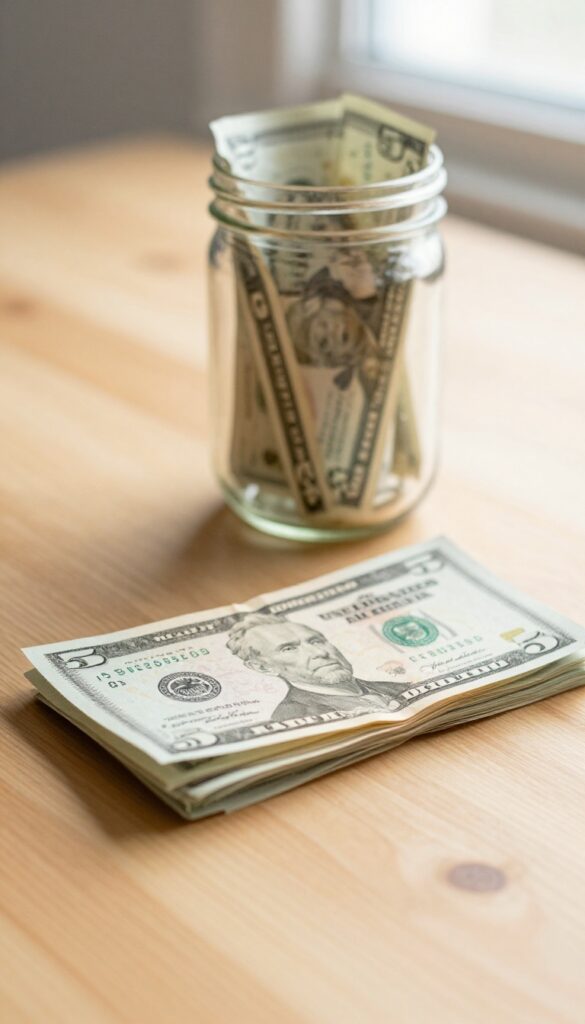
This challenge turns pocket change into a surprising savings boost. Every time you receive a $5 bill as change, you stash it away instead of spending it. It's a low-effort way to build a cash reserve without changing your spending habits much.
The $5 bill challenge is all about capitalizing on small windfalls you'd normally overlook. Over time, those fives add up faster than you'd expect.
Where To Keep Your $5s
Pick a designated spot—a jar, an envelope, or a specific pocket in your wallet. Out of sight, out of mind helps you avoid dipping into the stash.
Track Your Progress
No need for a spreadsheet. Just count your $5s once a week or month. Watching the pile grow is surprisingly satisfying and keeps you motivated.
What To Do With The Money
After a few months, you'll have a nice sum. Use it for a specific goal like a weekend trip, paying off a small debt, or simply adding it to your emergency fund.
Free PDF Download
Not Sure Which Side Hustle Fits You Best?
Take the free Side Hustle Matchmaker Quiz and get a simple 7-day starter plan to help you choose a beginner-friendly idea based on your time, skills, comfort level, and goals.
You’ll get this free PDF plus access to the full Marketerna Save More & Earn More PDF Kit. No spam. Unsubscribe anytime.
5. The 30-Day No Takeout Challenge
Takeout is convenient, but it's also one of the biggest leaks in your budget. The average person spends $100–$200 a month on restaurant meals and delivery fees. This challenge asks you to cook every single meal at home for 30 days.
It's not about gourmet cooking—it's about breaking the habit of ordering out and discovering how much you can save by using what's already in your kitchen.
By the end of the month, you'll not only have extra cash in your pocket, but you'll also likely feel more confident in the kitchen. Plus, you'll have a clearer picture of where your money was going before.
Plan Ahead To Avoid Cravings
The hardest part is when you're tired and hungry. Avoid that trap by planning your meals for the week. Pick 3–4 simple recipes you enjoy and batch cook on Sunday.
Keep easy backup meals like frozen veggies and rice for low-effort nights.
Make It Fun, Not A Chore
Try new recipes or theme nights like Taco Tuesday or Stir-Fry Friday. Invite friends over for a potluck instead of going out. The goal is to make home cooking feel like a treat, not a punishment.
Track Your Savings Visually
Every time you would have ordered takeout, put that money into a jar or a separate savings account. Watching it grow is incredibly motivating. At the end of 30 days, use that cash to treat yourself—maybe a nice kitchen gadget or a special ingredient.
6. The Round-Up App Challenge
If you struggle to remember to save, this one does the work for you. Round-up apps link to your debit or credit card and automatically save the spare change from every purchase. You won't feel a thing, but the savings pile up fast.
The beauty of this challenge is that it's completely hands-off. Once you set it up, the app handles everything. You can even set a multiplier to save double or triple the round-up amount, accelerating your progress without extra effort.
How It Works
Download a round-up app like Acorns, Qapital, or Chime. Link it to your checking account. Every time you buy something, the app rounds the total to the nearest dollar and transfers the difference to your savings or investment account.
You can also set recurring deposits or one-time boosts.
Why It Works For Beginners
It's painless because you never miss the spare change. Over a month, those 50-cent and 75-cent round-ups can add up to $30–$50 without any budgeting effort. It's saving on autopilot.
Tips To Maximize It
Start with a 1x round-up, then increase to 2x or 3x after a few weeks. Also, set a weekly savings goal within the app to stay motivated. Review your progress monthly—you'll be surprised how fast it grows.
7. The Pantry Challenge

Your pantry and freezer might already hold a week's worth of meals—you just haven't looked closely. This challenge asks you to eat only what you have on hand for seven days, buying nothing but essentials like milk or eggs if absolutely necessary. It's a fun way to save money, reduce food waste, and get creative with ingredients you forgot you owned.
How To Start
First, take inventory. Pull everything out of your pantry, fridge, and freezer. Group items by type—grains, canned goods, proteins, veggies.
Then plan a rough menu around what you have. Don't stress about perfect meals; soups, stir-fries, and grain bowls are easy go-tos.
Make It A Game
Challenge yourself to use the oldest items first. You can even set a rule: no two meals can be the same. This keeps things interesting and pushes you to experiment.
Invite your household to join in—turn it into a 'Chopped' style competition with mystery ingredients.
What You'll Gain
Beyond the money saved (easily $50–$100), you'll clear out clutter, discover new recipes, and build a habit of mindful eating. You might also realize you buy more than you need. After the week, restock only what you'll actually use.
8. The $20 Weekly Challenge
If you want a savings goal that feels both manageable and rewarding, this one’s for you. The idea is simple: set aside $20 every week. That’s it.
No complicated rules, no tracking daily spending—just one small, consistent action. By the end of the year, you’ll have $1, 040 tucked away. That could cover a weekend getaway, a car repair, or just give you a solid emergency cushion.
The best part? You barely notice the money leaving your account if you automate it.
The beauty of this challenge is its flexibility. You can start any week of the year, skip a week if needed, and adjust the amount to fit your budget. The key is consistency, not perfection.
Even if you miss a week, just pick up where you left off. Over time, those $20 bills add up faster than you’d expect.
How To Make It Stick
Set up an automatic transfer from your checking to a separate savings account every Monday morning. Out of sight, out of mind—and you won’t be tempted to spend it. If your bank allows round-ups, combine this challenge with a round-up feature to save even more without thinking.
Where To Keep The Money
A high-yield savings account is ideal so your money earns a little interest while it sits. But even a simple jar or envelope works if you prefer cash. Just make sure it’s somewhere you won’t dip into for everyday expenses.
What To Do With The $1,040
Decide your goal early—that gives you motivation. Maybe it’s a holiday fund, a new laptop, or just a financial safety net. Having a specific purpose makes it easier to resist the urge to skip a week.
And when you hit that year mark, you’ll feel amazing cashing in.
9. The No-Buy Month Challenge
A no-buy month is exactly what it sounds like: for 30 days, you only spend money on absolute necessities. That means groceries, bills, rent, and basic toiletries. Everything else—clothes, takeout, gadgets, streaming subscriptions you barely use—gets a hard pause.
It sounds extreme, but the results can be shocking. You might discover how much you spend on impulse buys or realize you already have everything you need.
Set Your Ground Rules
Before you start, decide what counts as essential. For most people, that includes food, housing, utilities, transportation to work, and health items. Make a list of allowed categories and stick to it.
If you're unsure about something like a coffee shop visit, ask yourself: do I truly need this, or is it just a habit? Be honest—this challenge works best when you're clear and consistent.
Plan For Social Situations
One of the hardest parts of a no-buy month is navigating social events. Friends might invite you out for dinner or drinks. Let them know you're doing a savings challenge—most people will understand.
Suggest free alternatives like a walk in the park, a potluck at home, or a movie night at your place. You can still have fun without spending.
Track Your Progress And Celebrate
Keep a simple log of what you would have bought but didn't. At the end of the month, add up those savings. It's motivating to see the total.
Consider putting that money directly into a savings account. Treat yourself with a small, free reward—like a relaxing bath or a favorite homemade meal—to acknowledge your discipline.
10. The 30-Day Savings Jar Challenge
There's something satisfying about watching a jar fill up with cash. This challenge turns that simple pleasure into a structured game that adds up fast. You'll need a jar, some labels, and a bit of daily discipline.
Label a jar with amounts from $1 to $30. Each day, pick a number and drop that cash in. By day 30, you've saved $465.
How It Works
Write the numbers 1 through 30 on small slips of paper and put them in a bowl. Each day, draw one number and put that amount of cash into your jar. No skipping—once a number is drawn, it's out for the month.
Why It Works
The randomness keeps it interesting. Some days you only add $1, other days $30. The variety makes it feel less like a chore and more like a daily surprise.
Plus, seeing the jar fill up is a powerful motivator.
Tips For Success
Keep the jar somewhere visible, like your kitchen counter. If cash is tight, you can modify the amounts (try $0. 50 to $15).
At the end, resist the urge to spend—roll that $465 into an emergency fund or a goal you care about.
11. The Cash-Only Week Challenge
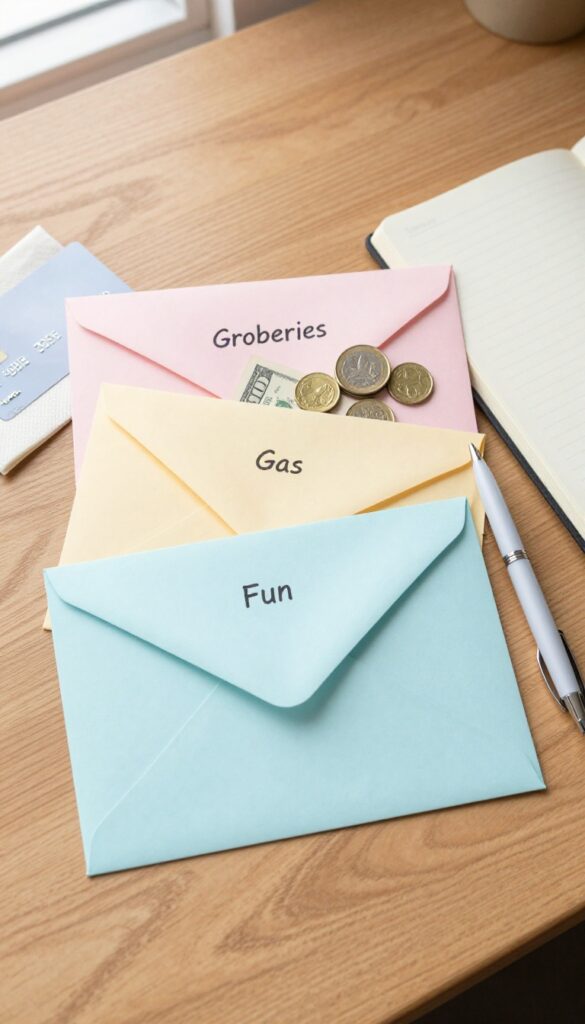
Plastic money makes it too easy to overspend. When you tap a card or phone, you don't feel the loss the same way. This challenge flips that by forcing you to use physical cash for everything.
Withdraw a set amount of cash at the start of the week—enough for groceries, gas, and a small buffer. Leave all cards and digital wallets at home. Every time you hand over a bill, you literally see your money disappear.
That mental friction makes you think twice before buying that extra coffee or impulse snack. By the end of the week, you'll likely have cash left over, which goes straight into savings.
How Much To Withdraw
Look at your typical weekly spending on non-bills (food, transport, entertainment). Subtract 10–20% as your savings target. That's your cash envelope amount.
If you normally spend $200, pull out $160–$180. The slight squeeze is what makes you more mindful.
What About Emergencies?
Keep a single emergency card hidden in your car or bag for true emergencies only—like a flat tire or a medical need. If you never use it, you win. If you do, just note what happened and adjust next week's cash amount accordingly.
Why It Works
Studies show people spend up to 50% less when using cash instead of cards. The physical act of counting and handing over bills activates pain centers in the brain. You become a more intentional spender without any complicated budgeting.
12. The 100 Envelope Challenge
This one’s a classic for a reason. You grab 100 envelopes, label them 1 through 100, and each day you pick one at random. Whatever number’s on it, you tuck that many dollars inside.
By day 100, you’ll have stashed away $5, 050—without ever feeling like you’re depriving yourself.
The randomness keeps it fun. Some days you’ll pull a low number like $3, other days you might grab $87. The mix of small and big amounts makes it feel like a game, not a chore.
Just make sure you have enough cash on hand for the higher numbers, or prep by breaking larger bills into smaller ones.
Set It Up In Minutes
All you need is 100 envelopes, a marker, and a safe place to store them. Number them 1 through 100, then mix them up in a box or bag. That’s it.
No spreadsheets, no apps—just a simple physical system that’s hard to ignore.
Pick Your Pace
You don’t have to do one envelope per day. If daily feels too intense, pick two or three envelopes each week. The math still works out as long as you finish all 100.
Just track which numbers you’ve used so you don’t repeat.
What If You Get A High Number?
It happens. If you pull $99 on a tight week, swap it back and draw another. There’s no rule that says you can’t reshuffle.
The goal is to build the habit, not stress yourself out. You can also pre-sort the envelopes into “easy” and “stretch” piles.
13. The No Impulse Buy Challenge
Impulse buys are the sneakiest budget killers. That $5 coffee run, the flash sale email, the “treat yourself” mentality—they add up fast. This challenge flips the script: you simply wait 24 hours before buying anything non-essential.
Most of the time, the urge fades, and you realize you didn't need it after all. It's like giving your wallet a second chance to say no.
The rule is simple: for any purchase that isn't a necessity (groceries, bills, gas), force a 24-hour pause. Write it down or add it to a wish list. If after a full day you still want it and it fits your budget, go ahead.
But more often than not, you'll cross it off and keep your cash.
Why 24 Hours Works
Our brains are wired to crave instant rewards. The 24-hour rule interrupts that impulse loop. Once the dopamine rush fades, you see the purchase with a clearer head.
You'll be surprised how many “must-haves” become “meh” overnight.
Make It A Game
Track every impulse you resist. At the end of the week, tally up how much you saved. Then reward yourself with something meaningful—like putting that money into savings or treating yourself to a planned experience.
It turns self-control into a win.
Real-life Tips
Unsubscribe from marketing emails. Delete saved payment info from online stores. Keep a small notebook or phone note for “wish list” items.
The less friction to buy, the harder it is to pause. Remove the shortcuts and you'll pause automatically.
14. The 365-Day Penny Challenge
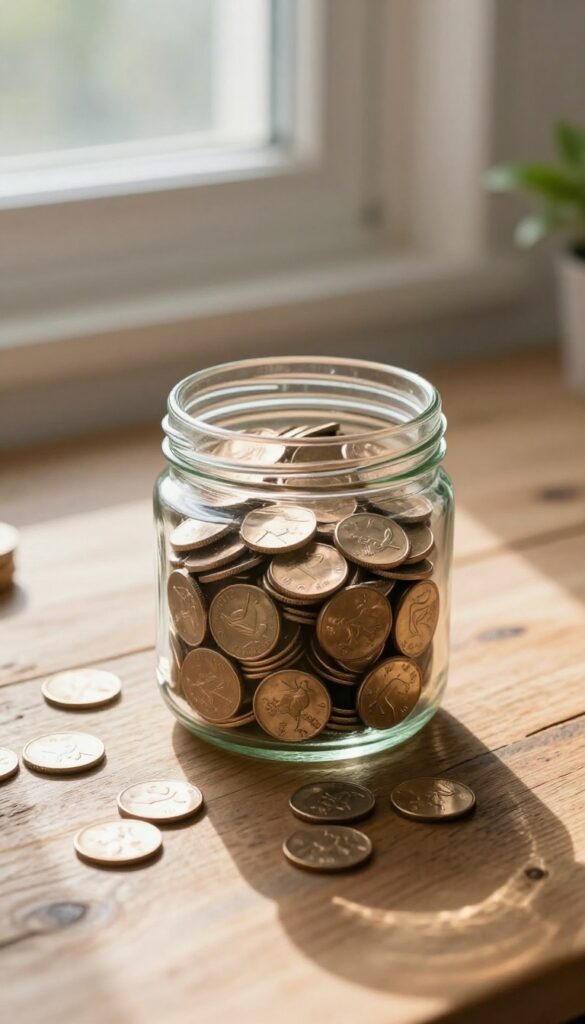
This challenge is all about small, daily wins. You start by saving one penny on day one, two pennies on day two, and so on. It sounds almost too simple, but by the end of the year, those pennies add up to $667.
- The best part? You barely notice the money leaving your pocket.
The 365-Day Penny Challenge is perfect for beginners because it starts tiny. You're not committing to a big weekly amount—just a penny more than yesterday. It builds a habit without the pressure.
How To Track Your Progress
Grab a jar or a simple envelope. Each day, drop in the exact number of pennies. Or use a savings tracker printable and transfer the amount to a separate savings account.
The key is to make it visual and satisfying.
Make It Digital
If carrying pennies feels old-school, automate it. Set up a daily recurring transfer of $0. 01 on day one, then increase it by $0.
01 each day. Your bank might limit daily transfers, so weekly lump sums work too.
What To Do With The $667.95
By December 31st, you'll have a nice chunk of change. Use it for a holiday fund, an emergency buffer, or a guilt-free splurge. The point is you earned it one penny at a time.
15. The Subscription Audit Challenge
Subscriptions are sneaky. That $9. 99 streaming service you forgot about?
It's been quietly draining your account for months. This challenge turns you into a subscription detective, hunting down and canceling those forgotten fees. Over three months, you'll eliminate three unnecessary subscriptions and reclaim $30–$50 each month.
Start by listing every subscription you currently pay for—streaming, apps, gym memberships, meal kits, anything recurring. Then, for the first month, pick one you haven't used in at least 30 days and cancel it. Repeat for the next two months.
After three months, you'll have three fewer drains on your income, often saving $90–$150 total. Plus, you'll build a habit of regularly reviewing your subscriptions.
How To Find Forgotten Subscriptions
Check your bank and credit card statements for the past three months. Look for small recurring charges you don't recognize. Also, review your email inbox for subscription confirmations or renewal notices.
Apps like Truebill or Mint can help automatically identify subscriptions.
Which Subscriptions To Cancel First
Prioritize subscriptions you haven't used in the last month. Streaming services you only watch one show on? Cancel after the season ends.
Gym memberships you never use? Ditch them. Also consider duplicate services—like having both Netflix and Hulu when you only watch one.
Make It A Habit
Set a calendar reminder every three months to audit your subscriptions again. Over time, this simple practice can save you hundreds of dollars a year. You'll also become more intentional about what you actually pay for.
16. The 30-Day No Coffee Shop Challenge
Coffee shop runs add up fast. A $5 latte here, a $7 mocha there—it's easy to spend $100 or more each month without realizing it. This challenge flips that habit into savings.
For 30 days, make all your coffee at home. That includes espresso drinks, cold brew, and fancy lattes. Invest in a simple French press or a bag of good beans.
At the end of the month, you'll have saved around $150. Put that cash toward something you really want—a nice dinner out, a new book, or an emergency fund boost.
How To Make It Easy
Stock up on quality coffee and a reusable mug. Prep your coffee the night before if mornings are rushed. Experiment with flavors like cinnamon or vanilla syrup to keep it interesting.
What To Do With The Savings
Transfer the money you would have spent directly into a savings account. Or set it aside in an envelope. After 30 days, treat yourself to something meaningful—not another coffee.
17. The Savings Bingo Challenge
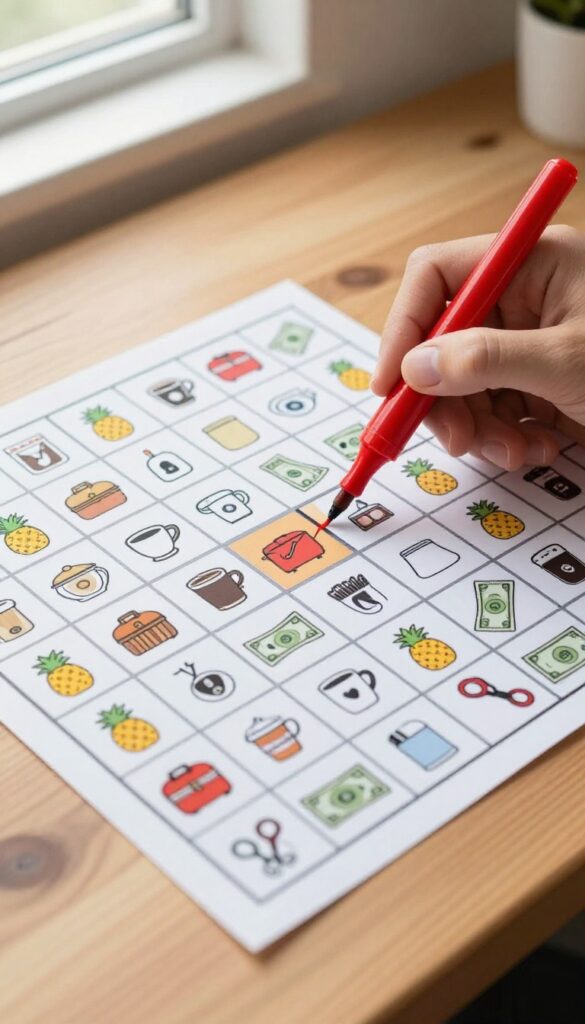
Turn saving into a game with a bingo card full of money-saving actions. Every time you complete a task like packing lunch or skipping a coffee run, mark it off. Finish a row and treat yourself to a small reward.
It’s fun, motivating, and keeps you consistent without feeling like a chore.
How To Set Up Your Bingo Card
Create a 5×5 grid and fill each square with a simple savings action. Think of things like “bring lunch from home, ” “skip one online purchase, ” “save a $5 bill, ” or “unsubscribe from an unused service. ” Mix easy and slightly harder tasks to keep it balanced. Print it out or use a digital bingo app.
Choosing Your Rewards
Rewards keep the momentum going. For each row you complete, treat yourself to something small but meaningful—a movie night, a fancy coffee, or a new book. For a full card (blackout), go bigger: a dinner out or a spa day.
Just make sure the reward doesn’t blow your savings.
Tips To Stay On Track
Place your bingo card somewhere you see daily, like on the fridge or as a phone wallpaper. Involve a friend or family member to play along—friendly competition makes it even more fun. And don’t stress if you miss a square; just keep going.
The goal is progress, not perfection.
FAQ
What is the easiest savings challenge for a beginner?
The Spare Change Jar or the $5 Bill Challenge are great starters. They require no planning and build savings passively.
How much money can I save with these challenges?
It varies. The 52-Week Challenge yields $1, 378, while the 100 Envelope Challenge can net $5, 050. Even small challenges like the $20 Weekly add up to over $1, 000 a year.
Do I need a separate bank account for savings challenges?
Not necessarily. A jar or envelope works fine. But a separate savings account can help avoid temptation and track progress.
What if I miss a week or day in a challenge?
No problem. Just pick up where you left off or restart. The goal is progress, not perfection.
Can I combine multiple challenges?
Absolutely. Start with one, then layer another. Just don't overwhelm yourself—consistency matters more than complexity.
Conclusion
You don't need a huge income to build meaningful savings—just the right small habits. Pick one challenge from this list, like the 52-week money challenge or a no-spend weekend, and try it for a week. That tiny step builds momentum.
Before you know it, you'll have a cushion that gives you breathing room and confidence. Start today, even if it's small.
Free PDF Download
Not Sure Which Side Hustle Fits You Best?
Take the free Side Hustle Matchmaker Quiz and get a simple 7-day starter plan to help you choose a beginner-friendly idea based on your time, skills, comfort level, and goals.
You’ll get this free PDF plus access to the full Marketerna Save More & Earn More PDF Kit. No spam. Unsubscribe anytime.