
19 Budget Reset Ideas When Your Money Feels Messy
Last updated on May 5th, 2026 at 03:43 pm
When your finances feel like a tangled mess, a fresh start is just a few simple actions away.
These 19 budget reset ideas cut through the chaos, helping you regain control without overhauling your entire life.
Pick one, try it today, and watch your money clarity return.

Free PDF Download
Get the Free Budget Binder Starter Pack
Download simple printable budget sheets to plan your monthly money, track expenses, organize bills, and start building better money habits without feeling overwhelmed.
You’ll get this free PDF plus access to the full Marketerna Save More & Earn More PDF Kit. No spam. Unsubscribe anytime.
1. Do a 7-Day No-Spend Challenge

Sometimes the fastest way to untangle your money mess is to press pause. A no-spend challenge does exactly that—hit the brakes on all non-essential spending for one week. It’s not about deprivation; it’s about awareness.
You’ll quickly see where your cash actually goes and where you can cut back without feeling miserable.
Pick a week that’s relatively normal—no birthdays, no travel plans. Then commit to spending only on absolute necessities: rent, utilities, groceries, transportation, and bills. Everything else—takeout, coffee runs, new clothes, streaming subscriptions—gets a temporary freeze.
The goal isn’t perfection; it’s noticing how often you spend without thinking.
What Counts As Essential?
Be honest with yourself. Essentials keep you housed, fed, and able to work. That includes groceries (but not restaurant meals), gas or transit fare, prescription meds, and utility bills.
Non-essentials are everything else: that daily latte, a new phone case, or a spontaneous dinner out. If you’re unsure, ask: “Would I need this if I were broke? ”
How To Survive The Urge To Spend
Cravings for convenience will pop up. When they do, pause for 10 minutes. Drink water, go for a walk, or check your bank balance.
Often the urge passes. Keep a list of free activities—reading, hiking, movie night at home—so you have alternatives ready. You’ll be surprised how little you miss the extras.
What You’ll Learn By Day 7
By the end of the week, you’ll have a clear picture of your spending leaks. Maybe you’re dropping $50 on takeout or $30 on coffee runs. You’ll also feel a sense of control—proof that you don’t need to spend to be happy.
Use that momentum to set a monthly no-spend weekend or a recurring challenge.
2. Audit Your Subscriptions
Those monthly charges you barely notice? They're quietly draining your account. A subscription audit is one of the fastest ways to find hidden money leaks.
You might be surprised how many services you're paying for but not using.
Go through your bank and credit card statements from the last three months. Highlight every recurring charge—streaming services, app subscriptions, meal kits, gym memberships, even cloud storage. Be ruthless: if you haven't used it in the past 30 days, cancel it.
You can always re-subscribe later if you miss it.
Check For Forgotten Free Trials
Free trials that auto-convert to paid subscriptions are a classic money trap. Search your email for keywords like "trial, " "subscription, " and "renewal. " Cancel any trials you're still paying for but no longer need.
This alone can save you $20–$50 a month.
Look For Duplicate Services
You might be paying for two streaming platforms that offer the same content, or a gym membership and a fitness app you never use. Consolidate where possible. For example, pick one streaming service per month or switch to a free version of an app.
Negotiate Or Downgrade
Some subscriptions offer lower tiers or annual discounts. Call your internet or phone provider and ask about promotions. Downgrade to a cheaper plan if you're not using all the features.
Even a $5 reduction per month adds up to $60 a year.
Free PDF Download
Get the Free Budget Binder Starter Pack
Download simple printable budget sheets to plan your monthly money, track expenses, organize bills, and start building better money habits without feeling overwhelmed.
You’ll get this free PDF plus access to the full Marketerna Save More & Earn More PDF Kit. No spam. Unsubscribe anytime.
3. Create a Cash-Only Week
Plastic makes spending almost painless. Swipe, tap, done—the money feels imaginary. A cash-only week flips that script entirely.
You withdraw a fixed amount for groceries, gas, eating out, and fun, then leave the cards at home. Suddenly every purchase is real.
When you hand over physical bills, you feel the weight of each dollar. That mental friction slows you down and makes you think twice before buying. It’s a simple reset that reveals exactly where your money goes and how much you actually need.
How To Pick Your Cash Amount
Look at your last week of variable spending—things like coffee, takeout, entertainment, and transport. Don’t include fixed bills like rent or insurance. Take that total and subtract 10–20%.
That’s your cash envelope number. It’s tight but doable.
What Counts As Variable Spending
Anything that changes week to week: dining out, groceries, gas, parking, snacks, streaming snacks, or that random Amazon buy. Fixed costs like rent, utilities, and subscriptions stay on autopay. The cash rule only applies to the flexible stuff you can actually control.
Tips To Stick With It
Tell a friend or partner you’re doing a cash week—accountability helps. Carry the cash in separate envelopes labeled by category. When an envelope is empty, that category is done.
No borrowing from another envelope. It’s not punishment; it’s a game of resourcefulness.
4. Use the 50/30/20 Rule as a Quick Check
The 50/30/20 rule is a simple way to see if your spending is in balance. It splits your after-tax income into three buckets: needs (50%), wants (30%), and savings (20%). If your money feels messy, this rule gives you a clear target to aim for.
Start by adding up your monthly after-tax income. Then sort your expenses into needs (rent, groceries, utilities), wants (dining out, subscriptions, hobbies), and savings (debt payments beyond minimums, retirement, emergency fund). Compare each category to the 50/30/20 percentages.
If you're overspending on wants, trim a few subscriptions. If needs are too high, look for ways to lower fixed costs like insurance or phone plans. The goal isn't perfection—it's awareness and a nudge toward better balance.
Calculate Your Numbers
Grab your bank statements from the last month. List every expense and label it as a need, want, or saving. Total each category and divide by your income.
See how close you are to 50/30/20.
Adjust The Levers
If wants are at 40%, cut back by 10%—maybe fewer takeout meals or a cheaper streaming plan. If needs are at 60%, look for savings on rent, insurance, or groceries. Redirect the extra to savings.
Use It As A Monthly Reset
Check in once a month. Life changes—so do your numbers. A quick review keeps you aligned with your goals without a full budget overhaul.
Free PDF Download
Get the Free Budget Binder Starter Pack
Download simple printable budget sheets to plan your monthly money, track expenses, organize bills, and start building better money habits without feeling overwhelmed.
You’ll get this free PDF plus access to the full Marketerna Save More & Earn More PDF Kit. No spam. Unsubscribe anytime.
5. Set Up Automatic Transfers to Savings
Payday feels great, but somehow the money vanishes before you know it. What if your savings could grow without you lifting a finger? That's the magic of automation.
Set up a recurring transfer from checking to savings on the same day you get paid. Even $20 per week adds up to over $1, 000 in a year. The key is making it automatic so you never see the money in your checking account.
Start Small, Stay Consistent
Pick an amount that feels almost too small to matter. $10 or $20 per week is perfect. You won't miss it, but over time it builds a real cushion. The habit matters more than the number.
Use The Right Account
Keep savings in a separate account, ideally one that's a little harder to access. A high-yield savings account or a different bank entirely helps reduce the temptation to dip in.
Automate On Payday
Schedule the transfer for the same day your paycheck hits. That way, your savings get paid before you can spend the money on anything else. Out of sight, out of mind.
6. Try a Spending Fast on One Category
Sometimes the best way to reset is to go cold turkey—on just one thing. A spending fast means you pick a category you regularly spend on and cut it out completely for two weeks. It's not about deprivation; it's about noticing how much you actually spend on that habit and what happens when you stop.
Pick The Right Category
Choose something you spend on frequently but not necessarily for survival. Dining out, coffee runs, takeout, or even impulse shopping on Amazon are great candidates. The key is to pick a category that's noticeable enough to create a real impact but not so essential that the fast feels impossible.
Set Clear Rules
Define what counts. If you're fasting from dining out, does that include fast food? What about a coffee from a café?
Be specific so there's no gray area. Also, decide on the duration—two weeks is ideal because it's long enough to see savings but short enough to stay motivated.
Track The Savings And The Shift
Put the money you would have spent into a separate jar or account. At the end of the fast, count it up. You'll likely be surprised by the total.
More importantly, notice how your habits changed. Did you start making coffee at home? Did you realize you didn't miss that daily latte?
That awareness can stick long after the fast is over.
7. List Every Bill and Due Date
It's easy to lose track of bills when they're scattered across different accounts, apps, and paper statements. Writing them all down in one place changes everything. You'll see exactly what's coming, when it's due, and how much you need to set aside.
Grab a notebook or open a simple spreadsheet. List every recurring bill: rent, utilities, subscriptions, insurance, loans, and any other regular payments. Next to each, write the monthly amount and the due date.
Keep it simple—no budgeting software required. Once it's all in one spot, you can plan your payments to avoid late fees and overdrafts. Bonus: you'll spot subscriptions you forgot about and can cancel the ones you don't use.
Start With The Essentials
Begin with non-negotiables like rent or mortgage, utilities, and insurance. These are the bills that keep your life running. Write down the exact due date and amount, even if it's auto-paid.
Seeing them first helps you know how much of your income is already spoken for.
Don't Forget The Flexible Ones
Next, add variable bills like credit cards, streaming services, and gym memberships. These amounts might change monthly, so estimate or use last month's total. The goal is to get a complete picture—not perfection.
You can adjust later.
Set A Weekly Bill Check-in
Once your list is done, pick one day a week to review it. Mark off paid bills and note any upcoming ones. This five-minute habit keeps you ahead of due dates and reduces money stress.
Over time, you'll naturally start planning your spending around your bill schedule.
8. Round Up Purchases to Save Spare Change
Micro-savings can feel like magic. Instead of trying to stash away big chunks of cash, you let the small stuff do the work. Rounding up your everyday purchases to the nearest dollar is a painless way to build a savings cushion without even thinking about it.
Many banks and apps offer automatic round-up features. Every time you buy a coffee for $3. 50, the app tucks away $0.
50 into a savings or investment account. Over a month, those quarters and dimes can easily add up to $20, $30, or more. If you prefer a manual approach, you can transfer the difference yourself at the end of each day or week.
The key is consistency—the spare change habit turns pocket lint into real progress.
Choose Your Round-up Tool
Apps like Acorns, Qapital, or even your own bank's savings feature can automate the process. Look for one that links to your debit or credit card and rounds up to the nearest dollar (or even $5 for a bigger boost). No app?
No problem. Just round up manually in your budgeting app or notebook.
Set A Round-up Cap
To avoid surprise overdrafts, set a daily or weekly cap on how much can be rounded up. Most apps let you limit transfers to $5 or $10 per day. That way, you still save but never scramble for rent money.
Watch The Snowball Effect
Don't underestimate the power of small amounts. Rounding up just $0. 50 per transaction on 30 purchases a month gives you $15.
Over a year, that's $180—enough for a nice emergency buffer or a guilt-free treat. The habit builds momentum without feeling like a sacrifice.
9. Host a 'Use It Up' Week
Your pantry, bathroom cabinet, and cleaning closet are probably hiding treasures you forgot about. A 'Use It Up' week challenges you to consume what you already own before buying anything new. It's like a treasure hunt that saves money and reduces waste.
For seven days, commit to buying only absolute necessities like fresh milk or eggs. Everything else—meals, toiletries, household supplies—comes from your existing stash. You'll be surprised how many meals you can create from that half-used bag of lentils and the frozen veggies hiding in the back of the freezer.
Start With A Pantry Audit
Take everything out of your pantry, fridge, and freezer. Group items by type and expiration date. You'll instantly see what needs to be used soon and what you have too much of.
This also prevents buying duplicates next time you shop.
Get Creative With Leftovers
Turn odds and ends into new meals. That single potato, half an onion, and some cheese can become a frittata. Stale bread becomes croutons or breadcrumbs.
Challenge yourself to make at least one meal a day from leftovers or random ingredients.
Extend The Challenge To Non-food Items
Use up half-empty shampoo bottles, sample-size toiletries, and that weird cleaning spray you bought on a whim. You'll free up space and delay the need to restock. By the end of the week, you'll see exactly what you actually need to buy.
10. Review Your Bank Statements Line by Line
When was the last time you actually read your bank statement instead of just checking the balance? Most of us skim it, see we're not overdrawn, and move on. But buried in those transactions are clues about where your money really goes—and where you can easily save.
Set aside 20 minutes with your last month's statement. Go through every single transaction, from the big rent payment to that $3 coffee. Highlight or flag anything that gives you pause—a subscription you forgot about, a fee you could avoid, or a habit you didn't realize was so expensive.
You'll almost always spot at least one pattern you can change immediately.
Spot The Sneaky Subscriptions
Look for recurring charges you no longer use or need. Streaming services, app subscriptions, gym memberships—they add up fast. Canceling just two or three can free up $30–$50 a month without changing your lifestyle.
Identify Spending Triggers
Notice when and where you tend to overspend. Maybe it's late-night online shopping or mid-afternoon takeout. Recognizing the pattern helps you plan ahead—like deleting saved payment info or packing a snack.
Catch Bank Fees And Errors
Banks make mistakes, and fees can slip through. Look for overdraft charges, ATM fees, or duplicate transactions. A quick call to customer service can often reverse a legitimate fee, and catching errors early saves headaches.
11. Implement a 24-Hour Rule for Non-Essentials
Impulse buying is a budget killer. That cute mug or flashy gadget feels urgent in the moment, but the urge usually fades fast. The 24-hour rule gives your brain time to cool off, so you can decide with logic instead of emotion.
Before you hit “buy” on anything non-essential, add it to a wish list or cart and walk away. Set a timer for 24 hours. When you come back, ask yourself: Do I still want this?
Will I use it? Is it worth the money? Most of the time, the answer is no, and you just saved yourself from regret.
Why It Works
Your brain’s reward system lights up at the thought of a new purchase, but that dopamine spike drops quickly. Waiting a day lets the initial excitement settle, revealing whether you genuinely need the item or just wanted the thrill.
How To Make It Stick
Keep a running list on your phone of things you’re waiting on. After 24 hours, review it. If you still want it, add it to your next month’s budget.
If not, delete it. This simple habit turns impulse into intention.
12. Switch to a No-Fee Bank Account
Bank fees are one of those silent budget killers that slip under the radar. You might be paying $10 or $15 a month just for the privilege of keeping your money in a certain account. That adds up to $120–$180 a year for absolutely nothing.
The fix is simple: switch to a bank or credit union that doesn't charge monthly maintenance fees. Many online banks offer free checking and savings accounts with no minimum balance requirements. It's a one-time change that keeps saving you money year after year.
Check your most recent bank statement for any monthly service fees. If you see one, start shopping around for a no-fee account. Online banks like Ally, Capital One 360, and Chime are popular options.
Credit unions often have low or no fees too. Once you open the new account, switch over your direct deposit and automatic payments. Then close the old account to avoid any lingering fees.
That's it—you've just given yourself a permanent raise.
How To Spot Hidden Fees
Monthly maintenance fees aren't the only ones. Watch out for ATM fees, overdraft fees, and minimum balance fees. Some banks waive the monthly fee if you set up direct deposit or keep a certain balance.
But why jump through hoops? Just pick an account that's free with no strings attached.
Online Banks Vs. Credit Unions
Online banks typically offer higher interest rates and lower fees because they don't have physical branches. Credit unions are member-owned and often have great customer service and low fees. Both are solid choices.
Just make sure the bank is FDIC-insured or the credit union is NCUA-insured.
13. Plan Your Meals Around What's on Sale
Grocery shopping can feel like a guessing game, but it doesn't have to be. By letting store sales guide your menu, you cut costs without sacrificing taste or variety. It's a simple shift that saves money and reduces food waste.
Start by checking weekly ads from your local stores. Look for proteins, produce, and pantry staples that are discounted. Then build your meals around those items.
You'll eat well and spend less, all while avoiding the stress of deciding what's for dinner.
How To Spot The Best Deals
Flip through grocery store flyers or use apps like Flipp to compare prices. Focus on discounts on meat, seasonal produce, and bulk items. Stock up on non-perishables when they're on sale, and plan fresh meals around what's marked down that week.
Build A Flexible Meal Plan
Don't lock yourself into a rigid menu. Instead, list 3-4 meals based on sale items, then fill in the gaps with staples you already have. For example, if chicken is on sale, plan a stir-fry, grilled chicken salad, and a simple roast.
Swap ingredients as needed.
Reduce Waste And Save Again
When you plan around sales, you buy only what you'll use. That means less food spoiling in the fridge. Use leftovers creatively—turn roasted veggies into soup or extra rice into fried rice.
Every bit saved stretches your budget further.
14. Use a Single Budgeting App for 30 Days
App hopping is a common trap. You download one, try it for a few days, then switch to another because the first one felt clunky. Before you know it, you've tried five apps and still have no clue where your money went.
Commit to one app for a full 30 days. No backups, no switching mid-month. The goal isn't perfection—it's consistency.
Pick one app and commit to tracking every expense for a month. Consistency reveals where your money really goes.
Choose Your Tool Wisely
Not all budgeting apps are created equal. Some sync automatically with your bank, others require manual entry. Think about your habits: if you hate typing amounts, go with an auto-sync app like Mint or YNAB.
If you prefer hands-on control, try EveryDollar or Goodbudget. Pick one that fits your style, then delete the rest from your phone.
Track Everything, No Exceptions
For 30 days, log every single transaction—even the $2 coffee. This isn't about judgment; it's about data. Most apps categorize spending automatically, so you can see patterns you might have missed.
You'll likely discover a few surprises, like how much you actually spend on takeout or subscriptions.
Review Weekly, Not Daily
Checking your budget every day can feel obsessive and stressful. Instead, set aside 10 minutes each Sunday to review the week's spending. Look at where you went over and where you saved.
Over time, these weekly check-ins become a habit that keeps you on track without the daily pressure.
15. Negotiate One Bill This Month

Picking up the phone might feel like a hassle, but it's one of the fastest ways to put money back in your pocket. Service providers rarely offer their best rates to existing customers—you have to ask. A single 10-minute call to your internet, cable, or insurance company can slash your monthly bill and save you hundreds over the year.
Start by checking what competitors are charging for similar service. Then call your provider, be polite but firm, and mention that you're considering switching unless they can match or beat those offers. Many companies have a retention department with authority to lower rates or add perks.
If the first rep says no, hang up and call again—you might get a different answer.
Do Your Homework First
Before you dial, look up current deals from other providers. Write down the price and speed or coverage details. This gives you leverage and shows you're serious.
Use The Right Script
Say something like: 'I've been a loyal customer for X years, but I noticed a new customer offer for $Y. Can you match that or apply a loyalty discount? ' Stay calm and friendly—it works more often than you'd think.
Don't Forget Insurance
Bundle your auto and home or renters insurance with the same company, or ask about safe-driver discounts. Even a small percentage drop adds up over a year.
16. Create a 'Sinking Fund' for Irregular Expenses
Those surprise bills that arrive once or twice a year? They're not really surprises—you know car insurance is due every six months and holiday gifts roll around annually. Yet when the charge hits, it feels like a punch to the gut.
A sinking fund turns those predictable expenses into manageable monthly payments, so you're never caught off guard again.
A sinking fund is a separate savings account where you set aside a fixed amount each month for a specific irregular expense. Instead of scrambling to find cash when the bill arrives, you've already got it waiting. This simple habit removes the stress and keeps your budget on track.
Pick Your Biggest Irregulars
Start with the expenses that cause the most panic. Car insurance, property taxes, annual subscriptions, or holiday spending are common culprits. List them out with their expected costs and due dates.
Then divide each annual total by 12 to figure out your monthly contribution.
Automate It
Set up an automatic transfer from your checking to your sinking fund account on payday. Even $25 a week adds up. Treat it like any other bill—non-negotiable.
Before you know it, you'll have a cushion for those once-a-year costs.
Keep It Separate
Don't mix sinking fund money with your emergency fund or everyday checking. Use a high-yield savings account or a separate sub-account. Label each fund (e. g. , "Car Insurance") so you know exactly what the money is for.
This clarity prevents accidental spending.
17. Try a No-Eating-Out Challenge for Two Weeks
Restaurants and takeout are convenient, but they drain your budget fast. A two-week break from eating out forces you to use what you already have and get creative in the kitchen. The result?
More cash in your wallet and a healthier you.
Commit to cooking all meals at home for 14 days. No coffee shop runs, no lunch deliveries, no dinner takeout. Plan your meals, shop smart, and watch your savings grow.
You'll likely discover that homemade meals taste better and cost a fraction of the price.
Plan Your Meals
Spend 30 minutes mapping out breakfast, lunch, dinner, and snacks for the week. Check your pantry and fridge first, then make a targeted grocery list. Stick to it to avoid impulse buys.
Batch Cook For Busy Days
Cook larger portions on weekends or evenings when you have time. Freeze leftovers in single servings. That way, when you're tired or rushed, you have a homemade meal ready in minutes—no temptation to order out.
Make It Fun
Get the family involved or challenge yourself to try one new recipe each week. Use the money you save for a small reward after the two weeks, like a movie night or a new kitchen gadget.
18. Unsubscribe from Marketing Emails
Your inbox is a battlefield of flash sales and limited-time offers. Every email is a tiny nudge to spend money you didn't plan to. The fix is simple: start unsubscribing.
Marketing emails are designed to trigger impulse buys. They create a false sense of urgency and make you feel like you're missing out. By removing them, you remove the temptation entirely.
It's a passive way to save money without willpower.
Why It Works
Each email is a mini advertisement. When you stop seeing them, you stop wanting. It's out of sight, out of mind.
Plus, fewer emails mean less mental clutter, making it easier to stick to your budget.
How To Do It Efficiently
Use a tool like Unroll. me or do it manually. Set aside 15 minutes and unsubscribe from every store newsletter. For the ones you actually want, keep them, but be honest with yourself.
Most can go.
The Long-term Benefit
Your inbox stays clean, and your spending stays intentional. Over a year, you'll save hundreds just from not seeing those 20% off coupons. It's one of the easiest budget resets you'll ever do.
19. Write Down Your Top 3 Money Goals
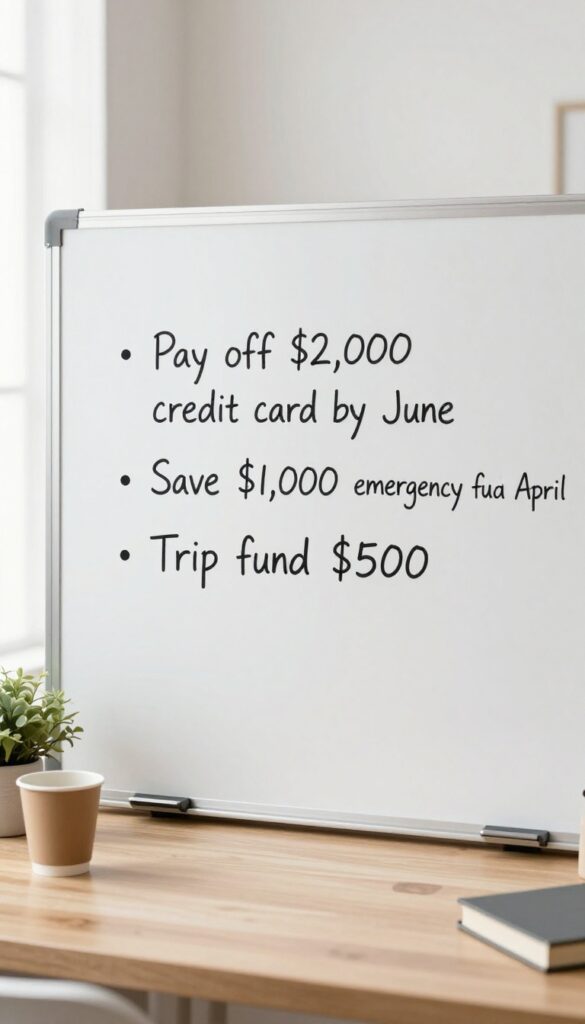
Getting clear on what you're actually saving for can turn vague anxiety into focused action. Instead of feeling guilty about every purchase, you'll know exactly what matters most. Pick just three goals—debt payoff, emergency fund, a trip—and write them down.
Clarity is a powerful motivator. When you see your goals daily, you're more likely to make choices that align with them. Keep it simple: no more than three goals, and make them specific.
Make Them Specific
Instead of "save more, " try "pay off $2, 000 credit card by June" or "save $1, 000 emergency fund by April. " Specific numbers and deadlines turn wishes into targets.
Post Them Where You'll See Them
Stick your goals on the fridge, bathroom mirror, or phone wallpaper. Daily visual reminders keep your brain focused on what you're working toward, making it easier to skip impulse buys.
Celebrate Small Wins
Hit a mini milestone? Treat yourself to something small but meaningful. A coffee, a movie night, or a walk in the park reinforces progress and keeps motivation high.
FAQ
How often should I do a budget reset?
Aim for a mini reset every month and a deeper reset quarterly. Life changes, so your budget should adapt too.
What if I can't stick to a no-spend challenge?
Start smaller—try a one-day no-spend or limit it to a single category. Progress, not perfection.
Do I need a budgeting app to reset my budget?
No, a simple notebook or spreadsheet works fine. The key is tracking your spending consistently.
How much should I save each month?
Aim for at least 20% of your income, but start with whatever you can. Even 5% builds momentum.
What's the first step if I feel completely lost?
Start with step 7: list every bill and due date. That alone gives you a clear picture and reduces anxiety.
Conclusion
You don't need to overhaul everything at once. Pick just one reset idea that feels doable—maybe the no-spend week or the bill audit—and commit to it for 30 days. That small win builds momentum.
Before you know it, your money won't feel messy anymore. It'll feel like a tool you actually control.
Free PDF Download
Get the Free Budget Binder Starter Pack
Download simple printable budget sheets to plan your monthly money, track expenses, organize bills, and start building better money habits without feeling overwhelmed.
You’ll get this free PDF plus access to the full Marketerna Save More & Earn More PDF Kit. No spam. Unsubscribe anytime.