
10 Small Business Ideas You Can Test This Month
Most people get stuck because they treat a first business like a lifelong commitment instead of a small experiment. That thinking slows everything down, drains motivation, and turns a simple idea into a weird mental obstacle course.
A smarter move starts with something cheap, quick, and easy to validate without building a giant brand first. I like business ideas that let you test demand fast, learn what people actually want, and adjust before you waste time making a logo you’ll probably hate in two weeks.
This list focuses on ideas you can realistically try this month, not someday after a perfect plan magically appears. Some of these work best as side hustles, some can grow into serious income, and a few look almost too simple until they start bringing in money.
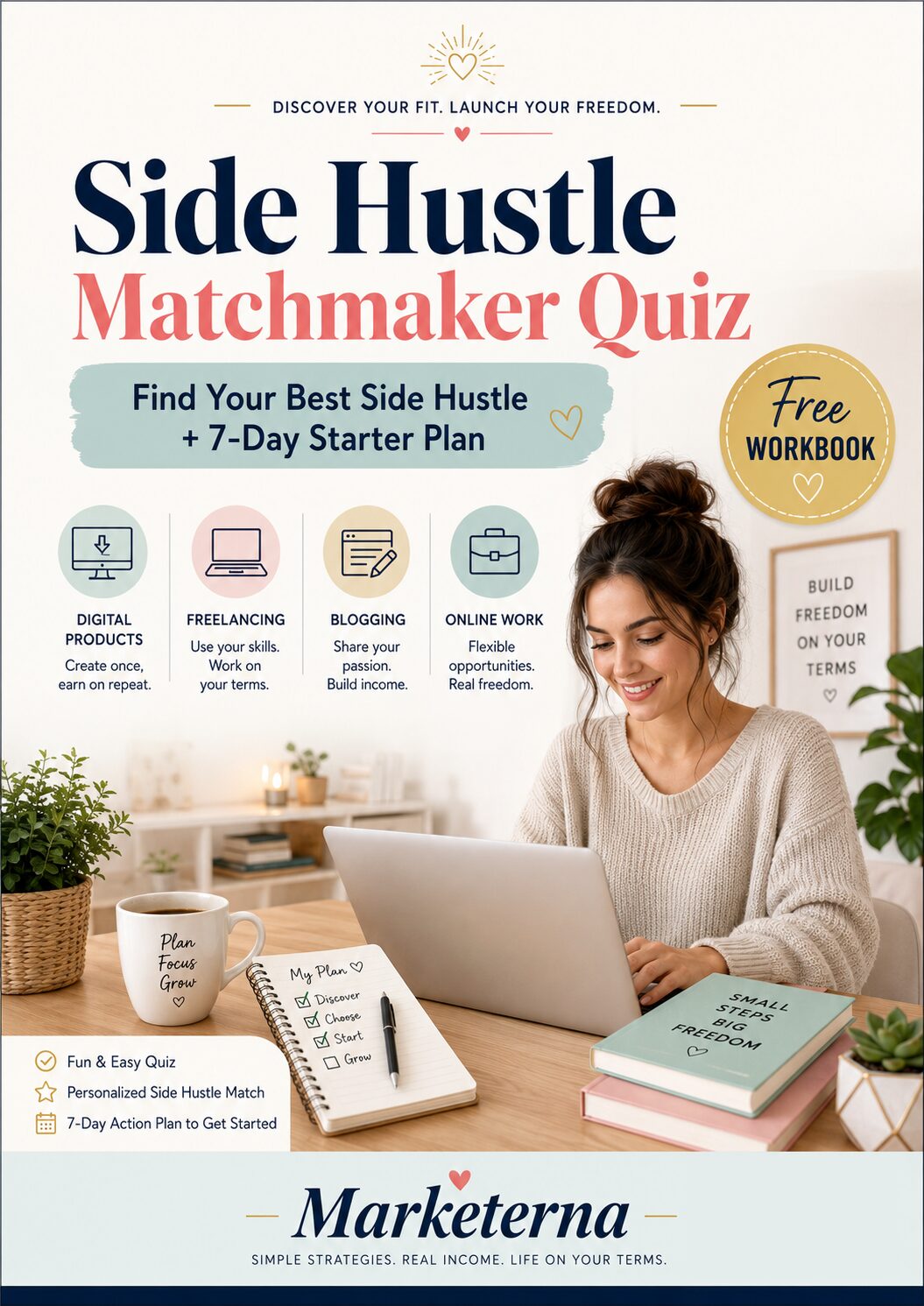
Free PDF Download
Not Sure Which Side Hustle Fits You Best?
Take the free Side Hustle Matchmaker Quiz and get a simple 7-day starter plan to help you choose a beginner-friendly idea based on your time, skills, comfort level, and goals.
You’ll get this free PDF plus access to the full Marketerna Save More & Earn More PDF Kit. No spam. Unsubscribe anytime.
1. Freelance Social Media Content Service
A lot of small businesses know they need social media, but plenty of them still post like they lost a bet. Their pages look random, inconsistent, and weirdly stuck in 2019, which creates a real opening for someone who can organize content and make it look alive again.
This idea matters because it solves an obvious, visible problem that business owners already understand. I like it because you do not need a huge setup, and you can start by offering content calendars, captions, simple post graphics, or short-form content planning.
Why It Works
Small businesses usually do not want a full agency right away, but they often need help with the basics. That makes a small starter package much easier to sell than some bloated monthly offer with ten buzzwords and zero clarity.
It also gives you quick feedback because results show up fast in engagement, consistency, and owner satisfaction. Even better, one happy client can lead to referrals, and referrals hit different when you are starting from scratch.
How to Test It This Month
- Pick one type of client, like cafés, gyms, salons, local shops, or consultants, so your offer feels specific instead of vague.
- Create three sample posts and one mini content plan to show what you can do before anyone hires you.
- Message local businesses or email a short pitch that offers a low-risk trial package for one or two weeks.
- Price the first test offer simply, such as ten posts plus captions for one flat fee, because confusion kills early sales.
Tips & Variations
Tip: Start with businesses that already post sometimes but clearly need help, because they already believe in the platform and just lack consistency. Variation: Offer a content-only package or a content-plus-scheduling package so clients can choose based on budget and control.
2. Print-on-Demand Niche Store
A lot of people hear print-on-demand and immediately picture generic mugs with lazy quotes, which is exactly why most stores go nowhere. The real opportunity sits in narrow niches with clear interests, inside jokes, or identity-based themes that people actually enjoy buying.
This idea matters because you can test product demand without holding inventory or packing boxes in your living room. I have always liked this model for beginners because it strips out one of the biggest early headaches, which is getting buried under stock you guessed wrong on.
Why It Works
Print-on-demand works best when the design connects with a specific audience instead of trying to impress everyone on the internet. Niche buyers usually respond better when a shirt, tote, or notebook feels like it was made for their exact hobby, job, or lifestyle.
It also gives you room to test fast because one design can go on multiple products without much extra work. If something flops, you move on without staring at a pile of unsold items judging you from a shelf.
How to Test It This Month
- Choose a tight niche like teachers, gardeners, cat lovers, pickleball fans, book club members, or small business owners.
- Create five to ten design ideas around one clear theme instead of opening a random store with mixed products.
- Upload the designs to a simple storefront and list only a few product types so the shop feels focused.
- Promote the products through Pinterest, short videos, niche groups, or themed content that matches the audience’s interests.
Tips & Variations
Tip: Keep designs readable and easy to understand in two seconds, because complicated graphics often look clever only to the person who made them. Variation: Test seasonal designs first, since holidays, school events, and trending interests can create faster buying decisions.
Free PDF Download
Not Sure Which Side Hustle Fits You Best?
Take the free Side Hustle Matchmaker Quiz and get a simple 7-day starter plan to help you choose a beginner-friendly idea based on your time, skills, comfort level, and goals.
You’ll get this free PDF plus access to the full Marketerna Save More & Earn More PDF Kit. No spam. Unsubscribe anytime.
3. Digital Product Shop
People love the idea of passive income, then create a digital product nobody asked for and act surprised when silence follows. A better approach starts with small, useful products like templates, checklists, planners, worksheets, or mini guides that solve one clear problem.
This idea matters because digital products cost very little to create and can be tested without a giant audience. I genuinely like this model because one good product can sell again and again, and you can improve it once real buyers show you what they actually need.
Why It Works
Digital products sell well when they save time, reduce stress, or organize messy tasks into something easier. Buyers usually do not care whether a product looks fancy if it helps them finish something faster and with less brain damage.
It also lets you validate a niche before building a bigger brand, course, or membership. That early proof matters a lot because sales tell the truth way faster than compliments do.
How to Test It This Month
- Pick a specific customer and one problem, like meal planning, budgeting, wedding prep, classroom organization, or content planning.
- Create one simple product that solves that problem clearly, rather than building a giant bundle no one requested.
- Write a clean product page with practical benefits, mockup images, and a plain explanation of what the buyer gets.
- Share it through Pinterest, TikTok, Instagram, email, or a small blog post that matches the product topic.
Tips & Variations
Tip: Start cheap and simple, because a $7 to $19 product often gets faster traction than a giant premium item with zero trust behind it. Variation: Bundle two or three related products later if the first one gets attention and buyers ask for more.
4. Local Service Booking Business
Some of the fastest ways to make money have nothing to do with becoming an influencer or building a personal brand empire. Local services stay underrated because they look less glamorous, but real people still pay for help with cleaning, organizing, pet care, yard work, errands, or basic home tasks.
This idea matters because it can produce cash quickly and teach you how selling really works. I respect local service businesses a lot because they force clarity, reliability, and actual customer service, which beats vague online hustle talk every single time.
Why It Works
Local services solve immediate problems, and immediate problems usually come with built-in demand. When someone needs dog walking, room organizing, furniture assembly help, or lawn care, they often want a solution now, not next quarter after your brand strategy matures.
It also gives you a simple feedback loop because customers respond to punctuality, communication, and results almost instantly. That makes it easier to improve your offer, raise prices, or narrow into a premium niche once you see what people ask for most.
How to Test It This Month
- Choose one service you can deliver well and safely without needing a complicated certification or major equipment.
- Create a one-page flyer or social post with the service, price range, location, and easiest way to book you.
- Share the offer in neighborhood groups, local Facebook communities, WhatsApp circles, or through direct referrals.
- Book a few small jobs first, then ask satisfied customers for a short testimonial or referral right away.
Tips & Variations
Tip: Focus on being responsive and easy to book, because half the competition loses work just by replying late or sounding flaky. Variation: Turn one-off services into recurring packages, like weekly pet care or monthly home organizing, to make income less random.
Free PDF Download
Not Sure Which Side Hustle Fits You Best?
Take the free Side Hustle Matchmaker Quiz and get a simple 7-day starter plan to help you choose a beginner-friendly idea based on your time, skills, comfort level, and goals.
You’ll get this free PDF plus access to the full Marketerna Save More & Earn More PDF Kit. No spam. Unsubscribe anytime.
5. Handmade or Custom Gift Business
A lot of gift products fail because they feel generic, rushed, or copied from the same tired online trend cycle. Custom gifts do better when they feel personal enough to matter but simple enough for buyers to order without thinking too hard.
This idea matters because people constantly shop for birthdays, anniversaries, baby showers, holidays, weddings, and thank-you gifts. I think custom products have staying power because emotion drives purchases, and people will spend more when something feels thoughtful instead of mass-produced.
Why It Works
Gift buyers usually want three things at once: convenience, personal meaning, and decent presentation. If your product covers those basics, you already stand out from a lot of sellers who overcomplicate the design but forget the buyer wants an easy win.
This business also benefits from repeat demand because occasions never really stop. One customer who buys for a birthday today might come back for a wedding, a holiday box, or a baby gift a few weeks later.
How to Test It This Month
- Choose one customizable product, such as gift boxes, candles, mugs, bookmarks, keychains, or simple decor pieces.
- Build a small starter collection with a few style options so buyers can choose without feeling overwhelmed.
- Take clear photos and show examples of personalization, because people need help picturing the final result.
- Offer a short launch discount or limited number of custom slots to create urgency and gather first orders quickly.
Tips & Variations
Tip: Keep the customization process easy with one form or message template, because too many choices slow buyers down. Variation: Create themed collections for birthdays, teachers, bridesmaids, or pet lovers so your store feels more curated.
6. Blog or Niche Content Website
A content website sounds slow compared to quick-cash ideas, and honestly, it usually is at the beginning. Still, it remains one of the best long-term businesses to test if you enjoy writing, keyword research, and building traffic around a clear topic people search for every day.
This idea matters because it can grow into ad revenue, affiliate income, digital products, sponsored content, or even lead generation. I like niche sites because one solid article can keep working long after you post it, which feels way better than chasing attention from scratch every single morning.
Why It Works
Search-based content works because people already look for answers, ideas, comparisons, and step-by-step help online. When your article solves a real question clearly, it has a chance to bring traffic month after month instead of disappearing after one chaotic afternoon on social media.
It also gives you a flexible way to test niche demand before going bigger. If several posts in one topic start getting traction, that tells you where future products, offers, or partnerships might actually make sense.
How to Test It This Month
- Pick one focused niche, like budgeting, recipes, pet care, small business tips, home organization, or seasonal ideas.
- Publish five to ten useful articles built around specific search terms instead of broad, fluffy topics.
- Create matching Pinterest pins or short social content to bring early traffic while search rankings build up.
- Watch which topics get clicks, impressions, or saves, then double down on the ones that show real interest.
Tips & Variations
Tip: Start with low-competition topics where you can offer practical help, because broad topics get crowded fast. Variation: Pair the blog with a simple email freebie so you build an audience while traffic grows.
7. Virtual Assistant Service
Many business owners do not need a full-time hire, but they absolutely need someone to handle the small tasks they keep pushing to tomorrow. Inbox cleanup, calendar scheduling, research, customer follow-up, data entry, and simple admin work may not sound glamorous, yet they solve painfully real bottlenecks.
This idea matters because it requires low startup cost and can begin with skills a lot of organized people already have. I think it is one of the best beginner service businesses because the work is clear, useful, and easier to pitch than some vague “I help you scale” nonsense.
Why It Works
Business owners happily pay for time savings when those hours can go back into sales, delivery, or client work. A reliable assistant does more than finish tasks, because they reduce mental clutter and help the business owner stop juggling twenty tabs and one thousand half-done things.
This business can also grow in a smart way as your confidence improves. You can start with general admin support, then specialize in inbox management, Pinterest scheduling, customer service, podcast support, or ecommerce admin once you see what clients need most.
How to Test It This Month
- List five tasks you can already do well and turn them into a simple service menu with starter pricing.
- Create a short portfolio or one-page overview that explains who you help and what tasks you handle.
- Reach out to bloggers, coaches, local businesses, shop owners, or creators who look busy but disorganized online.
- Offer a limited trial package for a small number of hours so clients can test your help without much risk.
Tips & Variations
Tip: Sell outcomes, not just tasks, because “clean inbox and faster replies” sounds stronger than “email support.” Variation: Package your service around one niche, such as realtors, content creators, or ecommerce sellers, to make your pitch sharper.
8. Reselling Curated Products Online
A lot of people assume reselling means hoarding random stuff and hoping somebody buys it eventually. Good reselling looks much smarter than that, because the money usually comes from curation, product knowledge, and understanding what buyers actively search for.
This idea matters because you can start small, learn fast, and turn knowledge into profit without creating your own product first. I like reselling when it stays focused, since a curated shop often performs better than a chaotic pile of listings with zero identity.
Why It Works
Reselling works when you spot items that people want but do not feel like hunting for themselves. Vintage decor, books, clothing, accessories, baby gear, kitchen items, collectibles, and hobby products can all move well when your listings are clean and your niche makes sense.
It also teaches pricing, market demand, and customer behavior in a very direct way. Those lessons matter because they sharpen your instincts fast, and early business instincts usually come from selling something real, not from watching motivational clips while folding zero dollars into your wallet.
How to Test It This Month
- Choose one category you understand, since product knowledge helps you price better and source more confidently.
- Start with a small batch of items from your own home, thrift stores, clearance shelves, or local marketplaces.
- Take bright, honest photos and write useful descriptions that answer common buyer questions before they ask.
- Track which items sell fastest so you can narrow your niche instead of listing everything under the sun.
Tips & Variations
Tip: Focus on easy-to-ship items first, because giant, fragile products can turn your test month into a stress festival. Variation: Build themed collections, like cottage decor, retro kitchenware, or minimalist office items, to attract repeat buyers.
9. Tutoring or Skill-Based Coaching
A lot of people sit on useful knowledge because they assume teaching only counts if they become a formal expert with a dramatic website. In reality, if you can help someone improve a skill, understand a subject, or get through a problem faster, you already have something people might pay for.
This idea matters because it starts with what you know instead of what you need to manufacture. I respect this business because it turns practical skill into direct value, and that is often one of the cleanest paths to early income.
Why It Works
Parents, students, beginners, and professionals all pay for guidance when they want faster progress or less frustration. That could mean academic tutoring, language support, beginner design lessons, writing help, basic tech coaching, interview prep, or even platform-specific guidance.
It also gives you fast market signals because students either keep booking or they do not. When people return and refer others, that tells you your teaching, structure, and results actually land in the real world.
How to Test It This Month
- Pick one teachable skill where you can clearly help a beginner move from confused to competent.
- Create one starter package, such as a 30-minute session, one-week support plan, or four-session mini course.
- Promote it to local groups, parent communities, student circles, or online audiences connected to that topic.
- Ask early clients what result they wanted most, then refine your sessions around that exact goal.
Tips & Variations
Tip: Keep your offer outcome-based, because “basic English speaking help” sells better than “general tutoring support.” Variation: Add downloadable notes, practice sheets, or session summaries to increase perceived value without much extra work.
10. Simple Subscription Box or Monthly Bundle
One-time sales are great, but recurring revenue makes a business feel way less chaotic. A simple monthly bundle can work surprisingly well when it serves a hobby, routine, or interest people already spend on regularly.
This idea matters because it helps you test not just what people buy, but what they want again and again. I like monthly bundles because they reveal loyalty fast, and loyalty matters more than random one-off hype that disappears by next week.
Why It Works
Subscription-style products work best when they reduce decision fatigue or add a bit of anticipation to something people already enjoy. Snack boxes, stationery bundles, craft kits, self-care packs, themed book extras, pet treat boxes, or seasonal decor bundles can all work if the concept stays clear.
It also gives you predictable patterns that help with planning, pricing, and customer retention. When buyers subscribe, they signal stronger interest than someone who clicks once, disappears, and leaves you wondering what happened.
How to Test It This Month
- Build a one-time “monthly style” bundle first instead of launching a full subscription right away.
- Choose a simple theme and price point that feels easy to try, not like a major financial commitment.
- Offer limited quantities so you can test demand without overbuying supplies or overcomplicating fulfillment.
- Ask buyers whether they would want the bundle monthly, every two months, or seasonally before expanding.
Tips & Variations
Tip: Keep the first version small and profitable, because stuffing a box with too much value too early can wreck your margins fast. Variation: Try themed limited-edition drops before a real subscription model if you want cleaner testing with less pressure.
Things to Consider Before You Pick One
The best first business idea usually is not the coolest one, and that truth saves a lot of wasted time. A smart pick sits at the overlap of demand, skill, speed, and simplicity, which sounds boring until it starts producing actual money.
Start by asking what you can test fast without spending much or waiting for perfect conditions. That question matters because momentum beats overplanning early on, and a small win teaches more than a giant unfinished idea sitting in a notes app.
It also helps to think about how you want the business to fit into your life this month. If you only have a few hours each week, a service-based offer or a simple digital product may work better than a physical product business that needs sourcing, packing, and customer support.
You should also pay attention to how quickly you can get feedback. Some ideas, like local services or freelancing, can bring answers in days, while content sites and some product businesses need more time before you know whether the market actually cares.
Personal energy matters more than people admit. An idea can look profitable on paper, but if you dread the work, hate the customers, or get bored after three days, the test probably dies before it has a fair shot.
The goal this month is not building a flawless empire with a cinematic origin story. The goal is finding one idea that fits your skills, solves a clear problem, and gives you enough proof to keep going without guessing the whole way.
FAQ
What is the easiest small business idea to start this month?
Service-based ideas usually start fastest because they need the least setup. Freelance content help, virtual assistant work, tutoring, and local services all let you sell your time and skill before investing in products.
How much money do I need to test a small business?
Some ideas need almost nothing beyond internet access, basic tools, and a payment method. Others, like reselling or gift boxes, may need a small starter budget, but you can still test them on a lean scale.
Should I start with a product business or a service business?
A service business usually gives faster feedback and quicker cash flow. A product business can scale well too, but it often needs more testing around demand, presentation, and delivery.
How do I know if an idea is worth continuing?
Look for signs like repeat customers, referrals, easy conversations around the offer, and people buying without endless convincing. Interest is nice, but real sales tell you far more than polite encouragement ever will.
Can I test more than one business idea in the same month?
You can, but two is usually the max if you want clean results. Testing five ideas at once sounds ambitious, yet it often turns into confusion, half-effort, and a whole lot of noise.
What if the first idea does not work?
That does not automatically mean you failed or picked a terrible niche. Sometimes the offer, pricing, audience, or message needs adjustment, and sometimes the idea really is a dud, which is still useful information.
Do I need a website before I start?
No, not for most of these ideas. A simple landing page, marketplace listing, social profile, or direct message offer can be enough to validate demand before you build anything bigger.
Final Thoughts
Testing one small business idea this month makes more sense than daydreaming about ten for the rest of the year. Action clears up confusion fast, and even a rough first attempt gives you better information than endless planning.
Pick the idea that feels practical, sellable, and realistic with your current time and budget. Start small, watch what people respond to, and let real demand guide the next move.
Free PDF Download
Not Sure Which Side Hustle Fits You Best?
Take the free Side Hustle Matchmaker Quiz and get a simple 7-day starter plan to help you choose a beginner-friendly idea based on your time, skills, comfort level, and goals.
You’ll get this free PDF plus access to the full Marketerna Save More & Earn More PDF Kit. No spam. Unsubscribe anytime.
