
16 Home-Based Small Business Ideas to Try Now
Stable income usually comes from simple offers people actually want, not from flashy business ideas that look cute on social media for five minutes. A home-based business works best when it fits your skills, your schedule, and the kind of work you can repeat without getting annoyed by it after two weeks.
A lot of people jump into random side hustles because they sound easy, then quit when the setup gets messy or the money shows up painfully slow. I always think it makes more sense to pick something practical first, get a few small wins, and build from there instead of chasing the internet’s latest “passive income” fantasy.
The good news is you do not need a warehouse, a fancy office, or a huge budget to get started. You just need a business model that makes sense at home, feels realistic for your energy level, and gives you room to grow without turning your living room into a full-time stress zone.
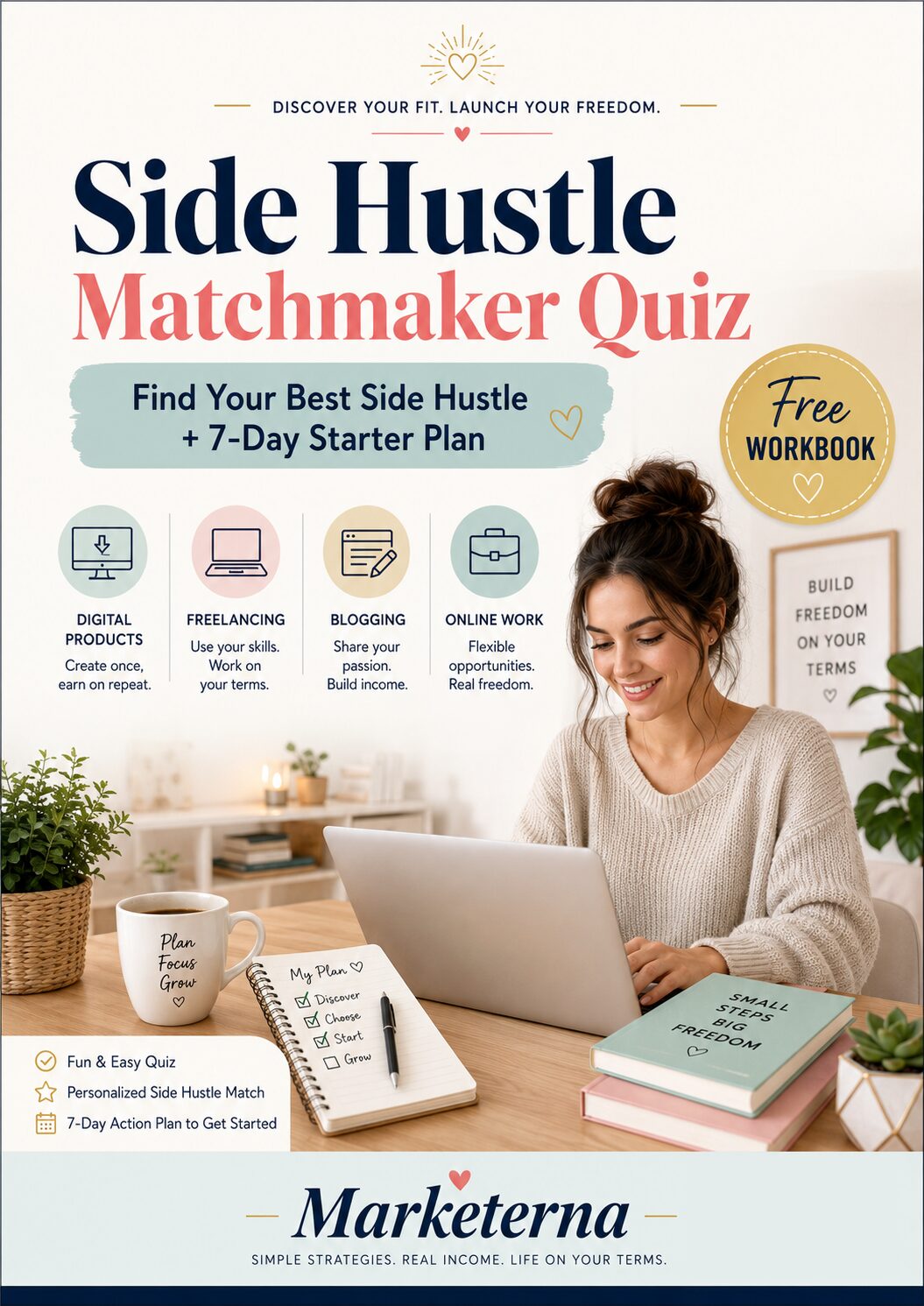
Free PDF Download
Not Sure Which Side Hustle Fits You Best?
Take the free Side Hustle Matchmaker Quiz and get a simple 7-day starter plan to help you choose a beginner-friendly idea based on your time, skills, comfort level, and goals.
You’ll get this free PDF plus access to the full Marketerna Save More & Earn More PDF Kit. No spam. Unsubscribe anytime.
1. Freelance Writing Services
A lot of small brands need blog posts, product descriptions, email copy, and website pages, but they do not have an in-house writer. That gap creates a very real business opportunity, especially if you can write clearly, hit deadlines, and make boring topics sound less painful to read.
Freelance writing works well from home because the startup cost stays low and the work fits around almost any routine. You can start with one niche, like food, pets, home decor, or finance, and build faster than someone trying to write about absolutely everything under the sun.
I like this idea because it lets you turn existing knowledge into money without needing inventory or endless meetings. It also grows in layers, which means you can begin with simple blog work and later offer higher-paying services like email funnels, landing pages, or content strategy.
Why It Works
Businesses always need words that sell, explain, or rank on search engines, and most owners either hate writing or do not have time for it. When you solve that problem well, clients come back because content is not a one-time need for most brands.
This business also rewards skill more than appearance, which I personally appreciate. Nobody cares whether your home office looks Pinterest-perfect if your writing helps them get traffic, leads, or sales.
How to Start Offering Writing Services
Pick one clear service first, such as blog posts, product descriptions, or email newsletters, and keep the offer simple. That makes it easier to explain what you do and easier for clients to hire you without needing a long dramatic discovery call.
Create three to five sample pieces, even if nobody has paid you yet, and make them look polished. Samples matter because clients want proof that you can write in a useful voice, not just tell them you are “passionate about content,” which honestly means nothing by itself.
Reach out to small businesses, agencies, and site owners with a short pitch that shows you understand their audience. Keep it specific, mention one improvement you noticed, and offer one service instead of a giant menu that makes everything feel vague.
Tips & Variations
Tip: choose a niche you can write about for months without getting bored, because consistency beats random enthusiasm every time. Variation: once you get steady clients, add content refreshes, SEO outlines, or Pinterest descriptions as upsells to increase income without hunting for brand-new clients nonstop.
2. Virtual Assistant Business
A lot of business owners waste time doing admin work they should have handed off months ago. That is where a virtual assistant business becomes smart, because you step in and handle the tasks that quietly eat up their entire day.
This can include email management, scheduling, research, customer support, file organization, social media posting, or basic bookkeeping support. It sounds simple on paper, but reliable support is hard to find, which is exactly why good virtual assistants stay booked.
I genuinely think this is one of the most underrated home-based businesses for people who are organized and calm under pressure. If you are the type who likes checklists, clean systems, and sorting out messy back-end stuff, this can be a very solid fit.
Why It Works
Business owners do not just pay for tasks here; they pay for mental relief. When you remove ten small headaches from someone’s week, you become useful fast, and useful people get retained.
This business also gives you room to specialize over time. You can begin as a general virtual assistant, then move into higher-value support like launch assistance, inbox management, or Pinterest scheduling once you see what clients need most.
How to Build a VA Offer
Start by listing the tasks you already know how to do well, then group them into one or two service packages. A clear package feels easier to buy than a vague promise to “help with whatever,” even if you are flexible behind the scenes.
Use simple tools that keep work organized, like shared calendars, project boards, and cloud folders. Clients love smooth communication, and honestly, half the job is making people feel like nothing will slip through the cracks.
Look for coaches, bloggers, consultants, and local service businesses that already look busy but disorganized. Those are usually the people who need help right now, not six months from now when they finally admit they cannot do everything themselves.
Tips & Variations
Tip: define boundaries early around work hours, response times, and task limits so the job does not sprawl into your whole life. Variation: specialize in one platform, like Shopify, WordPress, or Pinterest, and position yourself as platform-specific support instead of a general assistant.
Free PDF Download
Not Sure Which Side Hustle Fits You Best?
Take the free Side Hustle Matchmaker Quiz and get a simple 7-day starter plan to help you choose a beginner-friendly idea based on your time, skills, comfort level, and goals.
You’ll get this free PDF plus access to the full Marketerna Save More & Earn More PDF Kit. No spam. Unsubscribe anytime.
3. Print-on-Demand Shop
A lot of people want to sell products but do not want boxes stacked in every corner of the house, and fair enough. A print-on-demand shop solves that by letting you create designs for items like shirts, mugs, totes, or journals while a third-party company handles printing and shipping.
This business makes sense from home because you do not need inventory upfront. You focus on design, branding, and product ideas, which means the business stays lightweight while still giving you something physical to sell.
I like print-on-demand when the designs serve a niche instead of trying to please literally everybody on the internet. The strongest shops usually target a clear audience, like pet lovers, teachers, gardeners, brides, or people obsessed with sarcastic kitchen signs.
Why It Works
Niche products sell better because buyers like feeling understood. A random mug is just a mug, but a mug with a sharp design that matches someone’s identity or inside joke feels personal enough to buy.
This model also lets you test ideas without betting money on bulk inventory. If one design flops, annoying but manageable; you just move on and try a better concept instead of staring at 200 unsold T-shirts in defeat.
How to Launch a Small POD Shop
Choose one niche and one product category first so your shop feels focused. That helps your branding look intentional, and it makes product research way easier than bouncing between dog moms, accountants, wedding humor, and cottagecore mushrooms all at once.
Create a small starter collection with ten to fifteen strong designs instead of dumping fifty weak ones into a shop. A tight lineup with better quality usually performs better and gives you clearer data on what people actually like.
Spend time on mockups, titles, and search-friendly product descriptions because discoverability matters a lot. Good design helps, but poor listings can bury even a solid product like it owes the algorithm money.
Tips & Variations
Tip: study niche trends without copying what every other shop already overused to death. Variation: build seasonal mini collections for holidays, gifting moments, or profession-based events so you can create timely launches without reinventing your whole store.
4. Handmade Product Business
If you already make candles, jewelry, soaps, hair accessories, knit items, greeting cards, or home decor pieces, you may be sitting on a real business idea. Handmade products still attract buyers because people like items that feel more personal than mass-produced stuff from giant stores.
This works especially well from home if you enjoy creating with your hands and can keep production organized. The key is choosing products you can make consistently without each order turning into a three-hour art project that quietly ruins your pricing.
I have always thought handmade businesses do best when the product looks distinctive and the process feels repeatable. Cute alone is not enough, because cute does not automatically cover your time, packaging, and materials.
Why It Works
People pay more for products that feel unique, giftable, or thoughtfully made. That is why handcrafted items with clear branding often beat generic alternatives, even when they cost more.
A handmade business also gives you strong content opportunities for marketing. Behind-the-scenes clips, packaging videos, process photos, and styling shots make it much easier to attract buyers because they get attached to the story behind the product.
How to Make It Practical From Home
Start with a narrow product line and test which items people respond to before expanding. You want a small collection that you can produce well, photograph well, and price properly without drowning in options.
Track your material cost, labor time, packaging, and shipping before you set prices. A lot of sellers price with pure optimism, then realize they built themselves a lovely little hobby that pays about three dollars an hour.
Set up one clean workspace at home where tools, supplies, and finished products stay organized. That sounds basic, but mess slows everything down and makes even a fun business feel ten times more chaotic.
Tips & Variations
Tip: create signature styles or colorways so your products look recognizable without needing your shop name stamped across everything. Variation: offer personalized versions for gifts, weddings, or seasonal events if customization fits your process and does not destroy your turnaround time.
Free PDF Download
Not Sure Which Side Hustle Fits You Best?
Take the free Side Hustle Matchmaker Quiz and get a simple 7-day starter plan to help you choose a beginner-friendly idea based on your time, skills, comfort level, and goals.
You’ll get this free PDF plus access to the full Marketerna Save More & Earn More PDF Kit. No spam. Unsubscribe anytime.
5. Home Bakery or Snack Business
A home bakery or snack business can work beautifully if local regulations allow it and you already know your way around a kitchen. Cakes, cookies, brownies, snack boxes, granola, and specialty treats often sell well because people always need something for gifting, events, or last-minute cravings.
This idea feels especially strong when you focus on one category instead of trying to become the neighborhood supplier of every edible item in existence. Specialty wins here, whether that means custom cupcakes, low-sugar desserts, brownies, or party platters.
I love this business model when the menu stays tight and the presentation looks polished. Great flavor matters most, obviously, but buyers also eat with their eyes first, which is a little unfair and very true.
Why It Works
Food sells when it feels convenient, delicious, and worth sharing with other people. Home-based bakers often do well because they can offer more personalized service and better freshness than bigger local options.
Repeat sales also come naturally when the product lands well. Someone may order once for a birthday, but if the taste and packaging both hit, they usually come back for holidays, office treats, or family events.
How to Start Without Overcomplicating It
Choose one core offer and make it excellent before expanding your menu. A focused product line helps you shop smarter, prep faster, and market more clearly because people know exactly what to order from you.
Take clear photos, create a basic price list, and spell out ordering rules in plain language. Customers want the process to feel simple, and confusion around pickup times or customization details can turn a good sale into a weird headache fast.
Test small batches with friends, family, or local buyers and gather honest feedback. You need real reactions on taste, size, packaging, and price, not just polite compliments from people trying to be nice.
Tips & Variations
Tip: build around occasions like birthdays, Eid, office parties, or weekend treats because people buy more easily when the use case feels obvious. Variation: add themed boxes, diet-friendly options, or seasonal flavors once your signature product starts getting repeat orders.
6. Social Media Management Service
A lot of small businesses know they need social media, but they do not know what to post, when to post, or why their posts look like a sleepy notice board. That confusion creates a strong home-based business opportunity if you can plan content, write captions, and keep accounts active in a smart way.
This business works from home because most of the job happens online through planning, design tools, scheduling platforms, and reporting. You do not need a huge setup, but you do need consistency and a decent eye for what makes content worth stopping for.
I think this is a great option for someone who already understands audience behavior and content flow. It is not just about pretty posts; it is about helping brands show up regularly without sounding stale or lost.
Why It Works
Business owners pay for social media help because visibility takes time, and time is exactly what many of them do not have. When you create a system that keeps their brand active and polished, you save them hours while improving how they look online.
The best part is that results stack over time. Better posting leads to stronger brand recognition, which helps attract inquiries, referrals, and content opportunities even before a page gets huge.
How to Set Up This Business
Choose one or two platforms to specialize in first, such as Instagram and Pinterest or Facebook and Instagram. Specializing makes your service feel sharper, and it keeps you from offering six platforms badly instead of two platforms well.
Build a sample portfolio with content calendars, caption examples, and mock graphics for a specific type of business. A potential client wants to see how you think, not just hear that you “love social media,” because sadly that line has been beaten to death.
Offer a simple starter package that includes content planning, caption writing, scheduling, and basic reporting. Small businesses respond better to clear monthly packages than custom chaos that requires five emails to explain.
Tips & Variations
Tip: track what content gets saves, clicks, replies, or shares so your service stays tied to actual performance. Variation: offer short-form video scripting, Pinterest management, or content repurposing as add-ons once you have a few steady clients.
7. Online Tutoring Business
If you are strong in a school subject, language, software skill, or test prep area, online tutoring can become a very solid home business. Parents, students, and adult learners all look for help that feels personal, clear, and less intimidating than big formal programs.
This works well from home because lessons happen through video calls, shared screens, and simple teaching materials. You do not need a fancy classroom setup either; you need patience, structure, and the ability to explain things without sounding like a dusty textbook.
I respect this business because it creates direct value fast. When someone understands a topic better because of you, the result feels obvious, and that makes referrals much easier to earn.
Why It Works
People pay for tutoring because targeted help saves time and reduces frustration. One good tutor can often fix a learning block faster than hours of random videos and half-followed study plans.
This business also benefits from trust and word of mouth. Once parents or learners see improvement, they usually recommend you to others, and that kind of referral traffic is gold because it arrives pre-sold.
How to Start Tutoring From Home
Choose a clear subject and age group so your offer feels specific. “Math tutor for middle school students” sounds stronger than “I can teach pretty much anything,” which usually reads like a red flag.
Create a simple lesson format that includes explanation, practice, and recap. Structure matters because students learn better when they know what to expect, and parents feel better when the session sounds organized instead of improvised.
Use trial sessions or low-risk introductory packages to get early reviews and testimonials. That helps build credibility quickly, especially when you are still proving your results to new families or adult learners.
Tips & Variations
Tip: keep notes on student progress so lessons feel customized instead of repetitive. Variation: create small group classes, exam bootcamps, or downloadable worksheets to add income beyond one-to-one sessions.
8. Graphic Design Service
Businesses constantly need logos, flyers, social graphics, presentations, lead magnets, packaging, and branded templates. If you know how to design visuals that look clean and useful, a graphic design business can work extremely well from home.
This kind of business suits people who enjoy visual problem-solving more than random artsy chaos. Good design is not just making things pretty; it is making them readable, on-brand, and effective enough that nobody has to squint and wonder what they are looking at.
I like design as a home-based business because it combines creativity with clear deliverables. You finish a project, the client can see it immediately, and the value feels tangible in a way that many abstract services do not.
Why It Works
Visual quality shapes first impressions faster than most people admit. A brand with messy graphics looks less trustworthy, and business owners know that even if they cannot always explain it well.
Design also creates repeat work because brands need more than one asset. A client may hire you for a logo first, then return for social templates, brochures, digital products, or sales pages once they like your style and process.
How to Turn Design Into a Business
Pick a design lane first, like social media graphics, brand kits, eBooks, or presentation design. A focused service helps you attract the right clients faster and stops your portfolio from looking like twelve businesses arguing in one folder.
Create polished sample projects for the kind of clients you want. Show before-and-after concepts, explain your choices briefly, and make the work feel practical rather than overly artsy for no reason.
Use a clear revision policy and timeline for every project. Clients love creative work until revisions turn into endless personality tests, so a simple process keeps the business sane.
Tips & Variations
Tip: build template-based offers for smaller clients who need quality but cannot afford custom design from scratch. Variation: combine graphic design with simple copy help or Canva template packs to open up extra income streams.
9. Pet Care Consultation or Pet Product Business
Pet owners spend money quickly when something helps their animals feel safer, happier, cleaner, or less chaotic. That makes pet-related businesses a strong fit for home, especially if you already understand pet behavior, routines, grooming basics, or product needs.
This can go in two directions. You can offer consultations around routines, enrichment, new pet setup, and product recommendations, or you can sell pet items like treats, accessories, toy bundles, or digital pet planners.
I have a soft spot for pet businesses because the audience tends to be enthusiastic and loyal. Also, pet people do not need much convincing once they trust you, because they will absolutely buy the cute thing and the practical thing.
Why It Works
Pet owners often look for advice that feels more personal than generic articles and more affordable than high-end specialists. When you offer practical help in plain language, people remember it and often come back.
Products also do well in this niche because owners like discovering items that solve daily annoyances. Cleaner feeding, easier walks, calmer pets, better storage, and safer play all turn into real buying reasons.
How to Build It From Home
Choose one target pet group and one problem area to start with, such as dog enrichment, puppy setup, cat organization, or healthy treat ideas. Narrow focus helps your branding look sharper and makes it easier to create content that attracts the right buyers.
If you offer consultations, create one clear package with a call, follow-up notes, and a simple action plan. If you sell products, start with a small collection that matches one theme instead of a giant mixed shop that feels random.
Use content marketing heavily because pet buyers love visuals, recommendations, and relatable examples. Helpful content builds trust fast, and trust matters a lot when people spend money on anything connected to their pets.
Tips & Variations
Tip: talk like a real person and avoid overly technical pet jargon unless it actually helps. Variation: add printable guides, treat recipe bundles, or new-pet checklists as low-cost digital offers alongside physical products or consultations.
10. Blogging or Niche Content Website
A niche blog can absolutely become a home-based business if you treat it like a real asset instead of an online diary from 2009. With the right topic, search strategy, and monetization plan, a website can earn through ads, affiliates, sponsored content, and digital products.
This business takes longer than some service-based ideas, but it scales better once content starts working for you. You write once, optimize well, and let that article attract readers for months or years instead of needing a fresh hour of labor for every dollar.
I like blogging because it gives you ownership. Platforms change, social reach gets moody, and algorithms love drama, but your website still gives you a home base you control.
Why It Works
People constantly search for answers, ideas, recommendations, and comparisons online. When your content solves those searches clearly and consistently, traffic builds, and that traffic turns into multiple income options over time.
A blog also lets you grow authority in a niche without needing to look like a giant company. One focused site with useful content can compete surprisingly well if it understands search intent and serves readers better.
How to Start a Niche Site
Choose a niche with enough topic depth and some monetization potential, such as recipes, pets, home decor, finance, or practical lifestyle content. You need enough content ideas to keep going and enough buyer interest to make future monetization worthwhile.
Plan topic clusters around what people already search for, not just what sounds fun in your head. That part matters because random posting feels productive but often leads to traffic that goes absolutely nowhere.
Publish consistently, improve old posts, and build basic email capture early. Even a small list helps you stay connected to readers, which matters when search and social decide to act unpredictable.
Tips & Variations
Tip: stay niche enough to build authority before expanding into nearby categories. Variation: pair the blog with Pinterest, YouTube, or an email newsletter so your traffic does not rely on one source alone.
11. Resume Writing and Career Help Service
A lot of people struggle to explain their own experience clearly, which is why resume writing stays in demand. Job seekers often know they need a stronger application, but they do not know how to translate their work into sharp, results-focused language.
This business fits well at home because the work happens through documents, questionnaires, and online calls. You can offer resumes, cover letters, LinkedIn profile rewrites, interview prep, or job search strategy depending on your experience.
I think this is a smart service because the value feels immediate to clients. Better documents can lead to more interviews, and that outcome gives the business a strong before-and-after effect.
Why It Works
People pay for career help because job searching is stressful and personal. When someone feels stuck, a professional rewrite can give them structure, confidence, and a much stronger shot at getting noticed.
This is also a referral-friendly business. If you help one client land interviews or a better role, they usually tell friends, siblings, coworkers, or that one cousin who updates his resume once per geological era.
How to Start Offering Career Services
Pick a target audience, such as fresh graduates, mid-level professionals, or remote job seekers. Specific audiences help you write stronger messaging and create packages that match real needs.
Build a few sample resume transformations that show how you improve clarity, formatting, and impact. Concrete proof works better than generic claims, especially when trust matters as much as it does in career services.
Use a clear intake form to gather work history, achievements, and target roles before you begin. Good input saves time, and it helps you write documents that feel strategic instead of stuffed with random responsibilities.
Tips & Variations
Tip: ask clients for measurable achievements so the final resume sounds credible and stronger. Variation: add mock interview sessions, LinkedIn headline rewrites, or job application tracking templates as extra services.
12. Online Course or Workshop Business
If you know how to do something useful and can teach it in a clear way, an online course or live workshop can become a strong business from home. People buy education that saves time, gives structure, and helps them avoid expensive trial and error.
This model works best when the topic solves a specific problem rather than trying to cover a huge life transformation in one go. Smaller, focused offers usually convert better because the promise feels believable and the result feels reachable.
I like this business because it lets you package knowledge once and sell it many times. That takes effort upfront, sure, but the long-term leverage is hard to ignore.
Why It Works
People are willing to pay for shortcuts that feel organized and trustworthy. A good course removes confusion, lays out the steps, and gives learners a path they can actually follow.
This business also scales better than one-to-one services. You can teach ten people or one hundred people with the same core material, which means your time stretches further once the offer is built.
How to Create a Useful First Offer
Pick one teachable topic with a clear result, such as beginner budgeting, pet treat making, Canva design basics, or Pinterest keyword research. A focused promise is easier to market than a giant course that tries to solve thirty-seven problems at once.
Outline the lessons in a simple sequence that moves from setup to action to improvement. Learners need progress they can feel, and a clean structure keeps the material from turning into a giant info dump.
Start with a live workshop or mini course before creating a full program. That lets you test demand, hear real questions, and refine your teaching before you spend weeks recording a giant course nobody asked for.
Tips & Variations
Tip: teach with examples, templates, and action steps so buyers feel momentum quickly. Variation: offer private add-on coaching, printable workbooks, or a paid community once the core course starts getting traction.
13. Bookkeeping or Admin Support Business
Small businesses constantly need help tracking income, expenses, invoices, receipts, and monthly records. If you are detail-oriented and comfortable with numbers and systems, bookkeeping or admin support can turn into a reliable home business.
This option is practical, not flashy, and honestly that is part of the appeal. Glamorous businesses get attention, but businesses that solve necessary tasks often get paid more steadily because clients cannot ignore the need forever.
I respect this path because it builds on trust and accuracy. When you handle money records or key admin details properly, clients tend to stay, which makes income less shaky than trend-based work.
Why It Works
Business owners know sloppy records can create tax stress, missed payments, and messy decision-making. When you keep things organized, you protect both their time and their peace of mind.
This service also creates recurring work rather than one-off projects. Monthly support builds predictability for both you and the client, and predictable income is a beautiful thing.
How to Start This Type of Service
Choose whether you want to focus on bookkeeping, invoicing, expense tracking, calendar admin, or a blend of support services. Clear positioning matters because clients need to understand where you help and where your role stops.
Learn the tools your target clients already use, such as spreadsheet systems or bookkeeping platforms. Familiarity with common tools makes onboarding smoother and helps you work faster without a giant learning curve inside every new client account.
Offer a simple monthly package with clearly defined tasks and limits. That protects your time and helps clients compare your service to the actual value of the time and stress you remove.
Tips & Variations
Tip: double-check everything and build repeatable systems because this business depends heavily on accuracy. Variation: niche down to freelancers, creators, or small e-commerce shops so your service feels tailored instead of generic.
14. Subscription Box Business
A subscription box business can work from home if you love curation, packaging, and creating a repeat buying experience. Instead of selling a one-time product, you send a themed box on a regular schedule, usually monthly or quarterly.
This works best when the niche has strong enthusiasm and gift appeal. Think snacks, self-care items, stationery, crafts, pet goodies, or hobby-themed collections that people look forward to opening.
I think subscription boxes succeed when they feel cohesive, not stuffed with random filler. Nobody wants to pay monthly for a mystery box that feels like a clearance bin wearing nicer branding.
Why It Works
Recurring revenue gives this model a huge advantage when customers stay subscribed. You spend time attracting the customer once, then keep earning as long as the boxes continue delivering value.
The experience also matters as much as the products. Packaging, surprise, theme, and presentation all create emotional value, and that makes people more likely to share, gift, or renew.
How to Start Small From Home
Test one themed box idea with a limited number of customers before committing to a big launch. Small test runs help you refine pricing, sourcing, shipping, and unboxing quality without overcommitting too early.
Set a clear promise for each box so subscribers know what kind of value they are getting. Surprise is fun, but structure matters because buyers still want a reason to trust the box every month.
Build a repeatable packing process and keep supply tracking tight. Subscription businesses can get messy fast if stock runs late or you build each month like a tiny emergency.
Tips & Variations
Tip: price for shipping, packaging, and occasional supplier hiccups, not just ideal conditions. Variation: offer one-time gift boxes, premium upgrades, or seasonal themed editions alongside the core subscription.
15. Digital Product Shop
Digital products are one of the cleanest home-based businesses because there is no inventory, no shipping, and no piles of packaging supplies living rent-free in your house. You create something once, then sell it repeatedly as long as people keep finding value in it.
Examples include planners, checklists, templates, printables, guides, prompts, presets, trackers, eBooks, or worksheets. The best products usually solve one annoying problem clearly rather than trying to become a life-changing masterpiece in PDF form.
I really like this business because it pairs well with content marketing and grows nicely over time. It also gives you room to start small, test demand, and improve based on what buyers actually use.
Why It Works
People buy digital products for speed and convenience. A useful template or checklist can save someone hours, which makes even a low-priced product feel worth it.
Digital products also scale beautifully because delivery costs stay low. Once the file exists, selling to one person or one thousand people does not require you to package anything except maybe your sanity during launch week.
How to Build a Strong First Product
Start with a product that solves one clear issue for one clear audience, such as meal planners, budgeting trackers, pet care printables, or business templates. Simple, useful, and specific beats bloated every single time.
Create the product in a clean, easy-to-use format and test it yourself like a buyer would. If the instructions confuse you, they will definitely confuse everyone else too, and buyers are not paying to decode your formatting choices.
Sell the product through a basic storefront and market it through social content, email, or blog traffic. Visibility matters because even a great printable cannot sell itself if nobody knows it exists.
Tips & Variations
Tip: focus on usability first and decoration second unless aesthetics are the main reason people buy. Variation: bundle several related digital products together to increase average order value without needing a completely new audience.
16. Home-Based Coaching or Consulting
If you have experience in a specific area and can guide people toward better results, coaching or consulting can become a profitable home business. This could include business coaching, content strategy, fitness planning, budgeting guidance, productivity support, or niche consulting based on your background.
This model works from home because sessions happen online and most deliverables stay digital. You are selling insight, structure, feedback, and accountability rather than physical products, which keeps the business flexible and scalable.
I think this is one of the strongest options for people who already have proven experience. It is not about sounding impressive; it is about helping someone move faster with fewer mistakes because you already know the road.
Why It Works
People pay for direct guidance when free content stops being enough. At a certain point, they do not need more random information; they need someone to look at their specific situation and tell them what to do next.
Consulting also supports premium pricing because the value feels personal and tailored. When you help someone avoid expensive mistakes or speed up results, the return can be much bigger than the session cost.
How to Start as a Coach or Consultant
Define one transformation or result you help with, and keep the promise realistic. Clear positioning attracts better-fit clients and stops your offer from sounding like vague motivation dressed up as strategy.
Create one entry-level package with a session, action plan, and follow-up support. A simple offer feels easier to buy and gives you a clean structure for delivering value without overpromising.
Use content to demonstrate your thinking before people ever book with you. Helpful posts, mini tips, and practical breakdowns build trust because people get a preview of how you solve problems.
Tips & Variations
Tip: lean on real experience and practical examples instead of trying to sound ultra-polished. Variation: add group coaching, audits, VIP intensives, or mini strategy calls once you know which format clients respond to best.
Frequently Asked Questions
Do I need a lot of money to start a home-based business?
Not usually, and that is one reason these ideas work so well. Service businesses often need the least money upfront because you mostly sell skill, time, and results rather than physical stock.
Which home-based business is easiest for beginners?
Freelance writing, virtual assistant work, and digital products usually feel easiest to start because the setup stays simple. The best beginner option still depends on what you already know and what kind of work you can stick with consistently.
How long does it take to make money?
Some service businesses can make money within weeks if you land a client quickly. Content sites, digital products, and print-on-demand shops usually take longer because they need traffic, testing, and audience trust.
Can I run a home-based business part-time?
Yes, and a lot of people should start that way. Part-time gives you room to test demand, improve your process, and make early mistakes without attaching your entire financial survival to day one.
What should I pick if I do not want inventory?
Go with freelance services, tutoring, coaching, digital products, blogging, or virtual assistant work. Those models stay lighter, which means you can focus on delivery and marketing without also managing stock and shipping.
How do I choose the right idea for me?
Look at three things: what you already do well, what people need, and what you would not hate repeating every week. The sweet spot usually sits where skill, demand, and sustainability overlap.
Do I need social media to grow?
Not always, but it helps in many cases. Some businesses grow through referrals, SEO, marketplaces, or email, though social media can still make trust-building faster when used well.
Final Thoughts
The best home-based business is not the trendiest one. It is the one you can start clearly, deliver well, and keep improving without burning yourself out by month two.
Pick one idea, keep the offer simple, and get moving before overthinking turns into a full hobby of its own. Small starts count, and a steady business usually grows from that kind of grounded beginning.
Free PDF Download
Not Sure Which Side Hustle Fits You Best?
Take the free Side Hustle Matchmaker Quiz and get a simple 7-day starter plan to help you choose a beginner-friendly idea based on your time, skills, comfort level, and goals.
You’ll get this free PDF plus access to the full Marketerna Save More & Earn More PDF Kit. No spam. Unsubscribe anytime.